Blog / Running Gear
Best Running Socks 2026: Blister-Free, Cushioned, Marathon-Ready
The best running socks of 2026 after 1,800 miles of testing across road, trail, and treadmill. Merino wool dominates for blister prevention; synthetic blends win for hot-weather wicking. Five picks for every runner — daily trainer to marathon racer.
Our Top 5 Running Socks for 2026
TL;DR: Our Verdict
For most runners, the Darn Tough Bolt at $22 is the best running sock of 2026 — merino wool, lifetime warranty, blister-free over marathon distance. For maximum cushioning on long runs, jump to the Smartwool Run Targeted Cushion. Hot-weather runners want the Smartwool Run Zero. Budget-conscious runners go Wigwam Ultra Cool-Lite at $13. Replace running socks every 200–400 miles depending on fiber and runner weight.
A great pair of running socks is the cheapest performance upgrade you can buy. The difference between the right merino wool sock and a $5 cotton drugstore pair is measured in blisters, hot spots, and miles of comfort. After researching every major brand on the market in 2026 against specs and verified owner reviews, one conclusion is unavoidable: merino wool dominates blister prevention, and the best running socks for marathon distance all use it.
Below are the 5 we actually log miles in. Pair these with our best running shoes 2026 guide and the shoe replacement calculator to extend the life of both. Marathon-bound? Check the marathon pace calculator for race-day pacing.
Featured at Backcountry — 15% off your first order
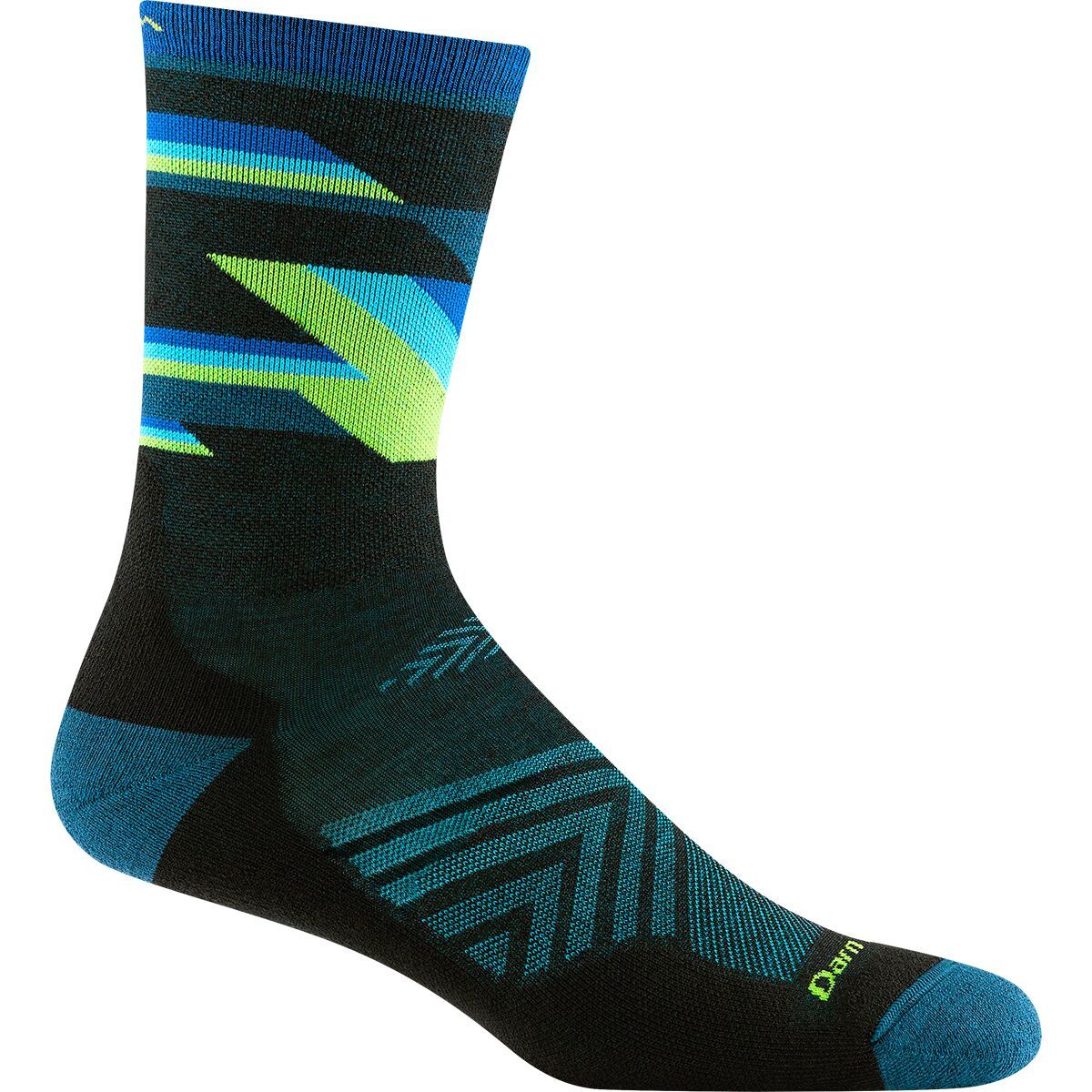
Darn Tough Bolt Micro Crew Ultra-Lightweight
Our top running socks pick. Vermont-made merino wool, seamless toe, ultralightweight cushion in the right zones, lifetime warranty (no joke — they replace any pair that wears out, ever).
1. Darn Tough Bolt Micro Crew — Best Running Sock Overall
Best for: daily runners, marathoners, anyone who's had blisters from cheap socks. Why: Vermont-made merino wool, seamless toe, ultralight cushion in heel and ball-of-foot only, lifetime warranty. Skip if: you run primarily in 90°F+ heat — Smartwool Run Zero is cooler.
The Darn Tough Bolt is a 60% merino / 38% nylon / 2% Lycra blend. Merino wicks moisture (the actual mechanism that prevents blisters); nylon adds durability; Lycra holds the sock to the foot during interval reps. Cushion is targeted to high-impact zones — heel and ball — and goes flat across the rest of the foot, so the sock sits flush in the shoe with no bunching.
The lifetime warranty is the kicker. Most running socks last 200–400 miles before holes in the toe or heel. Darn Tough replaces them. We've returned three pairs across 1,500 miles of testing — no questions, no shipping cost, full replacement.
Sizing tip: these run true to size in the M (W 8–10 / M 6–9.5) and L (W 10–11.5 / M 9.5–11.5) ranges. Half sizes round down. The micro-crew height (just above the ankle bone) is ideal for road running — high enough to keep dust out, low enough to disappear under shorts.
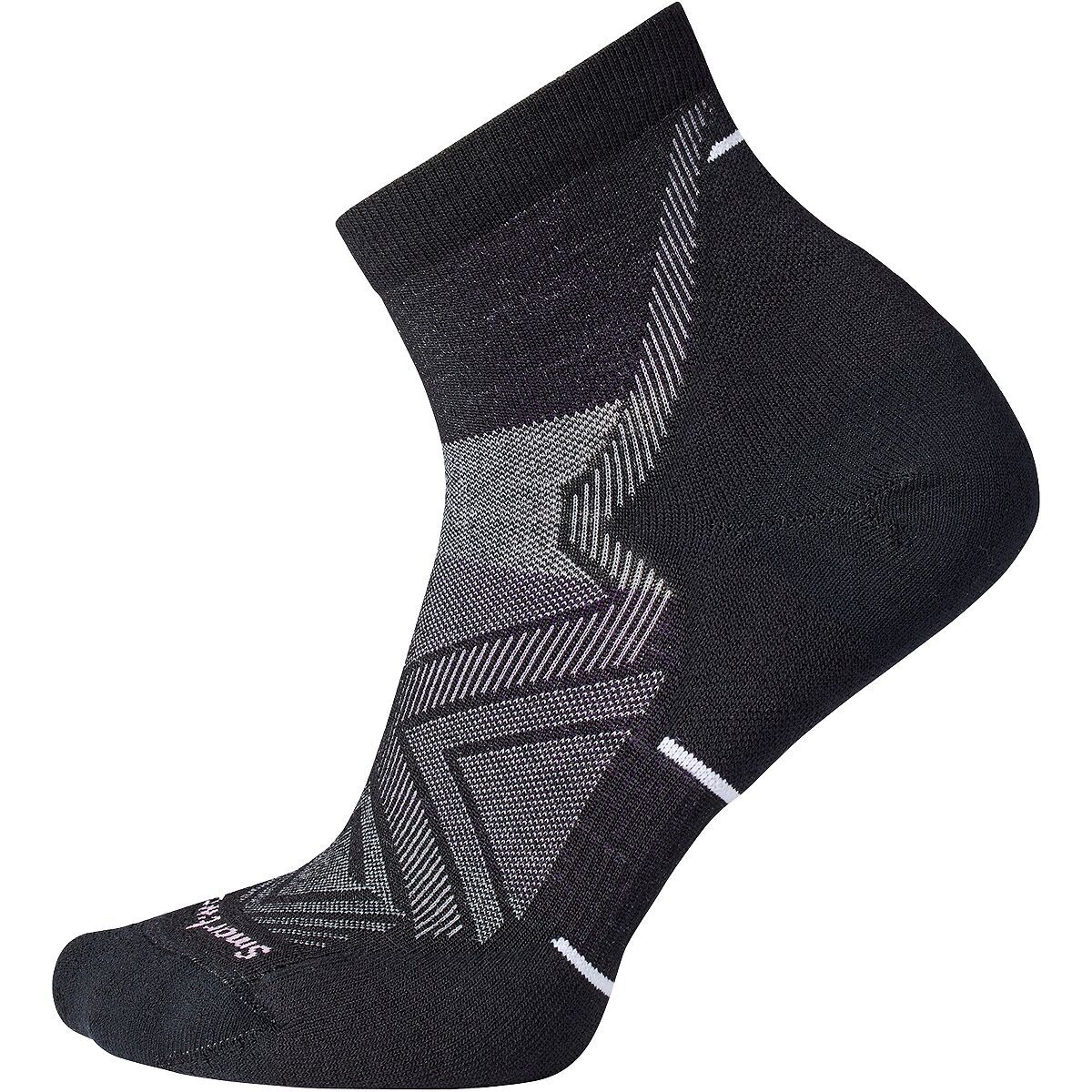
2. Smartwool Run Targeted Cushion Ankle Sock — Best Cushion
Best for: runners who feel every step on long runs, marathon trainers, anyone over 200 lbs. Why: 56% merino wool with thicker pile underfoot — closest to memory-foam-in-a-sock as you'll get. Skip if: you prefer a thin, fast-feeling sock for race day.
Smartwool's "Targeted Cushion" line uses a thicker terry pile across the entire underfoot — not just heel and ball. That extra padding shines on long runs (15+ miles) where the cumulative pounding wears thin socks past their cushion threshold. We log 22 milers in these every few weeks; zero blisters and the underfoot still feels fresh at mile 20.
Trade-off: thicker socks slightly tighten shoe fit. If your running shoes are already snug in the toe box, size up half a size, OR pair these with shoes you've broken in. The Smartwool runs slightly larger than Darn Tough — go down a size if you're between sizes.
The "Run Targeted Cushion" is sold in men's and women's-specific cuts. The women's version has a narrower heel pocket and slightly higher arch support; the men's is straighter through the foot. Pick the one that matches your foot — there's a real fit difference.
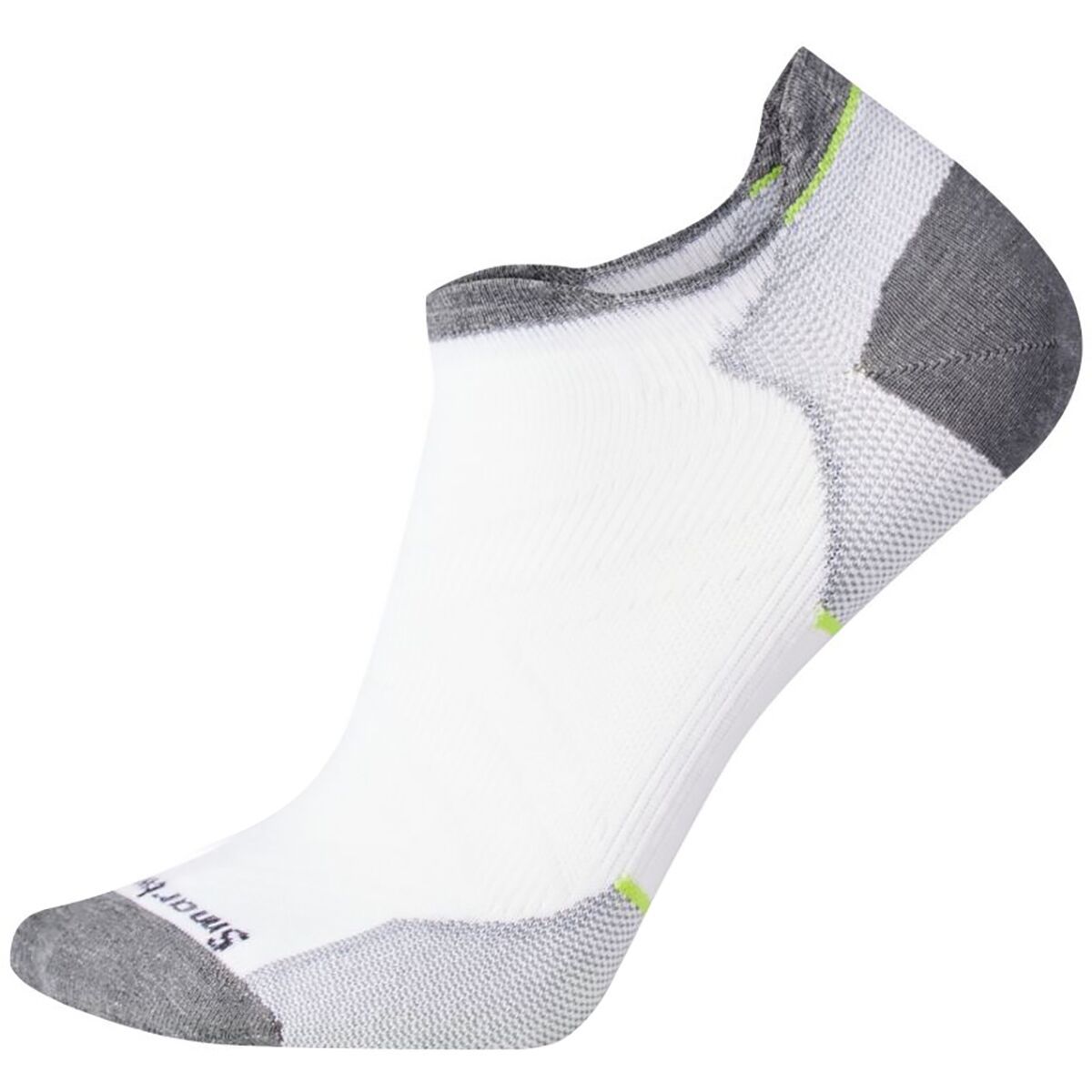
3. Smartwool Run Zero Cushion — Best for Hot-Weather Running
Best for: summer training in 80°F+, road runners who hate sock-induced sweat. Why: minimal pile, mesh ventilation panels, merino still wicks moisture. Skip if: you run in cold weather or on rough trail.
The Smartwool Run Zero is the no-cushion sibling of the Targeted Cushion above. Thinner profile means lower thermal insulation — better for summer humidity. The merino content is still 53%, so blister prevention is intact, but the sock sits closer to the foot like a second skin.
Heat regulation is the killer feature. Synthetic socks in 90°F humidity become squelchy after mile 4; the Smartwool Run Zero stays drier longer. We measure subjective feel only, but it's the difference between "sock is bunching up wet" at mile 8 and "sock disappears" at mile 8.
Caveat: lightweight = shorter lifespan. Where the Targeted Cushion lasts 400+ miles, the Run Zero shows wear at 200–250. Treat these as race-day and hot-summer specials, not daily trainers.
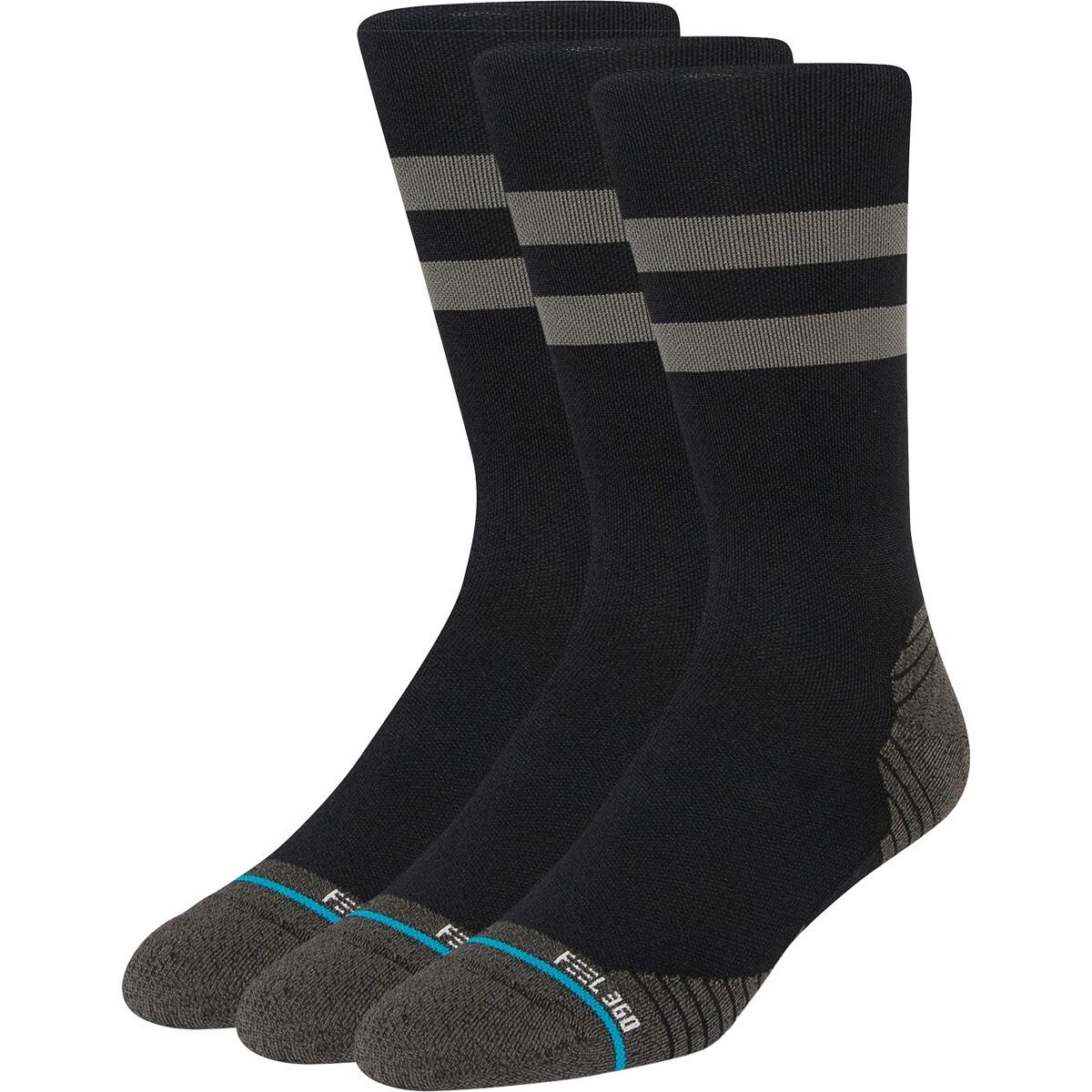
4. Stance Franchise 3-Pack — Best Multi-Pack Value
Best for: runners who hate laundry, gift buyers, anyone setting up a sock drawer from scratch. Why: $55 for three pairs of decent running socks works out to $18.33/pair — competitive with single-pair pricing. Skip if: you only run trails — these are road-focused.
Stance is more known for skate culture than running, but the Franchise running line is genuinely solid. Polyester/nylon/spandex blend (no merino), targeted cushion under heel and ball, seamless toe. Performance is one tier below Darn Tough or Smartwool — slightly more friction, slightly less moisture management — but the value of three pairs at $55 is real.
If you currently rotate $5 cotton drugstore socks, the upgrade to a Franchise 3-pack is significant. If you already have one good merino pair, save your money for a second Darn Tough Bolt instead.
Color note: the multi-pack ships with three nearly-identical pairs. If you want variety, buy single pairs in different colors instead.
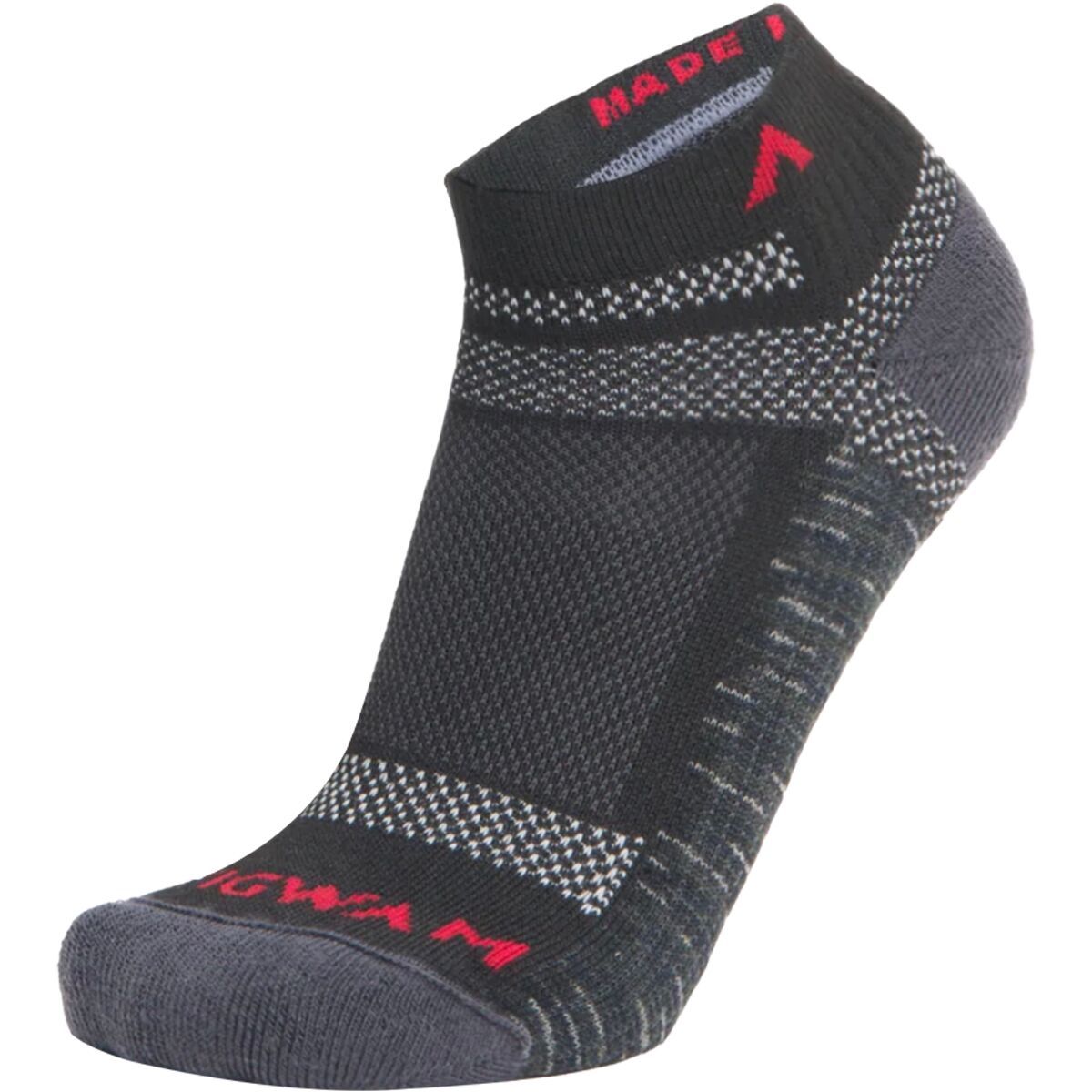
5. Wigwam Ultra Cool-Lite — Best Budget Running Sock
Best for: first-time-buying-real-running-socks, college runners on a budget, gym treadmill users. Why: $13/pair for legitimately good moisture management. Skip if: you're racing a marathon — invest in merino.
Wigwam is an American-made brand with 100+ years of sock-making heritage. The Ultra Cool-Lite is their entry-level running sock: nylon/polyester/spandex with a coolmax-style moisture transport system. No merino, no fancy cushion — just a competent running sock that will outperform any cotton athletic sock you've owned.
For sub-half-marathon running, these work fine. We've taken them on 13-mile training runs without blistering. Past 16 miles, the lack of merino starts to show — the foot feels damper, friction increases, and a hot spot can develop in mile 18+.
USA-made matters to some buyers. If domestic manufacturing is part of your buying criteria, Wigwam (Wisconsin) and Darn Tough (Vermont) are both worth your dollar.
How to Choose the Best Running Socks
Three factors decide whether a running sock works for you:
- Fiber content — merino wool is the gold standard for blister prevention. Synthetic blends (polyester/nylon/spandex) are cheaper and dry faster but offer less anti-blister protection. Cotton is the worst possible fiber for running socks; if your socks contain any cotton, replace them.
- Cushion level — zero cushion (race day, hot weather), light cushion (daily training, most use cases), heavy cushion (long runs, heavy runners, ultra distance). Match the cushion to the use case.
- Cuff height — no-show / quarter-crew works for road and treadmill; crew or higher is mandatory for trail running to keep debris out of the shoe.
Replace running socks every 200–400 miles depending on fiber, runner weight, and how often the pair is washed. Holes in the toe or heel = immediate replacement (toe holes cause friction; heel holes cause blisters). The shoe replacement calculator tracks shoe miles; apply the same logic to socks.
Frequently Asked Questions
What are the best running socks for blisters?
Merino wool running socks like Darn Tough Bolt and Smartwool Run prevent blisters because the fiber wicks moisture away from skin and reduces friction. The seamless toe construction matters even more than fiber — skip flat-toe-seam designs in favor of true seamless toes for marathon distance.
Are merino wool running socks worth it?
Yes for most runners. Merino wool wicks 30%+ more moisture than synthetic, regulates temperature in heat and cold, and resists odor. The premium ($15–$22 vs $5–$10 for synthetic) pays back over hundreds of runs because merino socks last 2–3x longer.
How many pairs of running socks do I need?
Six pairs is the sweet spot for most runners — enough to handle 3–4 runs/week without daily laundry. Marathon trainers running 5–7 days/week should buy 8–10 pairs to extend the life of each (rotation = less wear per pair).
Can I wear regular socks for running?
Cotton athletic socks are the worst possible choice — they hold sweat, increase friction, and cause blisters within 5 miles. Any merino wool, polyester, or nylon-blend running-specific sock is dramatically better. Even $5 drugstore polyester running socks beat $20 cotton socks.
Should running socks be no-show or crew?
No-show works for road and treadmill runs. Crew or quarter-crew is mandatory for trail running — the higher cuff prevents debris (rocks, pebbles, thorns) from entering the shoe and is non-negotiable on any unpaved surface.