Boston Marathon Training Guide 2026: Conquering Heartbreak Hill and the World's Most Prestigious 26.2
The definitive training guide for the Boston Marathon. Master the Newton Hills, prepare for Patriots' Day weather, and execute the race of a lifetime on the world's oldest annual marathon course from Hopkinton to Boylston Street.
Calculate Your Boston Pace
Plan your splits for the challenging point-to-point course
In This Guide
- The Boston Marathon Experience
- Course Profile: From Hopkinton to Boylston
- 2026 Qualifying Standards
- Boston-Specific Training Plan
- Hill Training: Newton Hills & Heartbreak
- Downhill Training for the Opening Miles
- Weather Preparation
- Gear Recommendations for Boston
- Pacing Strategy Mile-by-Mile
- Race Week Logistics
- Race Day Execution
- FAQ
The Boston Marathon Experience
The Boston Marathon isn't just a race - it's a pilgrimage. First run in 1897, it's the world's oldest annual marathon and the only major marathon that requires qualification. Running Boston means you've earned your place among the sport's most dedicated athletes.
The course from Hopkinton to Boston's Copley Square is unlike any other major marathon. A net downhill profile that deceives unprepared runners, the legendary Newton Hills in the final third, and the iconic climb up Heartbreak Hill at mile 20.5 - Boston demands specific preparation that generic marathon training won't provide.
Every April on Patriots' Day, over 30,000 runners experience the electric crowds of Wellesley College's "Scream Tunnel," navigate the challenging Newton Hills, and ultimately turn right onto Boylston Street for one of the most emotional finishes in sports. This guide will prepare you for every step.
The 2026 Boston Marathon: Scheduled for Monday, April 20, 2026 (Patriots' Day). Registration typically opens in September for qualified runners, with a rolling acceptance process based on how much you've beaten your BQ time.
Course Profile: From Hopkinton to Boylston
The Boston Marathon is a point-to-point course running 26.2 miles from Hopkinton to downtown Boston. While the net elevation drop of approximately 450 feet (from 490 ft to ~10 ft) might suggest an easy, fast course, the reality is far more complex.
Key Course Statistics
| Start Elevation | 490 feet (Hopkinton) |
| Finish Elevation | 10 feet (Copley Square) |
| Net Elevation Loss | ~450 feet |
| Total Elevation Gain | ~750 feet |
| Newton Hills Gain | ~230 feet over 4 miles |
| Heartbreak Hill | 88 feet over 0.4 miles (4% grade) |
| Course Record (Men) | 2:03:02 (Geoffrey Mutai, 2011)* |
| Course Record (Women) | 2:19:59 (Peres Jepchirchir, 2024) |
*Mutai's time is unofficial due to net downhill and tailwind. Official course record conditions vary by year.
Mile-by-Mile Course Breakdown
Miles 1-4: The Hopkinton Drop (DANGER ZONE)
The course drops over 300 feet in the first 4 miles. Gravity pulls you faster than goal pace should feel. THIS IS THE TRAP. Going out too fast here destroys your race in the Newton Hills. Run 15-30 seconds SLOWER than goal pace. It will feel frustratingly easy - that's correct.
Miles 5-10: Rolling Through Ashland & Framingham
Gentle rollers as you pass through small-town Massachusetts. Crowds thin compared to the start. Find your rhythm and settle into goal pace. The course levels out with minor undulations. Stay patient.
Miles 11-13: Natick & the Wellesley Scream Tunnel
Mile 12 features the famous Wellesley College "Scream Tunnel" - 0.5 miles of deafening cheers from students. The noise is incredible but don't let the energy spike your pace. Maintain rhythm through the halfway point.
Miles 14-16: Newton Lower Falls Approach
Relatively flat approach to the Newton Hills. This is your last chance to assess how your legs feel. If you're already struggling, back off pace now. If you feel good, STAY patient - the hills are coming.
Miles 16-21: The Newton Hills (THE TEST)
Four significant hills over 5 miles: Mile 16 (Firehouse Hill), Mile 17 (Cemetery Hill), Mile 18 (The Ghost), Mile 20.5 (Heartbreak Hill). Total elevation gain: ~230 feet. Run by EFFORT, not pace. Let your time suffer on the uphills; you'll make it back on the downhills.
Miles 21-26.2: Boston College to Boylston
After Heartbreak, it's mostly downhill to flat. If you've paced correctly, you'll pass fading runners. Boston College students are loud at mile 21. Coolidge Corner at mile 24 provides another energy boost. The final right turn onto Boylston Street is unforgettable.
The Boston Paradox: Despite being net downhill, Boston is NOT a fast course for most runners. The early downhills trash your quads, making the Newton Hills exponentially harder. Runners who negative split Boston typically had the discipline to run the first half conservatively.
2026 Qualifying Standards
Boston Marathon qualifying times are based on your age on race day. Meeting the standard doesn't guarantee entry - you must register during the BAA's acceptance window, and entry is granted to fastest qualifiers first.
| Age Group | Men | Women |
|---|---|---|
| 18-34 | 3:00:00 | 3:30:00 |
| 35-39 | 3:05:00 | 3:35:00 |
| 40-44 | 3:10:00 | 3:40:00 |
| 45-49 | 3:20:00 | 3:50:00 |
| 50-54 | 3:25:00 | 3:55:00 |
| 55-59 | 3:35:00 | 4:05:00 |
| 60-64 | 3:50:00 | 4:20:00 |
| 65-69 | 4:05:00 | 4:35:00 |
| 70-74 | 4:20:00 | 4:50:00 |
| 75-79 | 4:35:00 | 5:05:00 |
| 80+ | 4:50:00 | 5:20:00 |
Important: Recent cutoffs have required beating the standard by 5-6+ minutes. For the 2025 race, the cutoff was 5:29 faster than the BQ standard. Plan to beat your qualifying time by at least 5-10 minutes for safe entry.
Boston-Specific Training Plan
Training for Boston requires more than standard marathon preparation. You need to build quad resilience for downhills, climbing strength for the Newton Hills, and the mental fortitude to execute patient pacing.
16-Week Training Overview
Weeks 1-4: Base Building + Downhill Introduction
- Build weekly mileage to 40-50 miles
- Introduce downhill repeats (1x per week): 6 x 200m on 4-6% grade
- One tempo run per week (20-30 min at threshold)
- Long runs building to 14-16 miles
- Begin eccentric leg strength work
Weeks 5-8: Strength Phase + Hill Work
- Peak mileage: 50-60 miles/week
- Hill repeats (1x per week): 8-10 x 90-second climbs
- Downhill repeats continue: 8-10 x 300m
- Marathon pace long runs with hills: 16-18 miles
- Tempo runs extending to 40-50 minutes
Weeks 9-12: Race-Specific Phase (KEY WEEKS)
- Boston simulation long runs: 18-22 miles with downhill start + late hills
- Marathon pace work on rolling terrain
- Progressive long runs: easy start, marathon pace last 6-10 miles
- Tune-up race (half marathon recommended)
- Peak eccentric strength maintenance
Weeks 13-16: Taper + Final Preparation
- Reduce mileage: 70% > 50% > 30% of peak
- Maintain intensity with shorter intervals
- Final long run: 12-14 miles (2 weeks out)
- Mental rehearsal and pacing strategy review
- Travel to Boston; expo and course preview
Get Your Boston Training Plan
Our training plan generator creates Boston-specific plans with built-in hill work and downhill training based on your fitness level and goal time.
Generate Your PlanHill Training: Newton Hills & Heartbreak
The Newton Hills from miles 16-21 are Boston's defining challenge. Four significant climbs when your legs are already fatigued separate those who trained specifically for Boston from those who didn't.
The Four Newton Hills
| Hill | Mile | Elevation Gain | Grade |
|---|---|---|---|
| Firehouse Hill | 16 | ~50 ft | 2-3% |
| Cemetery Hill | 17 | ~60 ft | 3-4% |
| The Ghost | 18 | ~35 ft | 2-3% |
| Heartbreak Hill | 20.5 | 88 ft | 4% |
Key Hill Workouts
Long Hill Repeats
6-10 x 2-3 minute hill climbs at marathon effort. Recover with easy jog down. Builds climbing strength and teaches effort management on uphills.
Newton Simulation
Find a 4-5 mile stretch with multiple climbs. Run at marathon pace on flats, controlled effort on climbs. Practice recovering on downhills between hills.
Tired Legs Hills
Do 6-8 hill repeats at the END of a long run (after 14-16 miles). Simulates the Newton Hills after the early miles have already taxed your legs.
Rolling Long Run
20+ mile long run on hilly terrain. Include marathon pace segments on both uphills and downhills. Practice taking climbs by effort and recovering your pace on descents.
Downhill Training for the Opening Miles
The first 4 miles of Boston drop over 300 feet. This eccentric loading on your quadriceps causes muscle damage that compounds throughout the race. Without specific downhill training, your quads will fail you in the Newton Hills.
The Science of Downhill Running
Downhill running causes "eccentric" muscle contractions - your quad muscles lengthen while contracting to control your descent. This creates micro-tears in muscle fibers. Untrained runners experience severe delayed onset muscle soreness (DOMS) and quad failure during the race.
The good news: eccentric training creates a protective adaptation called the "repeated bout effect." After 4-6 weeks of downhill training, your muscles become significantly more resistant to damage.
Downhill Workouts
Downhill Repeats
Find a 4-6% grade hill. Run 6-10 x 200-400m downhill at race pace. Jog back up for recovery. Start conservatively (6 reps) and build to 10 over several weeks.
Downhill Tempo
Find a long, gradual downhill (1-2 miles). Run 2-3 tempo repeats at marathon pace. Focus on controlled form - short stride, high cadence, land softly.
Long Run with Downhill Start
Begin long runs with 3-4 miles of downhill at marathon pace. Simulates the Hopkinton experience. Monitor how your quads feel in later miles.
Eccentric Strength Exercises
- Eccentric squats: 3 seconds down, pause, 1 second up. 3 x 12
- Step-downs: Slow controlled step off 6-8" box. 3 x 10 each leg
- Bulgarian split squats: Emphasize slow lowering phase. 3 x 8 each leg
- Nordic hamstring curls: For posterior chain balance. 3 x 6
- Single-leg deadlifts: Eccentric control. 3 x 8 each leg
Timing Note: Begin downhill training 12+ weeks before race day. The protective adaptation takes 4-6 weeks to develop, and you want it fully established before your race-specific phase.
Weather Preparation
April weather in New England is notoriously unpredictable. Boston Marathon race day temperatures have ranged from 38°F (2018) to 89°F (2012). You must be prepared for anything.
Historical Race Day Conditions
| Year | Start Temp | Conditions | Notes |
|---|---|---|---|
| 2012 | 72°F (89°F peak) | Hot, sunny | Many DNFs |
| 2018 | 38°F | Cold rain, headwind | Desiree Linden wins |
| 2019 | 52°F | Perfect | Ideal racing weather |
| 2023 | 58°F | Mild, dry | Good conditions |
Weather Strategy
Cold/Rainy (38-45°F)
Throwaway layers essential. Arm warmers, light gloves, possibly a vest. Garbage bag poncho for the start. Stay dry as long as possible.
Ideal (45-55°F)
Perfect racing weather. Singlet and shorts. Arm warmers optional for start. Focus on execution.
Warm (55-65°F)
Adjust pace expectations 5-10 seconds/mile slower. Prioritize hydration. Consider sun protection.
Hot (65°F+)
Significant pace adjustment required (30-60+ sec/mile). Hydrate aggressively. Consider survival over time goal. Watch for heat illness signs.
Gear Recommendations for Boston
Boston's variable weather and unique logistics require thoughtful gear choices. The point-to-point course means you'll need throwaway layers for the cold Hopkinton start, and versatile race gear for whatever conditions develop.
Essential Race Day Gear
Racing Shoes
Carbon-plated shoes recommended for the marathon distance. Ensure you've trained in them extensively.
Shop Running Shoes at BackcountryArm Warmers/Sleeves
Easy to remove mid-race if conditions warm up. Essential for variable Boston weather.
Shop Arm Warmers at BackcountryLightweight Running Jacket
Packable, water-resistant layer for cold or rainy conditions. Can tie around waist if not needed.
Shop Running Jackets at BackcountryRunning Gloves
Lightweight gloves for cold starts. Can discard or pocket when hands warm up.
Shop Running Gloves at BackcountryGPS Watch
Essential for pacing. Program with mile-by-mile targets. Enable auto-lap.
Shop GPS Watches at BackcountryRunning Cap/Visor
Keeps sun or rain out of eyes. Light color for hot conditions, darker for cold.
Shop Running Hats at BackcountryHopkinton Start Kit (Throwaway Items)
You'll wait 30-90 minutes in the Athletes' Village before your wave. Bring warm, disposable layers:
- Old sweatshirt/hoodie (will be donated)
- Old sweatpants or track pants
- Garbage bag (wear holes for head/arms) - keeps you dry and warm
- Hand warmers for cold years
- Throwaway hat and gloves
- Old sneakers (change into race shoes at start line)
Race Day Nutrition Gear
- Gels (4-6) tested extensively in training
- Race belt or shorts with pockets
- Anti-chafe balm (Body Glide, Squirrel's Nut Butter)
- Caffeine gels for late-race boost (if trained with them)
Pacing Strategy Mile-by-Mile
Boston requires a different pacing approach than flat courses. The key is restraint in the opening downhills and patience through the Newton Hills.
The Boston Pacing Philosophy
The Rule: If you run the first half the same speed as a flat course, you will run the second half significantly slower. Boston requires running the first half SLOWER than you would on a flat course to run an equivalent overall time.
Sample Pacing: 3:30 Goal (8:01/mi average)
| Section | Miles | Target Pace | Split | Notes |
|---|---|---|---|---|
| Hopkinton Drop | 1-4 | 8:15-8:20 | 33:10 | HOLD BACK |
| Rolling Middle | 5-15 | 8:00 | 1:21:10 | Find rhythm |
| Newton Hills | 16-21 | 8:10-8:30 | 2:11:00 | Effort-based |
| Home Stretch | 22-26.2 | 7:50-8:00 | 3:29:30 | Finish strong |
Calculate Your Boston Splits
Use our pace calculator to generate custom mile-by-mile splits adjusted for Boston's elevation profile.
Pace CalculatorRace Week Logistics
Pre-Race Schedule
Friday: Expo & Bib Pickup
The expo is at the Hynes Convention Center in Boston. Pick up your bib, timing chip, and gear bag. Don't spend hours on your feet browsing - get what you need and rest.
Saturday: Course Preview (Optional)
Take the T to the Newton/Boston College area and drive or walk sections of the Newton Hills. Visualize racing them. Short shakeout run (2-3 miles easy).
Sunday: Rest & Prep
Lay out all race gear. Prepare nutrition. Check weather forecast and finalize clothing choices. Short jog if needed (20-30 min max). Carb-load dinner, early bed.
Monday: Race Day
Wake early (4:30-5:00 AM for most waves). Eat pre-race meal 3-4 hours before start. Take bus from Boston Common to Hopkinton Athletes' Village.
Getting to the Start
Boston is unique - there are no spectators at the start. Runners take BAA-organized buses from Boston Common to the Athletes' Village in Hopkinton. Buses run based on your wave assignment. Allow extra time; security screening and bus loading take time.
- Know your wave and corral assignment
- Arrive at Boston Common 30+ minutes before your bus time
- Bring throwaway clothes for the Athletes' Village
- Bring food and water for the 30-60+ minute wait in Hopkinton
- Portable toilets are available but lines can be long
Race Day Execution
Athletes' Village
The Athletes' Village is a large field near the Hopkinton start. You'll wait 30-90 minutes depending on your wave. Stay warm, stay calm, use the restrooms, and eat your final pre-race nutrition.
The Start Procedure
- Announcers call runners to corrals ~30 minutes before wave start
- Walk from Athletes' Village to the start area (10-15 min)
- Discard final throwaway layers before entering corral
- Position yourself based on pace (faster toward front)
- Wave 1 starts at 10:00 AM, with subsequent waves every 25 minutes
Key Race Moments
Mile 1-4: The Temptation
Gravity and adrenaline will pull you 20-30 seconds faster than goal pace. RESIST. Your watch will show fast splits - this is the trap. Run by effort, not pace.
Mile 12: Wellesley Scream Tunnel
The famous "Scream Tunnel" at Wellesley College. Incredibly loud. Enjoy it but don't let the energy spike your pace. You're not even halfway done.
Mile 13.1: Halfway Check
Check your split against goal. You should be on pace or slightly slow (10-30 seconds). If you're significantly fast, consciously ease back NOW.
Mile 16-20: Newton Hills
Run by effort, not pace. Accept slower splits on uphills. Recover pace on the brief downhills between climbs. Stay patient.
Mile 20.5: Heartbreak Hill
The summit is just past Boston College. Once you crest it, the hardest climbing is done. 5.7 miles to go, mostly downhill to flat.
Mile 21-25: Reap the Reward
If you paced correctly, you'll feel relatively strong while others fade. The crowds in Brookline and Boston grow louder. This is your race to take.
Mile 26: Right on Hereford, Left on Boylston
The iconic turns onto Boylston Street. 385 yards to the finish line. The roar of the crowd. Soak it in - you've earned this moment.
Frequently Asked Questions
How hard is Heartbreak Hill at the Boston Marathon?
Heartbreak Hill rises about 88 feet over 0.4 miles with a 4% grade - not steep by itself, but it comes at mile 20.5 after three previous Newton Hills. The difficulty is timing: your legs are depleted, and you're running the fourth significant climb in 4 miles. With proper pacing and hill training, Heartbreak is manageable. Most runners who struggle here went out too fast in the opening downhill miles.
What qualifying time do I need for the Boston Marathon 2026?
Boston Marathon qualifying times for 2026 vary by age and gender. Men 18-34 need 3:00:00, women 18-34 need 3:30:00, with standards becoming progressively easier in 5-year increments. However, meeting the standard doesn't guarantee entry - recent years required beating your BQ by 5-6 minutes due to high demand. Aim to beat your qualifying time by at least 5-10 minutes for a safe buffer.
What is the Boston Marathon course elevation profile like?
Boston is a net downhill course, dropping about 450 feet from Hopkinton to Boston (elevation: 490 ft to 10 ft). However, the profile is deceptive: miles 1-4 drop 300+ feet, then rolling terrain leads to the Newton Hills (miles 16-21) with four significant climbs totaling about 230 feet of gain. The famous Heartbreak Hill is the fourth and final climb. The last 5 miles are downhill to flat.
When is the Boston Marathon 2026?
The Boston Marathon 2026 is scheduled for Monday, April 20, 2026 (Patriots' Day). The race always takes place on the third Monday of April, which is a Massachusetts state holiday. Wave starts begin around 9:37 AM for the fastest qualifiers, with subsequent waves following in 25-minute increments.
What weather should I expect at the Boston Marathon?
April weather in Boston is notoriously variable. Historical race day temperatures range from 38°F (2018) to 89°F (2012). Typical conditions are 45-60°F with potential for rain, wind, or even snow. The point-to-point course can have headwinds, tailwinds, or crosswinds depending on the year. Train for all conditions and have multiple race day clothing plans ready.
How should I pace the Boston Marathon?
The biggest pacing mistake at Boston is going too fast in the opening downhill miles. Run the first 5 miles 15-30 seconds slower than goal pace - gravity will make goal pace feel easy, but your quads pay later. Bank time conservatively through the flats (miles 5-16), then focus on controlled effort through the Newton Hills. If you've paced correctly, you'll pass fading runners in the final 5 miles.
How do I train for the Boston Marathon's downhills?
Downhill running causes eccentric muscle damage that requires specific training. Include weekly downhill repeats (6-10 x 200-400m at race pace on 4-6% grade), long runs with significant downhill sections, and downhill-specific strength work (eccentric squats, step-downs). Start incorporating downhill work 12+ weeks before race day to build quad resilience. The first 4 miles of Boston drop 300+ feet - your quads need to be prepared.
What gear do I need for the Boston Marathon?
Essential Boston Marathon gear includes: lightweight racing shoes (carbon-plated recommended), throwaway layers for the Hopkinton start (it's often cold and you wait outside), arm warmers or sleeves (easy to remove mid-race), a singlet and shorts or racing suit, anti-chafe products, and nutrition you've tested in training. Prepare for variable weather with options for rain (light jacket or garbage bag) and wind (arm warmers, gloves).
Related Guides & Calculators
Featured at Backcountry — 15% off first order
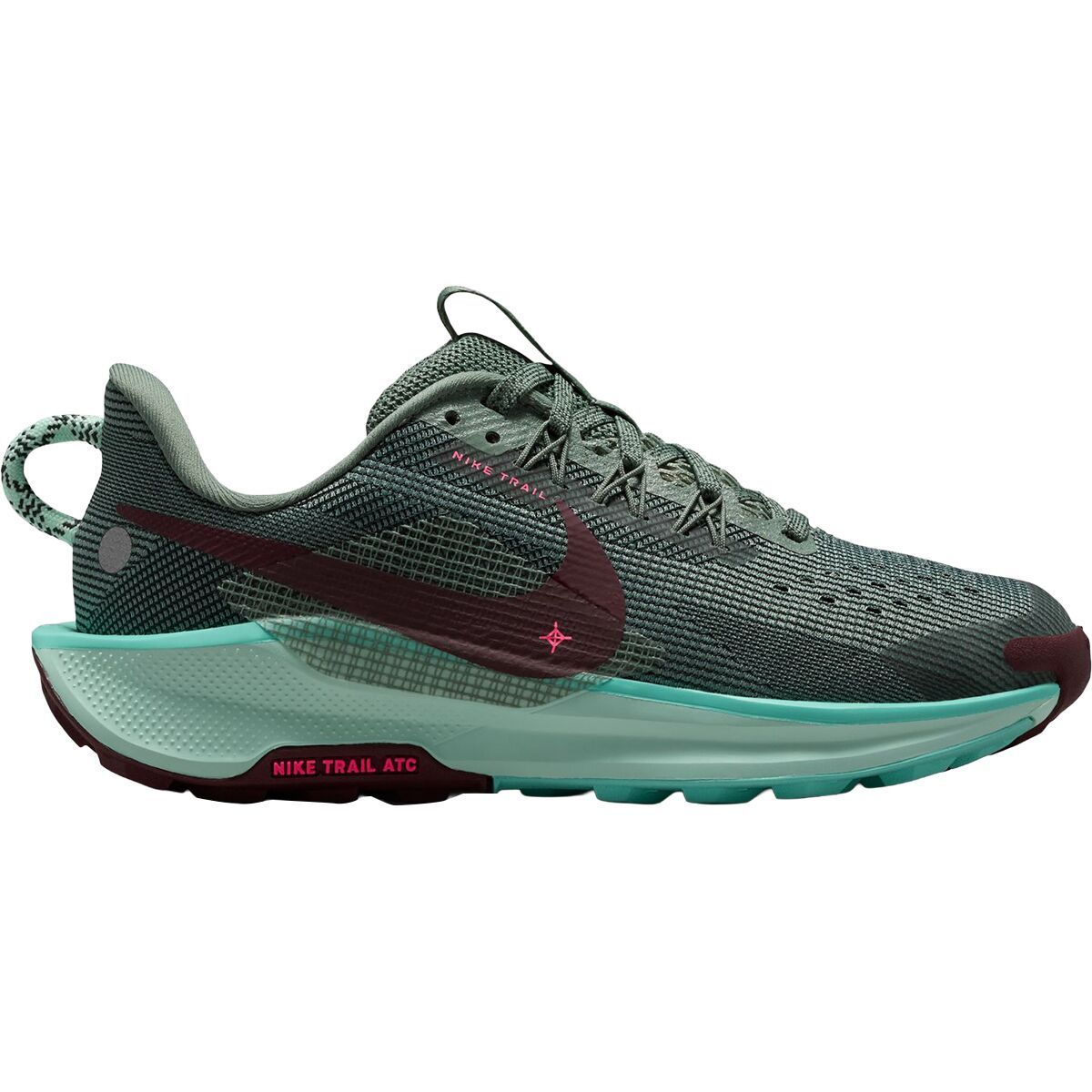
Nike Pegasus Trail 5
Our go-to trail-capable training shoe. React foam + sticky outsole.