Cycling Cadence: The Complete Guide to Optimal Pedaling
Master your RPM for better efficiency, power output, and endurance. Includes optimal ranges, pro cyclist data, drills, and equipment recommendations.
Key Takeaways
80-100
Optimal cadence range (RPM) for most cyclists
70-85
Typical climbing cadence (RPM) on steep grades
4-8 wks
Time to increase comfortable cadence by 10 RPM
TL;DR: The Short Version
Most cyclists should aim for 80-100 RPM on flat terrain. Higher cadence (90+) reduces muscular fatigue but increases heart rate; lower cadence (70-80) is more muscularly demanding but cardiovascularly easier. For climbing, drop to 70-85 RPM depending on gradient. Beginners typically self-select too low (60-70 RPM) and should consciously increase to 80+ RPM for better efficiency.
A cadence sensor ($30-50) is the most cost-effective training tool you can buy. It enables precise cadence training and helps you develop a smooth, efficient pedal stroke over time.
Table of Contents
What Is Cycling Cadence?
Cycling cadence is simply how fast you turn the pedals, measured in revolutions per minute (RPM). One complete rotation of both legs equals one revolution. If you pedal 90 times per minute, your cadence is 90 RPM.
Cadence is one of the two components of cycling power. The formula is straightforward:
Power = Torque x Cadence
Where torque is the force applied to the pedals and cadence is rotational speed (RPM)
This means you can produce the same power output in two ways: push a big gear slowly (high torque, low cadence) or spin a small gear quickly (low torque, high cadence). The question is which approach is more efficient and sustainable for different situations.
Why Cadence Matters
Your choice of cadence affects:
- Muscular fatigue: Lower cadence = higher force per stroke = faster muscle fatigue
- Cardiovascular demand: Higher cadence = more oxygen consumption = higher heart rate
- Efficiency: There's a "sweet spot" where you minimize total energy cost
- Joint stress: Lower cadence increases knee and hip joint loading
- Endurance: Proper cadence helps you ride longer without burning out
Think of cadence like gears on a car. You wouldn't drive up a steep hill in 5th gear (too much engine strain) or cruise the highway in 1st gear (engine screaming inefficiently). Cycling cadence works the same way - matching your "gear" to the terrain and effort level optimizes performance.
Optimal Cadence Ranges
While "optimal cadence" varies by individual, research and decades of coaching experience have established general guidelines. Here are the recommended ranges for different situations:
| Situation | Recommended Cadence | Notes |
|---|---|---|
| General riding (flat terrain) | 80-100 RPM | Sweet spot for most cyclists |
| Time trial / Triathlon | 95-105 RPM | Higher cadence preserves legs for run |
| Climbing (moderate 4-8%) | 75-85 RPM | Balance torque and cardiovascular load |
| Climbing (steep 8%+) | 60-75 RPM | Limited by gearing and gradient |
| Sprinting | 100-130 RPM | Maximum power for short bursts |
| Recovery rides | 85-95 RPM | Easy spinning, minimal resistance |
| Indoor training | 85-100 RPM | Controlled environment allows higher RPM |
| Beginners (initial target) | 75-85 RPM | Build from here to 85-95 over time |
Self-Selected vs Optimal Cadence
Research consistently shows that untrained cyclists self-select a cadence that's too low. Studies find beginners naturally pedal at 60-70 RPM, while trained cyclists gravitate toward 80-95 RPM. The difference isn't random - training develops both the neuromuscular coordination to spin faster and the cardiovascular fitness to sustain it.
Untrained Cyclists
Self-select: 60-70 RPM
Optimal: 75-85 RPM
Should consciously increase cadence by 10-15 RPM
Trained Cyclists
Self-select: 80-95 RPM
Optimal: 85-100 RPM
Self-selected cadence often matches optimal
Key Insight: If you're new to cycling and haven't trained specifically, you're almost certainly pedaling too slowly. Consciously increasing your cadence by 10-15 RPM (and using easier gears to compensate) will feel strange initially but typically improves efficiency within a few weeks.
High vs Low Cadence: Pros and Cons
The cadence debate often pits "grinders" against "spinners." The truth is both approaches have merit depending on context. Here's a detailed breakdown:
High Cadence (90-110 RPM)
Advantages
- + Reduces muscular fatigue and lactate buildup
- + Lower force per pedal stroke (easier on joints)
- + Preserves Type II fast-twitch muscle fibers
- + Better for long endurance events
- + Faster acceleration and response to attacks
- + Ideal for triathletes (preserves legs for run)
Disadvantages
- - Higher oxygen consumption and heart rate
- - Greater cardiovascular demand
- - Can feel unstable/bouncy at very high RPM
- - May be less efficient for some riders
- - Requires developed neuromuscular coordination
Low Cadence (60-80 RPM)
Advantages
- + Lower heart rate at same power output
- + Less oxygen consumption per minute
- + Can feel more stable and controlled
- + Often more efficient for time trials (trained cyclists)
- + Good for strength-focused training
- + Natural choice for steep climbing
Disadvantages
- - Higher muscular fatigue rate
- - Faster glycogen depletion
- - Greater knee and hip joint stress
- - More lactate production per pedal stroke
- - Less responsive to pace changes
The Physiological Trade-Off
At any given power output, you're balancing two energy systems:
Muscular System (Peripheral)
Handles the force production. Higher force per stroke = more muscular fatigue, lactate accumulation, and glycogen depletion. Limited by muscle strength and endurance.
Cardiovascular System (Central)
Delivers oxygen and removes waste. Higher cadence = more oxygen demand, higher heart rate, greater ventilation. Limited by VO2max and cardiac output.
The optimal cadence balances these demands. For most cyclists, the balance point is 80-100 RPM. But individual factors matter: riders with high aerobic capacity and lower raw strength may prefer higher cadence, while powerful riders with lower aerobic ceilings may prefer grinding.
Historical Perspective: Grinders vs Spinners
The cycling world famously debated cadence in the Armstrong-Ullrich era:
Lance Armstrong (Spinner)
Typical cadence: 100-110 RPM
Used high cadence to exploit superior VO2max and reduce muscular strain. Changed how many viewed optimal pedaling.
Jan Ullrich (Grinder)
Typical cadence: 70-80 RPM
Used low cadence to leverage raw power and muscular strength. Equally effective but different physiological approach.
Both riders won Grand Tours. The lesson: there's no single "correct" cadence, but there is an optimal cadence for your physiology and the demands of your event.
Cadence by Terrain: Climbing vs Flats
Flat Terrain Strategy
On flat roads, you have full control over cadence through gear selection. This is where the 80-100 RPM range applies most directly. Key considerations:
- Steady-state riding: Maintain 85-95 RPM for optimal efficiency
- Group rides/peloton: 90-100 RPM allows faster response to surges
- Headwind: Drop 5-10 RPM and use slightly harder gear for stability
- Tailwind: Increase 5-10 RPM and spin easier gear
- Time trials: 95-105 RPM minimizes muscular fatigue over sustained efforts
Climbing Cadence Strategy
Climbing changes the equation. Gravity demands higher power output, and gearing limitations often force lower cadence. Here's how to optimize:
| Gradient | Target Cadence | Strategy |
|---|---|---|
| 2-4% (false flat) | 80-90 RPM | Maintain near-normal cadence with slight gear adjustment |
| 4-6% (moderate) | 75-85 RPM | Find your climbing rhythm, balance torque and cardio |
| 6-8% (challenging) | 70-80 RPM | Accept lower cadence, focus on smooth power delivery |
| 8-12% (steep) | 60-75 RPM | Use lowest available gear, may need to stand periodically |
| 12%+ (very steep) | 50-65 RPM | Survival mode - alternate sitting/standing, manage effort |
Seated vs Standing Climbing
Seated Climbing
Cadence: 70-85 RPM typical
- + More efficient (less oxygen cost)
- + Sustainable for long climbs
- + Better for steady power output
- - Limited by gearing on steep grades
Standing Climbing
Cadence: 55-70 RPM typical
- + Generates more torque
- + Uses different muscle groups
- + Good for steep pitches and accelerations
- - Higher oxygen cost (10-12% more)
Descending Cadence
On descents, cadence often "spins out" as speed exceeds what your gearing can handle. Key points:
- Active pedaling descents: Use biggest gear, maintain 95-110 RPM to add speed
- Recovery descents: Soft-pedal at 60-80 RPM or coast to recover legs
- Technical descents: Keep feet level (no pedaling) for stability and cornering
- Cadence ceiling: Most cyclists can't pedal smoothly above 130-140 RPM
Pro Tip: If you're "spinning out" on descents regularly, consider a larger chainring or you may simply be geared appropriately for climbing-focused terrain. Competitive cyclists often carry 52/36 or 54/40 chainrings specifically to pedal on fast descents.
Pro Cyclist Cadence Data
Professional cyclists provide valuable cadence benchmarks. Here's data from current and recent Grand Tour contenders:
| Rider | Flat Cadence | Climbing Cadence | TT Cadence | Style |
|---|---|---|---|---|
| Tadej Pogacar | 92-95 RPM | 80-90 RPM | 100-105 RPM | High spinner, especially climbing |
| Jonas Vingegaard | 88-93 RPM | 75-85 RPM | 95-102 RPM | Balanced, adapts to terrain |
| Remco Evenepoel | 93-98 RPM | 82-90 RPM | 100-108 RPM | High spinner, exceptional TT |
| Primoz Roglic | 90-95 RPM | 78-88 RPM | 98-105 RPM | Powerful spinner |
| Wout van Aert | 95-100 RPM | 80-92 RPM | 100-110 RPM | Very high RPM, huge power |
| Mathieu van der Poel | 88-95 RPM | 75-85 RPM | 95-100 RPM | Power-focused, lower cadence climber |
| Filippo Ganna | 95-100 RPM | 70-80 RPM | 105-115 RPM | Extreme TT specialist, high RPM |
| Chris Froome (historical) | 90-100 RPM | 85-100 RPM | 100-105 RPM | Famous high-cadence climbing style |
Key Observations from Pro Data
- Flat terrain: Most pros maintain 88-100 RPM, clustering around 90-95 RPM
- Climbing: Wide variation (75-100 RPM) based on individual physiology and gradient
- Time trials: Universally higher (95-115 RPM) to minimize muscular fatigue
- Sprints: Peak cadences of 120-140 RPM during final kicks
- No single formula: Champions use both high and moderate cadence strategies
Modern Trend: Professional cycling has shifted toward slightly higher cadences since the Armstrong era. Better gearing options (compact and sub-compact cranksets), power meter feedback, and sports science have all contributed. Most coaches now recommend 85-100 RPM as a target range for developing cyclists.
Historical Pro Cadence Comparison
| Era/Rider | Typical Cadence | Context |
|---|---|---|
| Eddy Merckx (1970s) | 85-95 RPM | High for the era, 53x14 was standard big gear |
| Bernard Hinault (1980s) | 80-90 RPM | Powerful style, moderate cadence |
| Miguel Indurain (1990s) | 75-85 RPM | Famous diesel engine, low cadence TTs |
| Lance Armstrong (2000s) | 100-110 RPM | Revolutionized high-cadence approach |
| Jan Ullrich (2000s) | 70-80 RPM | Classic power grinder |
| Modern Era (2020s) | 88-100 RPM | Trend toward higher cadence overall |
Cadence Drills and Workouts
Specific cadence drills develop pedaling efficiency and expand your comfortable RPM range. Incorporate these into your weekly training:
1. Spin-Ups
Build neuromuscular coordination for high-cadence pedaling.
How to Execute
- 1. Start at comfortable cadence (80-85 RPM)
- 2. Gradually increase to 110-120 RPM over 30 seconds
- 3. Maintain highest smooth cadence for 15-30 seconds
- 4. Recover at normal cadence for 2-3 minutes
- 5. Repeat 6-10 times
Key Points
- - Stay seated throughout
- - Stop increasing if you bounce in saddle
- - Use easy gear, focus on smooth circles
- - Weekly: 1-2 sessions
2. Single-Leg Drills
Eliminate dead spots and develop smooth, circular pedal stroke.
How to Execute
- 1. Unclip one foot, rest on trainer frame
- 2. Pedal with single leg for 30-60 seconds
- 3. Focus on smooth circles, no dead spots
- 4. Switch legs, repeat
- 5. Perform 4-6 sets per leg
Key Points
- - Best done on indoor trainer
- - Target 75-85 RPM per leg
- - Clunking at top = dead spot
- - Weekly: 1-2 sessions
3. High-Cadence Sustained Intervals
Build cardiovascular adaptation to higher pedaling speeds.
How to Execute
- 1. Warm up 10-15 minutes
- 2. Ride at 100-110 RPM for 3-5 minutes
- 3. Power should be Zone 2-3 (endurance)
- 4. Recover at normal cadence for 3 minutes
- 5. Repeat 4-6 times
Key Points
- - Use gear that allows target cadence
- - Heart rate will be elevated
- - Stay smooth, no bouncing
- - Weekly: 1 session
4. Low-Cadence Force Reps
Build leg strength and torque production capability.
How to Execute
- 1. Find moderate hill (4-8% grade)
- 2. Use big gear, target 50-60 RPM
- 3. Pedal smoothly for 2-4 minutes
- 4. Power should be Zone 3-4
- 5. Recover 3-5 minutes, repeat 3-6 times
Key Points
- - Stay seated throughout
- - Avoid knee pain - stop if discomfort
- - Focus on full pedal circle
- - Weekly: 1 session (build phase only)
5. Cadence Pyramids
Develop ability to pedal efficiently across full RPM range.
How to Execute
- 1. Start at 70 RPM for 2 minutes
- 2. Increase by 10 RPM every 2 minutes
- 3. Continue to 110 RPM (or max smooth)
- 4. Descend back down the pyramid
- 5. Maintain constant power throughout
Key Points
- - Adjust gearing to hold power constant
- - Total duration: 16-20 minutes
- - Note your comfort zone
- - Weekly: 1 session
Sample Weekly Cadence Work Schedule
- Monday: Rest or easy spin
- Tuesday: Include spin-ups during interval session
- Wednesday: Single-leg drills during recovery ride
- Thursday: Cadence pyramid or high-cadence intervals
- Friday: Rest or easy spin
- Saturday: Long ride - practice maintaining target cadence
- Sunday: Low-cadence force reps (during build phase) or recovery ride
How to Increase Your Cadence
If you've identified that your natural cadence is too low (under 80 RPM), here's a systematic approach to increasing it:
8-Week Cadence Development Program
| Week | Target Cadence | Focus | Key Workouts |
|---|---|---|---|
| 1-2 | +5 RPM from baseline | Awareness | Monitor current cadence, single-leg drills |
| 3-4 | +7 RPM from baseline | Coordination | Add spin-ups, cadence pyramids |
| 5-6 | +10 RPM from baseline | Endurance | Sustained high-cadence intervals |
| 7-8 | +10-12 RPM from baseline | Integration | Apply new cadence to all rides |
Step-by-Step Process
Establish Your Baseline
Use a cadence sensor to record your natural cadence during 3-5 easy rides. Calculate your average. This is your starting point.
Set Realistic Goals
Aim for +5-10 RPM over 4-8 weeks. If your baseline is 70 RPM, target 80 RPM. Trying to jump too quickly leads to bouncing and inefficiency.
Use Easier Gears
To increase cadence at the same speed, you must use an easier gear. Drop one gear and let your legs spin faster. Power output can stay the same.
Practice Consciously
During easy rides, consciously maintain your target cadence. Check your sensor regularly. It feels unnatural at first - that's normal.
Add Specific Drills
Include spin-ups, single-leg drills, and high-cadence intervals 2-3 times per week. These build the neuromuscular patterns for faster pedaling.
Be Patient
Cadence adaptation takes time. Your cardiovascular system needs to adapt to higher leg turnover. Give it 4-8 weeks before the new cadence feels natural.
Common Mistake: Many cyclists try to increase cadence while maintaining the same gear. This dramatically increases power output and leads to fatigue. Always shift to an easier gear when practicing higher cadence - the goal is to spin faster at the same power, not to generate more power.
Troubleshooting Cadence Increases
| Problem | Cause | Solution |
|---|---|---|
| Bouncing in saddle | RPM too high for current skill | Lower target by 5-10 RPM, build gradually |
| Heart rate too high | Normal cardiovascular adaptation | Accept higher HR initially, it will normalize |
| Legs feel "twitchy" | Neuromuscular fatigue | Reduce cadence work frequency, allow recovery |
| Can't maintain speed | Dropped too many gears | Accept slightly lower speed during adaptation |
| Dead spots in pedal stroke | Poor pedaling efficiency | More single-leg drills, focus on pulling through |
Cadence Sensors and Equipment
A cadence sensor is essential for structured cadence training. Modern sensors are inexpensive, accurate, and easy to install. Here are our top recommendations:

Garmin Cadence Sensor 2
The Garmin Cadence Sensor 2 is the go-to choice for most cyclists. Compact design mounts on crank arm with included bands. Dual ANT+ and Bluetooth ensures compatibility with virtually all bike computers and smartphone apps. Battery lasts approximately 1 year with daily use.
- ✓ ANT+ and Bluetooth dual connectivity
- ✓ Tool-free installation on crank arm
- ✓ 12-month battery life (CR2032)
- ✓ IPX7 waterproof
- ✓ Compatible with all major apps
Wahoo RPM Cadence Sensor
The Wahoo RPM is ultra-lightweight and integrates seamlessly with Wahoo's ecosystem. Works equally well with Garmin, Strava, and all other major platforms. Simple mounting on shoe or crank arm. Extremely reliable.
- ✓ Dual Bluetooth and ANT+
- ✓ Mounts on shoe or crank arm
- ✓ 12-month battery life
- ✓ Wireless firmware updates
- ✓ Works with all major apps
Garmin Speed and Cadence Sensor Bundle
Get both sensors for complete cycling data. The speed sensor mounts on the hub and provides accurate speed data independent of GPS. Perfect for indoor training or GPS-limited areas. Best value if you need both sensors.
- ✓ Includes both speed and cadence sensors
- ✓ Dual ANT+ and Bluetooth
- ✓ Hub-based speed (more accurate than GPS)
- ✓ Great for indoor trainers
- ✓ Save $10 vs buying separately
Bike Computers with Cadence Display
To view cadence data in real-time, you'll need a bike computer or smartphone mount. Here are our top picks:
Wahoo ELEMNT BOLT V2
$299.99
Premium GPS computer with excellent cadence display. Structured workout support, navigation, and seamless sensor pairing.
Garmin Edge 540
$349.99
Feature-rich with training load, ClimbPro, and customizable cadence displays. Great Garmin ecosystem integration.
Garmin Edge 130 Plus
$199.99
Compact and affordable. Perfect for cyclists who want basic cadence/speed display without the complexity.
Wahoo ELEMNT ROAM V2
$399.99
Large color display, best-in-class navigation, and easy sensor setup. Premium option for serious cyclists.
Smartphone Alternative: If you don't want a dedicated bike computer, apps like Strava, Wahoo Fitness, and TrainingPeaks can display cadence data from Bluetooth sensors. Just mount your phone on your handlebars with a secure mount.
The Science of Cycling Cadence
Energy Cost and Efficiency
Research on cycling cadence has identified several key physiological principles:
Key Research Findings
- Energetically Optimal Cadence (EOC): Studies show the most metabolically efficient cadence is typically 50-80 RPM for untrained cyclists. However, this increases to 80-100 RPM with training (Coast & Welch, 1985; Lucia et al., 2004).
- Self-Selected vs Optimal: Trained cyclists self-select cadences within 5% of their mechanically optimal cadence, while untrained cyclists self-select 10-20% below optimal (Hansen et al., 2002).
- Muscle Fiber Recruitment: Lower cadences recruit more Type II fibers, which fatigue faster. Higher cadences shift work to Type I fibers and the cardiovascular system (Ahlquist et al., 1992).
- Lactate Production: Blood lactate concentration is significantly higher at 50 RPM compared to 100 RPM at the same power output (Foss & Hallen, 2004).
The Power-Cadence Relationship
Understanding the physics of power production helps explain cadence optimization:
P = T x ω
Power (watts) = Torque (Nm) x Angular Velocity (rad/s)
Since ω = 2π x RPM/60, we can also write: P = T x (2π x RPM/60)
This means at 200 watts:
- At 60 RPM: Torque = 31.8 Nm per stroke
- At 90 RPM: Torque = 21.2 Nm per stroke
- At 120 RPM: Torque = 15.9 Nm per stroke
Higher cadence = lower torque requirement = less muscular strain per revolution.
Muscle Physiology and Cadence
Low Cadence Effects
- Higher peak muscle tension
- More Type II fiber recruitment
- Faster glycogen depletion
- Greater lactate accumulation
- Increased joint compression forces
High Cadence Effects
- Lower peak muscle tension
- More Type I fiber reliance
- Better glycogen preservation
- Reduced lactate per stroke
- Higher oxygen consumption
Training Adaptations
Cycling training shifts the optimal cadence higher through several mechanisms:
- Improved cardiovascular capacity: Higher VO2max supports the oxygen demands of faster pedaling
- Neuromuscular efficiency: Training improves coordination and reduces wasted energy at high RPM
- Muscle fiber adaptation: Endurance training increases Type I fiber efficiency
- Pedaling economy: Trained cyclists develop smoother, more circular pedal strokes
Research Insight: A landmark study by Lucia et al. (2001) found that elite cyclists' freely chosen cadence during competition was significantly higher (89-95 RPM) than their most economical cadence (70-80 RPM). This suggests elite athletes prioritize reducing muscular fatigue over pure metabolic efficiency, especially in multi-stage racing.
Common Cadence Mistakes to Avoid
Mistake 1: Grinding in Too High a Gear
Pedaling at 50-60 RPM because you don't want to "spin." This causes excessive muscular fatigue, rapid glycogen depletion, and increased knee stress.
Fix: Shift to an easier gear and increase RPM to 80+. Same speed, less fatigue.
Mistake 2: Bouncing at High Cadence
Trying to spin 120+ RPM without the neuromuscular development. This wastes energy and can cause saddle sores from excessive movement.
Fix: Stay at the highest RPM you can maintain smoothly. Build gradually with drills.
Mistake 3: Same Cadence for All Terrain
Trying to maintain 95 RPM on a 10% climb. This often isn't possible even with proper gearing and forces unnecessarily high power output.
Fix: Accept that climbing cadence will be lower. Match cadence to gradient as outlined above.
Mistake 4: Ignoring Individual Physiology
Forcing yourself to match pro cadence data when your body prefers different RPM. Individual optimal cadence varies by 15-20 RPM based on muscle fiber composition and training history.
Fix: Use guidelines as starting points, then experiment to find your personal optimal range.
Mistake 5: Obsessing Over Exact Numbers
Stressing about maintaining exactly 90 RPM at all times. Real-world riding involves constant cadence variation based on terrain, wind, and group dynamics.
Fix: Think in ranges (85-95 RPM) rather than single targets. Let cadence vary naturally within your optimal zone.
Mistake 6: Not Using a Cadence Sensor
Guessing your cadence by feel. Perception is notoriously inaccurate, especially when fatigued. Most cyclists overestimate their cadence by 5-10 RPM.
Fix: Invest $40 in a cadence sensor. It's the most cost-effective training tool available.
Frequently Asked Questions
What is the optimal cycling cadence?
The optimal cycling cadence for most recreational and competitive cyclists is 80-100 RPM. However, this varies based on terrain, fitness level, and riding style. Time trialists often pedal 95-105 RPM, climbers 70-90 RPM on steep gradients, and sprinters can exceed 120 RPM. The key is finding a cadence that minimizes fatigue while maximizing sustainable power output.
Is a higher cadence better for cycling?
A higher cadence (90-100+ RPM) reduces muscular fatigue by shifting more load to the cardiovascular system. This is beneficial for endurance events and preserving leg freshness. However, higher cadence increases heart rate and oxygen consumption. The best cadence balances muscular and cardiovascular demands for your specific event and fitness level.
What cadence do professional cyclists use?
Professional cyclists typically maintain 90-100 RPM on flat terrain. Tadej Pogacar averages 92-95 RPM, Jonas Vingegaard 88-93 RPM, and Wout van Aert 95-100 RPM. During climbing, pros often drop to 70-85 RPM on steep gradients. Lance Armstrong was famous for his high 100-110 RPM spinning style, while Jan Ullrich ground bigger gears at 70-80 RPM.
How do I increase my cycling cadence?
Increase cycling cadence gradually through specific drills: single-leg drills for pedal smoothness, spin-ups to build neuromuscular coordination, and sustained high-cadence intervals (100-110 RPM for 3-5 minutes). Aim to increase your comfortable cadence by 5-10 RPM over 4-8 weeks. Use a cadence sensor to track progress and ensure you're training in the target range.
What cadence should I use when climbing?
When climbing, optimal cadence typically drops to 70-85 RPM on moderate grades (4-8%) and 60-75 RPM on steep climbs (8%+). This lower cadence allows you to produce more torque per pedal stroke. However, some climbers like Egan Bernal maintain 80-90 RPM by using lighter gears. The key is matching cadence to gradient and your climbing strengths.
Does cadence affect power output?
Cadence significantly affects power output and efficiency. Power equals torque multiplied by cadence (P = T x RPM). At the same power, higher cadence means lower torque per pedal stroke (easier on muscles) while lower cadence requires higher torque (harder on muscles, easier on cardio). Studies show most cyclists are most efficient between 80-90 RPM, though trained cyclists often perform best at 90-100 RPM.
Why do my legs burn at low cadence?
Low cadence (under 70 RPM) requires high torque per pedal stroke, which rapidly fatigues Type II fast-twitch muscle fibers and causes lactate accumulation. This creates the burning sensation. Higher cadence distributes the work across more pedal strokes, reducing peak muscle tension and shifting more demand to the cardiovascular system. If your legs burn frequently, try increasing cadence by 10-15 RPM.
What is cadence self-selection?
Cadence self-selection refers to the RPM cyclists naturally choose without conscious effort. Research shows most untrained cyclists self-select 60-70 RPM, while trained cyclists naturally pedal at 80-95 RPM. Your self-selected cadence is influenced by muscle fiber composition, training history, and cardiovascular fitness. Training can shift your preferred cadence higher over time.
Do I need a cadence sensor?
A cadence sensor is highly recommended for serious training. It provides real-time feedback to maintain target cadence zones, track improvements over time, and execute cadence-specific workouts. Modern sensors like the Garmin Cadence Sensor 2 or Wahoo RPM are affordable ($30-50), easy to install, and connect to most bike computers and smartphones via Bluetooth and ANT+.
How does cadence affect knee health?
Higher cadence (85-95+ RPM) is generally easier on the knees because it reduces the force applied per pedal stroke. Low cadence grinding (under 70 RPM) significantly increases knee joint stress and can contribute to patellofemoral pain, IT band issues, and general knee discomfort. If you experience knee pain, try increasing cadence by 10-15 RPM and using easier gears.
What cadence should beginners use?
Beginners should aim for 75-85 RPM initially, which is higher than the natural 60-70 RPM most untrained cyclists self-select. This range balances efficiency with coordination development. Start by simply counting pedal strokes for 30 seconds and doubling (target: 37-42 strokes). Gradually increase to 85-95 RPM over several months as your technique improves.
Does cadence change with fatigue?
Yes, cadence typically decreases as you fatigue. Research shows cyclists drop 5-10 RPM over extended efforts as muscle glycogen depletes and neuromuscular coordination declines. Monitoring cadence helps identify fatigue onset. If your cadence drops significantly, you may be riding above sustainable intensity or need to improve endurance. Trained cyclists maintain cadence better than beginners.
Power Up Your Cycling
Use our free calculators to optimize performance:
Related Articles
Best Power Meters 2026
Compare pedal, crank, and spider power meters for training with power.
Bike Fit Complete Guide
Optimize your position for comfort, power, and injury prevention.
Cycling Training Plan Generator
Create a personalized cycling training plan for your goals.
Indoor Cycling Complete Guide
Set up your indoor training for maximum effectiveness.
Affiliate Disclosure: RunBikeCalc earns commissions from qualifying Backcountry purchases. This doesn't affect our recommendations - we only recommend products we'd use ourselves. First-time Backcountry customers get 15% off their entire order. Prices and availability subject to change.
Featured at Backcountry — 15% off first order
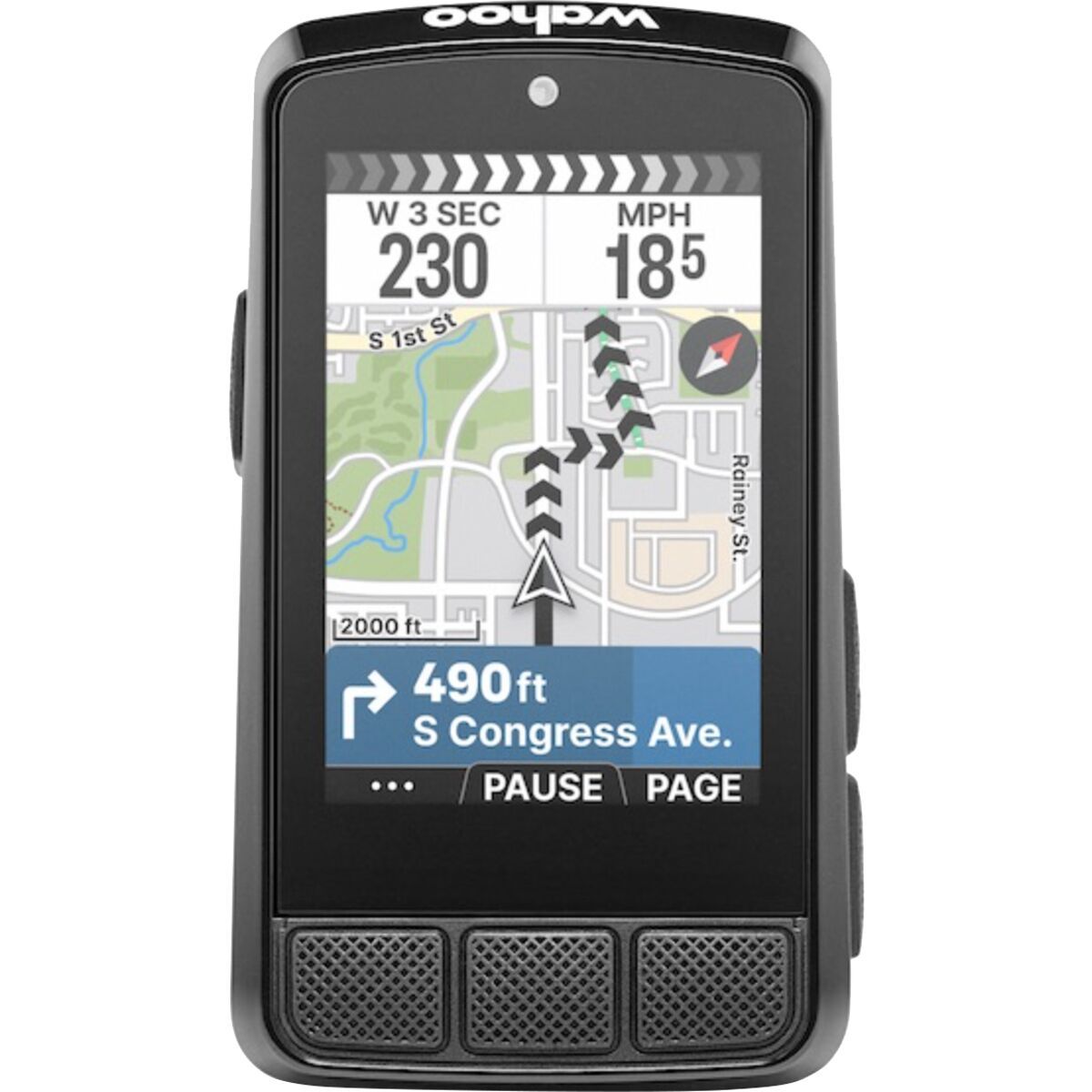
Wahoo ELEMNT BOLT 3
Track your rides with Wahoo's compact GPS — the bike computer we use daily.