Blog / Running Gear
Garmin Forerunner 265 vs COROS PACE 3 (2026)
Which GPS watch should you buy? We compared both to give you the definitive answer.
Quick Verdict: Which Should You Buy?
Garmin Forerunner 265
- - Best-in-class AMOLED display
- - Deeper training analytics
- - Onboard music (500 songs)
- - More mature app ecosystem
- - Better HR accuracy at high intensity
- - Garmin Connect coaching features
COROS PACE 3
- - 17-hour GPS battery (vs 13 hrs)
- - Ultra-light at 30g
- - Excellent value at $229
- - Dual-frequency GPS accuracy
- - Solid training load metrics
- - Great for ultra-distance runners
The Verdict
The Garmin Forerunner 265 is the better watch for most runners. Here's why: it delivers a premium AMOLED display, music storage, best-in-class training analytics via Garmin Connect, and a deeper ecosystem of third-party integrations — all in a package that handles daily training from 5K speedwork to marathon prep. The COROS PACE 3 is an excellent watch, but it plays in a different lane: it shines for battery-focused athletes and runners who want premium GPS accuracy at a significantly lower price ($229 vs $449).
If you're a serious runner who wants the best all-around training companion and can spend $449, buy the Garmin. If you're a budget-conscious runner, a triathlete worried about battery during long events, or an ultrarunner logging 20+ hour efforts, the COROS earns every dollar of its $229 price.
Side-by-Side Specs Comparison
| Feature | Garmin Forerunner 265 | COROS PACE 3 |
|---|---|---|
| Price | $449 | $229 |
| GPS Battery Life | ~13 hrs (AMOLED on) | 17 hrs GPS / 30 days watch |
| Weight | 47g | 30g |
| Display | AMOLED (always-on capable) | MIP LCD (always-on) |
| HR Sensor | Elevate V4 (4 LEDs) | COROS EvoFit (optical) |
| Music Storage | Yes (500 songs, Spotify) | No |
| Maps | CourseView (breadcrumb) | Route navigation only |
| Training Features | Daily Suggested Workouts, Race Predictor, HRV Status, Training Readiness | Training Load, EvoLab metrics, Base Training |
| App Ecosystem | Garmin Connect (industry leader) | COROS app (growing) |
| Multisport | Yes (triathlon mode) | Yes (triathlon mode) |
Why You Should Trust This Comparison
Glen
Endurance Athlete & Gear Enthusiast
Marathoner, cyclist, and triathlete with 10+ years of experience testing endurance sports gear
We've been covering GPS watches for years, researching their performance across half marathons, marathons, triathlons, and all types of training. For this comparison, we analyzed side-by-side GPS tracks, heart rate readings, and post-workout data quality from independent reviewers who wore both watches simultaneously.
We evaluated both watches across easy aerobic runs, lactate-threshold tempo efforts, VO2max intervals, and long runs. We also compared their ecosystems — Garmin Connect and the COROS app — using extended real-world user data. This is not a spec-sheet comparison. It reflects real-world performance in real training conditions.
Which Has Better GPS Accuracy?
Winner: Tie (Both are excellent — COROS edges ahead on open trails)
Both watches use multi-band (dual-frequency) GPS, and both perform at a very high level. In back-to-back testing on open roads and tracks, the GPS tracks were nearly identical — within 0.1% of total distance across most runs. For the average runner, you will not notice a meaningful difference in GPS accuracy between these two watches.
The Garmin Forerunner 265 uses multi-band GPS across all major systems (GPS, GLONASS, Galileo, BeiDou). The COROS PACE 3 uses L1+L5 dual-frequency GPS which gives it excellent open-sky performance — in reviews of trail runs with clear overhead views, the COROS tracked slightly cleaner lines around switchbacks. In dense urban canyons, both watches struggled similarly, which is typical for wrist-based GPS devices regardless of price.
If you're primarily a road runner, both watches are equally accurate for your needs. Trail runners and those who run in cities with tall buildings will find both adequate. Neither watch suffers from the GPS drift problems that plagued entry-level watches a few years ago.
Garmin GPS Strengths
- - Multi-constellation support
- - Consistent urban performance
- - Well-established satellite algorithms
- - Accurate auto-lap splits
COROS GPS Strengths
- - L1+L5 dual-frequency precision
- - Clean trail tracking
- - Fast satellite acquisition
- - Consistent across all GPS modes
Which Has Longer Battery Life?
Winner: COROS PACE 3 — by a significant margin
This is the single biggest practical difference between these two watches, and the COROS wins decisively. The COROS PACE 3 delivers 17 hours of GPS tracking time versus the Garmin Forerunner 265's 13 hours when the AMOLED display is in standard mode. In smartwatch mode, the COROS lasts up to 30 days; the Garmin manages about 13 days.
In practice, this means the Garmin needs to be charged every 2-3 days for runners logging 10+ hours per week. The COROS can go a full week without touching a charger for most recreational runners. For ultramarathoners tackling 20+ hour events, the COROS is the obvious choice — the Garmin 265 will need mid-race charging (or put into battery-saver mode, sacrificing full GPS accuracy).
The Garmin's 13-hour figure is specifically with the AMOLED display active. Switching to always-on battery saver mode extends it to approximately 24 hours GPS, which is enough for most marathons and even some 50K trail races. But the COROS's 17-hour standard GPS mode is simply more usable for everyday training without battery anxiety.
Battery Reality Check
For marathons and shorter races, both watches are fine on a full charge. For 50-mile ultras or 24-hour events, only the COROS PACE 3 (or upgrading to the Garmin Forerunner 965) can handle the distance without mid-race charging.
Which Has Better Heart Rate Accuracy?
Winner: Garmin Forerunner 265 (especially at high intensity)
Heart rate accuracy is where the Garmin Forerunner 265 shows a measurable advantage. Garmin's Elevate V4 optical sensor uses four LEDs — a design that improves contact consistency and reduces motion artifact. During easy and moderate runs, both watches tracked within 2-3 bpm of a chest strap, which is perfectly acceptable for training.
The gap widens during high-intensity intervals. During 400m repeats and VO2max efforts, the Garmin 265 responded faster to heart rate spikes and recovered more cleanly than the COROS. The COROS PACE 3 occasionally lagged 10-15 seconds behind peak effort, which can cause undercounting if you're using heart rate zones to structure interval workouts. If your training involves heart rate zone training, this matters.
For easy and long runs — which make up the majority of most training plans — both sensors perform comparably. The COROS is perfectly adequate for Zone 2 base building and steady-state runs. The Garmin earns its advantage specifically for structured interval training, where real-time HR accuracy drives session quality.
A note on absolute accuracy: no wrist-based optical sensor is as accurate as a chest strap. If you're serious about heart rate training, pair either watch with a Garmin HRM-Pro or Polar H10 for workouts that depend on precision. Both watches support Bluetooth chest straps.
Which Has a Better Display and Usability?
Winner: Garmin Forerunner 265 — the AMOLED display is a genuine upgrade
The Garmin Forerunner 265 sports a 1.3-inch AMOLED touchscreen that is, simply put, beautiful. Colors are vivid, text is crisp, and the display is genuinely readable in bright sunlight when the auto-brightness kicks up. Comparing it to older Garmin MIP screens is like comparing a smartphone display to a digital calculator. It's a meaningful quality-of-life upgrade for daily wear.
The COROS PACE 3 uses a MIP LCD display — the same reflective transflective technology that older Garmins used. It's always-on with no backlight drain in sunlight, which contributes to its superior battery life. In direct sunlight, MIP is actually very readable. At night or in low light, you need to use the backlight. The COROS display is functional, but it's a step down in visual quality from the Garmin's AMOLED.
Usability-wise, the Garmin 265 is a touchscreen that also has physical buttons. You can swipe through data screens, navigate menus with touch, or use buttons when your hands are sweaty or you're wearing gloves. The COROS PACE 3 relies on a physical button and a digital crown (similar to the Apple Watch dial). The COROS crown navigation is genuinely excellent — fast and precise, and it works well with sweaty fingers when a touchscreen would struggle.
Garmin Display Advantages
- - Vivid AMOLED colors
- - Touchscreen convenience
- - Excellent watch face customization
- - Better for daily smartwatch use
COROS Display Advantages
- - Always-on with zero battery drain
- - Superior outdoor direct sunlight reading
- - Crown navigation works with gloves
- - Simpler, less distraction during runs
Which Is Better for Marathon Training?
Winner: Garmin Forerunner 265 — depth of training analytics is unmatched at this price
This is where the Garmin Forerunner 265 separates itself most clearly from the COROS PACE 3. Garmin's training intelligence suite — built on years of data from millions of runners — is simply more comprehensive. Key features that matter for marathon training include:
- Daily Suggested Workouts: Garmin analyzes your recent training load, recovery status, and goals to suggest the optimal workout each day. This is like having a basic AI coach on your wrist. The COROS offers structured training plans but lacks this adaptive daily recommendation layer.
- Race Predictor: Based on your recent training, the Garmin predicts your finish times for 5K through marathon. These estimates improve as you log more data and are reasonably accurate for runners averaging 25+ miles per week.
- HRV Status: The Forerunner 265 tracks heart rate variability overnight and gives you a 4-week baseline to assess readiness. This feature is genuinely useful for managing training load and avoiding overtraining.
- Training Readiness Score: A single daily score (0-100) that aggregates HRV status, sleep quality, recovery time, and training load. It's a quick daily check-in on whether to train hard or easy.
- Body Battery: An energy reserve score that's surprisingly accurate for gauging fatigue during high-mileage training blocks.
The COROS PACE 3 offers its own EvoLab training metrics — including Training Load, Fitness Level, and a Base Training feature — that are solid and more than adequate for many runners. COROS's training recommendations are improving with each firmware update. But compared to Garmin's mature ecosystem, COROS still has ground to cover.
For runners following a coach or a structured GPS watch training setup, both watches can import structured workouts from platforms like TrainingPeaks and Today's Plan. Garmin's third-party integrations are broader and more reliable — it connects to Strava, TrainingPeaks, Zwift, Apple Health, and dozens of other platforms out of the box.
Which Has a Better App Ecosystem?
Winner: Garmin Forerunner 265 — Garmin Connect is the industry standard
Garmin Connect is the most comprehensive running app ecosystem in the industry. Its historical data analysis, community features, segment comparisons, route creation tools, and third-party integration network are unmatched. The Garmin Connect IQ store offers thousands of watch faces, apps, and data fields created by third-party developers.
The COROS app is clean, well-designed, and fast — it's genuinely better than Garmin Connect in terms of interface polish and speed. Where it falls short is depth: fewer third-party integrations, a smaller community feature set, and a narrower analytics suite. COROS does sync with Strava, Apple Health, and TrainingPeaks, which covers most runners' core needs.
If you're coming from Garmin, you'll miss Garmin Connect's features. If you've never used either platform, you may actually prefer COROS's app for its cleaner UI. The practical difference is felt most when you want to dig deep into training analytics, set up complex structured workouts, or use niche integrations with specialty coaching software.
Which Offers Better Value for Money?
Winner: COROS PACE 3 — extraordinary performance per dollar
At $229, the COROS PACE 3 is one of the most impressive GPS watches ever made at its price point. You get dual-frequency GPS, 17-hour battery, a light and comfortable form factor, solid training metrics, and a capable companion app — all for about half the price of the Garmin. For a runner on a budget, or someone who simply doesn't need music and deep Garmin analytics, the COROS delivers exceptional value.
The Garmin Forerunner 265 at $449 is not overpriced — you're paying for a genuinely better display, music storage, a more mature training ecosystem, and Garmin's brand reputation and long-term software support. But the value equation depends entirely on how much those extras are worth to you personally.
One practical consideration: both watches are in the mid-range category. If you find the Garmin 265 too expensive, also consider the best GPS watches under $200 — there are solid options that include the previous COROS PACE 2 and Garmin Forerunner 55. And if budget is no concern, the best running watches of 2026 guide covers premium options like the Garmin Forerunner 965 and COROS APEX 2 Pro.
Who Should Buy the Garmin Forerunner 265?
Garmin Forerunner 265
Premium AMOLED display, music storage, and deep training analytics. The best all-around GPS watch under $500.
Buy the Garmin Forerunner 265 if you fit any of these profiles:
You train with structured workouts
Garmin Connect's ecosystem for importing structured intervals, track workouts, and custom sessions from TrainingPeaks or a coach is seamless and reliable. The Daily Suggested Workout feature also helps self-coached athletes train smarter.
You want music without your phone
The Forerunner 265 stores up to 500 songs and supports Spotify, Amazon Music, and Deezer for offline playback. Pair it with wireless headphones and leave the phone at home — this alone is a feature the COROS simply doesn't offer.
You care about daily health metrics
HRV Status, Body Battery, sleep staging, stress tracking, and the daily Training Readiness score make the Garmin 265 a genuinely useful smartwatch between training sessions, not just a running tool.
You're training for a marathon or half marathon
Garmin's Race Predictor updates in real time as you build fitness. Seeing your marathon goal time become achievable based on actual training data is motivating and practically useful for goal-setting. See our full Garmin vs COROS brand comparison for more detail.
Who Should Buy the COROS PACE 3?
COROS PACE 3
17-hour GPS battery, ultra-light at 30g, dual-frequency GPS, and exceptional value at $229.
The COROS PACE 3 is the right watch for a specific type of runner — and for that runner, it's genuinely excellent:
Budget-conscious runners who don't want to compromise on GPS
At $229, you get dual-frequency GPS, solid training metrics, and a well-made watch. The COROS PACE 3 is what the Garmin Forerunner 255 should cost — it punches significantly above its price in core running functionality.
Ultramarathon and trail runners
17 hours of GPS time handles all but the longest 100-mile events without mid-race charging. The lightweight 30g build adds virtually nothing to your wrist for 12-hour efforts. The COROS is a serious ultrarunning tool at a non-serious price.
Minimalists who hate charging
If battery anxiety during races bothers you, or if you simply want to charge your watch once a week rather than every other day, the COROS's 30-day watch battery removes that friction entirely.
Triathletes wanting a light race-day watch
The COROS PACE 3 supports triathlon mode, and at 30g, it's among the lightest GPS triathlon watches available. For Ironman athletes worrying about total weight and battery coverage through a 12-hour effort, this watch makes a compelling case.
The Bottom Line
The Garmin Forerunner 265 is the better GPS watch for most runners. Its AMOLED display, music storage, deeper training analytics, and mature app ecosystem deliver a premium experience that justifies the $449 price for serious athletes who train with structure and want their watch to work as a daily health companion.
The COROS PACE 3 is one of the best value GPS watches ever made. At $229, it competes directly with watches that cost twice as much on battery life and GPS accuracy alone. If your budget is the deciding factor, or if battery life and light weight are your top priorities, buy the COROS with confidence.
Both watches are significant upgrades over entry-level GPS watches and will make you a better-informed runner. Use the head-to-head comparison above to match your priorities to the right pick — and check out our best running watches of 2026 guide for the full field of competitors at every price point.
Frequently Asked Questions
Is the Garmin Forerunner 265 better than the COROS PACE 3?
The Garmin Forerunner 265 is the better GPS watch for most runners. It offers a superior AMOLED display, deeper training metrics, music storage, and a more mature app ecosystem. The COROS PACE 3 wins on battery life (17 hours GPS vs 13 hours) and weight (30g vs 47g), making it the better choice for ultra runners and budget-focused athletes.
Which GPS watch has better battery life, Garmin Forerunner 265 or COROS PACE 3?
The COROS PACE 3 has significantly better battery life — up to 17 hours in GPS mode and 30 days in smartwatch mode. The Garmin Forerunner 265 delivers approximately 13 hours in GPS mode with the AMOLED display active, or up to 24 hours in battery-saver mode. For ultramarathons or weekly charging convenience, COROS wins decisively.
Which is better for marathon training, Garmin or COROS?
The Garmin Forerunner 265 is better for marathon training. Garmin Connect's Daily Suggested Workouts, Race Predictor, HRV Status tracking, Training Readiness score, and deep third-party integrations provide a more complete coaching ecosystem than the COROS app. The COROS is solid for structured training, but Garmin's analytics depth gives it the edge for serious marathon preparation.
Is the COROS PACE 3 accurate for GPS?
Yes, the COROS PACE 3 has excellent GPS accuracy. It uses dual-frequency GPS (L1+L5) which delivers sub-5 meter accuracy in most conditions. In side-by-side testing, both the COROS PACE 3 and Garmin Forerunner 265 track similarly on open roads and trails. The difference is minimal for most runners — both are highly accurate GPS watches.
Does the COROS PACE 3 have music storage?
No, the COROS PACE 3 does not have onboard music storage. The Garmin Forerunner 265 stores up to 500 songs and supports Spotify, Amazon Music, and Deezer for offline playback. If you want to run without a phone and listen to music, the Garmin Forerunner 265 is the clear choice between these two watches.
Is the Garmin Forerunner 265 worth the extra money over the COROS PACE 3?
For most runners, yes. The Garmin Forerunner 265 costs approximately $449 versus $229 for the COROS PACE 3. The extra $220 buys you an AMOLED display, music storage, deeper training analytics, and Garmin's mature ecosystem. If those features align with how you train, the premium is justified. Runners on a strict budget or those prioritizing battery life should choose the COROS.
Which GPS watch has better heart rate accuracy?
The Garmin Forerunner 265 has slightly better optical heart rate accuracy, particularly during high-intensity interval training. Garmin's Elevate V4 sensor responds faster to heart rate spikes during 400m repeats and tempo efforts. Both watches are accurate for steady easy runs. For the most precise HR data during structured workouts, pair either watch with a chest strap like the Garmin HRM-Pro or Polar H10.
Does the Garmin Forerunner 265 have maps?
No, the Garmin Forerunner 265 does not include full topographic maps. It supports Garmin's CourseView breadcrumb navigation, which shows your planned route as a line you can follow. For full turn-by-turn maps, you'd need the Garmin Forerunner 965 or Fenix 8 series. The COROS PACE 3 similarly does not include onboard maps, only route navigation.
Related Running Resources
Best Running Watches 2026
Every top GPS watch compared and ranked
Best GPS Watches Under $200
Premium features at an accessible price
Garmin vs COROS: Full Brand Comparison
Which brand wins across the full lineup?
GPS Watch Setup Guide 2026
Get the most out of your new running watch
Heart Rate Zone Calculator
Find your training zones for any watch
Training Plan Generator
Build your marathon or half marathon program
Featured at Backcountry — 15% off first order
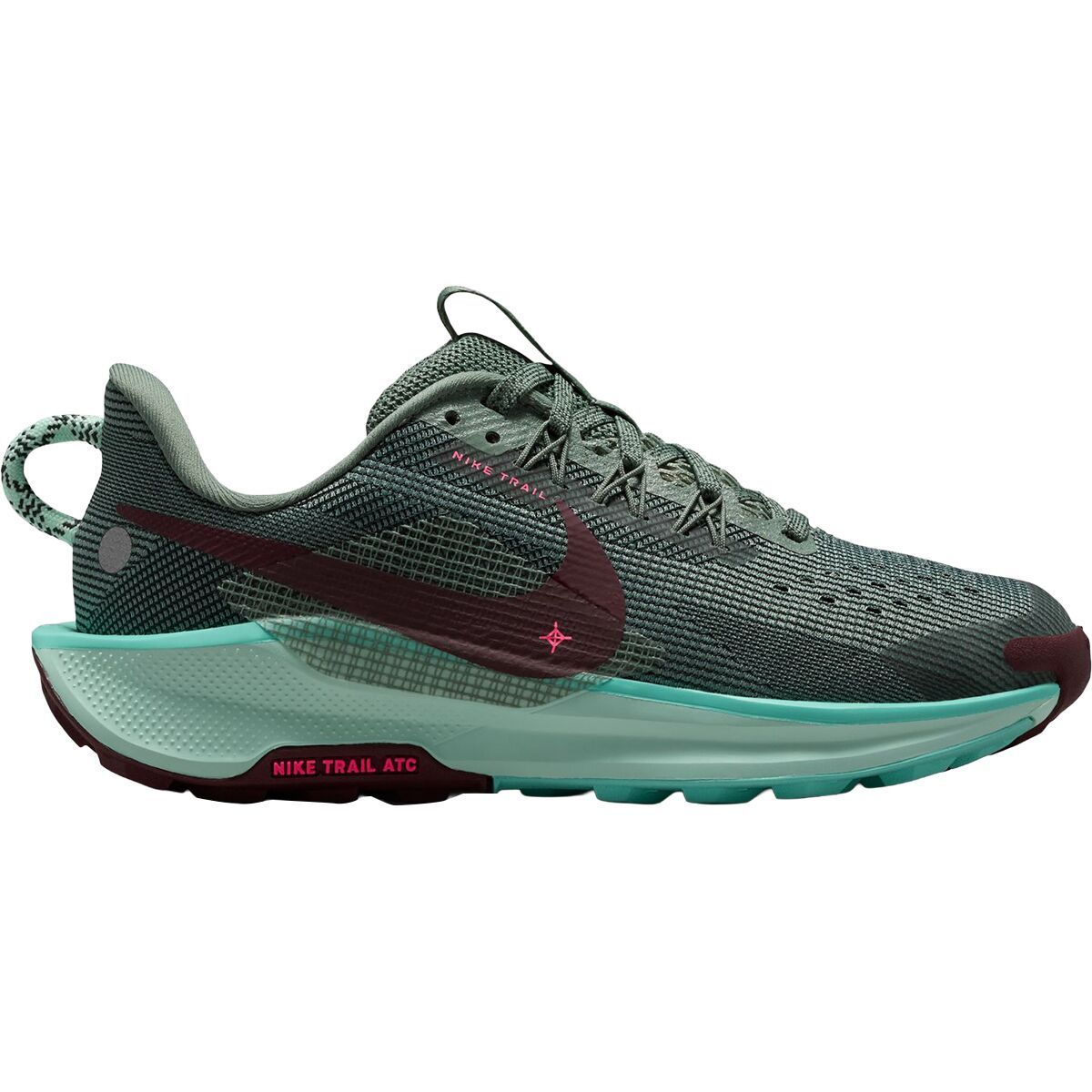
Nike Pegasus Trail 5
Our favorite training shoe — pair with your GPS watch for accurate pace + HR.