Indoor Cycling & Zwift Training: The Complete Beginner's Guide
Everything you need to know about indoor cycling, smart trainers, and virtual training platforms. Build cycling fitness year-round from your pain cave with structured workouts, virtual racing, and power-based training.
Ready to Train Smarter?
Find your FTP and power zones for structured indoor training
In This Guide
Why Indoor Cycling?
Indoor cycling has transformed from a winter necessity into a year-round training method preferred by everyone from casual cyclists to WorldTour professionals. Platforms like Zwift, TrainerRoad, and Rouvy have made riding indoors engaging, effective, and even social.
The appeal is simple: indoor training removes every excuse. No weather concerns, no traffic, no flat tires, no running out of daylight. You can complete a highly effective workout in 45-60 minutes, including warmup and cooldown, without leaving your home.
The Efficiency Factor: Because there's no coasting, traffic lights, or descents, an hour of focused indoor riding typically equals 1.25-1.5 hours of outdoor riding in terms of training stress. Time-crunched athletes often see faster improvements from indoor training.
Beyond convenience, indoor cycling offers unmatched consistency for structured training. When a workout calls for 3x10 minutes at 280 watts, you can hit exactly 280 watts for exactly 10 minutes - something nearly impossible to replicate outdoors with varying terrain, wind, and traffic.
Whether you're training for road races, triathlons, gran fondos, or just general fitness, indoor cycling should be part of your training mix. This guide covers everything you need to get started.
Zwift vs TrainerRoad vs Rouvy: Which Platform?
Three major platforms dominate indoor cycling. Each has different strengths:
| Platform | Best For | Monthly Cost | Key Feature |
|---|---|---|---|
| Zwift | Engagement & social riding | $14.99 | Virtual worlds, racing, group rides |
| TrainerRoad | Serious performance training | $19.95 | Adaptive training plans, analytics |
| Rouvy | Real-world video routes | $14.99 | Augmented reality, famous climbs |
Zwift
Zwift is the most popular platform with over 3 million users. It creates virtual worlds (Watopia, London, New York, etc.) where your avatar rides alongside others in real-time. The gamification elements - levels, achievements, unlockable gear - make indoor cycling surprisingly addictive.
Zwift excels at group rides and racing. You can join organized events with hundreds of riders or jump into races nearly any time of day. The drafting mechanics add tactical elements, and the social aspects help combat the isolation of indoor training.
TrainerRoad
TrainerRoad takes a no-frills approach focused purely on making you faster. Their "Adaptive Training" uses machine learning to adjust your plan based on your performance, ensuring workouts are always appropriately challenging.
If you want structured training plans, detailed analytics, and proven results without distraction, TrainerRoad is the choice. It's less visually engaging but more effective for focused training. Many serious cyclists use TrainerRoad for structured sessions and Zwift for "fun" rides.
Rouvy
Rouvy uses real video footage of roads and famous climbs, overlaying your avatar onto actual scenery. If you want to virtually ride the Alpe d'Huez or train on a course you'll race in real life, Rouvy delivers that experience better than any other platform.
Our Recommendation
Most beginners should start with Zwift - it's the most engaging and has the largest community. As you get more serious, consider adding TrainerRoad for structured training or switching entirely if you find Zwift too distracting.
Equipment You Need
Here's a breakdown of essential and optional gear for indoor cycling:
Smart Trainers (The Heart of Your Setup)
A smart trainer connects to apps via Bluetooth/ANT+ and automatically adjusts resistance to match your workout or the virtual terrain. There are two main types:
Wheel-On Trainers
- Your rear tire contacts a roller
- Cheaper: $300-600
- Quick to set up with any bike
- Wears out rear tire
- Less accurate power (+/- 3-5%)
Direct-Drive Trainers
- Remove rear wheel, attach bike to trainer
- More expensive: $600-1,400
- Quieter, more realistic road feel
- More accurate power (+/- 1-2%)
- Best for serious training
Popular choices: Wahoo KICKR (premium), Tacx NEO (premium), Wahoo KICKR Core (mid-range best value), Elite Suito (budget-friendly direct drive), Wahoo KICKR Snap (budget wheel-on).
Top Recommended Smart Trainers:
Essential Accessories
- Fan (ESSENTIAL): Indoor cycling generates massive heat. A powerful fan isn't optional - it's required. Many riders use multiple fans.
- Mat: Protects floors from sweat and vibration, reduces noise. ~$30-50
- Sweat towel/sweat catcher: Protect your bike from corrosive sweat. Some riders use specific bike sweat guards.
- Device for apps: Phone (small but works), tablet (ideal), laptop, or Apple TV/smart TV
- Heart rate monitor: Chest straps are more accurate than optical; useful for heart rate zone training
Essential Indoor Cycling Equipment:
Nice-to-Have Upgrades
- Rocker plate: Allows side-to-side movement for more natural feel (~$200-600)
- Dedicated indoor bike: Leave it set up permanently, no switching bikes
- Climbing block: Raises front wheel to simulate climbing position
- Big screen TV: More immersive than a small tablet
Budget Starter Setup: You can get started for under $500 with a basic smart trainer ($300), floor mat ($30), and a good fan ($50). Use your phone as the display and upgrade from there.
Setting Up Your Pain Cave
The "pain cave" is where the magic happens. A well-designed space makes indoor training more enjoyable and effective. Here's how to optimize yours:
Location Considerations
- Temperature: Cooler spaces are better. Garages work well in winter but can be brutal in summer without AC
- Ventilation: Good airflow is critical. Open windows, fans pointing at you, not just circulating air
- Space: You need about 6x4 feet minimum, more if using a rocker plate
- Noise: Direct-drive trainers are quiet, but you'll still make noise. Consider family/neighbor impact
Fan Setup Strategy
This is the most important factor for indoor comfort. One small fan isn't enough. Serious indoor cyclists use 2-3 fans positioned strategically:
- Primary fan: Large, powerful fan pointed at your chest/face
- Secondary fan: Aimed at your back or side
- Floor fan: Cooling legs can help significantly
Entertainment Setup
For structured workouts, the app display is often enough. For longer endurance rides, many cyclists watch TV shows, movies, or YouTube while riding in Zone 2. A second screen for entertainment while Zwift runs on another device is a popular setup.
Nutrition Station
Keep water bottles, energy gels, and snacks within easy reach. You'll sweat more indoors than outdoors (no wind cooling), so hydration is even more important. A small table or shelf next to your setup works well.
Structured Workouts Explained
The biggest advantage of indoor cycling is the ability to do precise, structured workouts. Here's what that means:
What Are Structured Workouts?
Structured workouts specify exactly what intensity to ride at and for how long. Instead of "ride hard for a while," you get "4x8 minutes at 105% FTP with 4 minutes recovery." The trainer automatically adjusts resistance to match the workout prescription.
Common Workout Types
Endurance / Zone 2
Long, steady rides at 55-75% FTP. Builds aerobic base. Can last 1-4+ hours. Learn more in our Zone 2 training guide.
Sweet Spot
Intervals at 88-94% FTP. High training benefit with manageable fatigue. Example: 3x15 min at 90% FTP.
Threshold
Intervals at 95-105% FTP. Directly improves your FTP. Brutal but effective. Example: 2x20 min at FTP.
VO2 Max
Short, hard intervals at 106-120% FTP. Improves oxygen utilization. Example: 5x3 min at 115% FTP.
ERG Mode vs Resistance Mode
ERG mode: The trainer automatically adjusts resistance to maintain target power regardless of your cadence. Great for structured intervals - just keep pedaling and hit the power.
Resistance/Simulation mode: Resistance changes based on virtual terrain or your selected level. You control power output through gearing and cadence, like outdoors. Better for racing and free riding.
Get Structured Training Plans
Our cycling plan generator creates periodized plans with the right mix of workout types for your goals.
Generate Your PlanPower Zone Training
Power zones are the foundation of effective cycling training. Everything revolves around your FTP (Functional Threshold Power) - the maximum power you can sustain for about an hour.
Finding Your FTP
Before doing zone-based workouts, you need to determine your FTP. Common methods include:
- 20-minute test: Ride as hard as you can for 20 minutes. FTP = average power × 0.95
- Ramp test: Power increases every minute until failure. Quicker but potentially less accurate for some athletes
- 60-minute test: Most accurate but extremely demanding - average power = FTP
Use our FTP calculator to determine your zones from your test results.
The 7-Zone Model
| Zone | Name | % of FTP | Purpose |
|---|---|---|---|
| 1 | Active Recovery | <55% | Recovery, warmup, cooldown |
| 2 | Endurance | 55-75% | Aerobic base, fat burning |
| 3 | Tempo | 76-87% | Improved efficiency |
| 4 | Threshold | 88-105% | FTP improvement |
| 5 | VO2 Max | 106-120% | Aerobic capacity |
| 6 | Anaerobic | 121-150% | Anaerobic power |
| 7 | Neuromuscular | Max | Sprinting, peak power |
Most training time should be spent in Zones 1-2 (easy) with focused intervals in Zones 4-5. Zone 3 is often called "junk miles" - too hard to recover from easily, too easy to drive adaptation. Learn more about this in our FTP training guide.
Zwift Racing & Group Rides
One of Zwift's greatest features is its racing and group ride ecosystem. Thousands of events happen every week, from casual group rides to serious competitive racing.
Zwift Racing Categories
Races are divided into categories based on your power-to-weight ratio (w/kg):
- Category A: 4.0+ w/kg (elite)
- Category B: 3.2-3.99 w/kg (strong)
- Category C: 2.5-3.19 w/kg (intermediate)
- Category D: <2.5 w/kg (beginner)
- Category E: Everyone welcome (no limits)
Racing Tips for Beginners
- Start in the right category: Racing above your level means getting dropped immediately; below means unfair advantage
- Warm up before the start: Races often start hard. Be ready to push
- Learn to draft: Sitting in the peloton saves 25-30% power. Don't pull unless you're attacking
- Watch key moments: Starts, climbs, and sprint finishes are where races are decided
- Practice w/kg, not absolute power: Climbing races reward lighter, powerful riders
Group Rides
Group rides are less competitive than races. They range from "no-drop" rides where the group stays together to faster rides where you'll need to work to keep up. Group rides are great for motivation and hitting consistent Zone 2-3 efforts with virtual company.
Race Training Value: Zwift races provide excellent high-intensity training. They push you harder than most structured workouts because the competition drives effort. Many cyclists use races as their weekly hard efforts.
Sample 8-Week Indoor Training Plan
Here's an 8-week progressive plan for building fitness through indoor cycling. This assumes 5-7 hours per week and includes an FTP test to track progress.
Weeks 1-2: Base Building
- Monday: Rest
- Tuesday: 45 min endurance (Zone 2)
- Wednesday: Rest or easy spin
- Thursday: 45 min with 4x5 min sweet spot
- Friday: Rest
- Saturday: 60-75 min endurance ride
- Sunday: 45 min easy or Zwift group ride
Weekly total: ~4-5 hours
Weeks 3-4: Building Intensity
- Monday: Rest
- Tuesday: 60 min with 3x10 min sweet spot
- Wednesday: 45 min Zone 2
- Thursday: 60 min with 3x8 min threshold
- Friday: Rest
- Saturday: 75-90 min endurance
- Sunday: 45 min easy or group ride
Weekly total: ~5-6 hours
Week 5: Recovery & FTP Test
- Monday: Rest
- Tuesday: 40 min easy spin
- Wednesday: Rest
- Thursday: FTP Test (20-min test protocol)
- Friday: Rest
- Saturday: 60 min easy recovery ride
- Sunday: Rest
Update your zones based on new FTP!
Weeks 6-8: Performance Phase
- Monday: Rest
- Tuesday: 60 min with 2x20 min threshold
- Wednesday: 45-60 min Zone 2
- Thursday: 60 min with 5x3 min VO2 max intervals
- Friday: Rest
- Saturday: 90-120 min long endurance ride
- Sunday: Zwift race or 60 min group ride
Weekly total: ~6-7 hours
Get a Complete Personalized Plan
Our cycling plan generator creates periodized plans tailored to your goals, experience, and available training time.
Generate Your PlanFrequently Asked Questions
Is Zwift worth it for beginners?
Yes, Zwift is excellent for beginners. It makes indoor cycling engaging with gamification, structured workouts, and social features. The monthly subscription ($14.99) is much cheaper than gym memberships, and the guided workouts help beginners train effectively without needing coaching knowledge.
What equipment do I need for indoor cycling?
At minimum: a bike and a trainer. A basic wheel-on trainer costs $100-300, while smart trainers range from $300-1,400. You'll also want a fan (essential for cooling), a mat to protect floors and catch sweat, and a device to run your training app (phone, tablet, laptop, or smart TV).
Can I get fit just cycling indoors?
Absolutely. Many professional cyclists do significant portions of their training indoors. Indoor cycling removes variables like traffic and weather, allowing for consistent, high-quality training. Some athletes find they improve faster indoors due to the focused, structured nature of the workouts.
How long should indoor cycling workouts be?
Quality trumps quantity indoors. Most effective indoor workouts are 45-90 minutes. Because there's no coasting or traffic stops, an hour indoors equals roughly 1.5 hours of outdoor riding in training stress. Long indoor rides (2+ hours) are mentally challenging but occasionally necessary for endurance events.
Zwift vs TrainerRoad: Which is better?
It depends on your goals. Zwift excels at engagement, social features, and virtual racing - great if motivation is your challenge. TrainerRoad focuses purely on structured training with adaptive plans and deeper analytics - better for serious performance gains. Many athletes use both: TrainerRoad for structured sessions, Zwift for fun rides and races.
Do I need a power meter if I have a smart trainer?
No - your smart trainer measures power. However, a separate power meter on your bike allows consistent power tracking both indoors and outdoors. If you only ride indoors or don't need outdoor power data, the trainer's power measurement is sufficient.
How do I stay motivated on the trainer?
Variety is key. Mix structured workouts, free rides, group rides, and races. Use entertainment for long Zone 2 rides. Set goals and track progress. Join a Zwift team or find training buddies. Some athletes schedule trainer sessions like meetings to ensure they happen.
Related Guides
Featured at Backcountry — 15% off first order
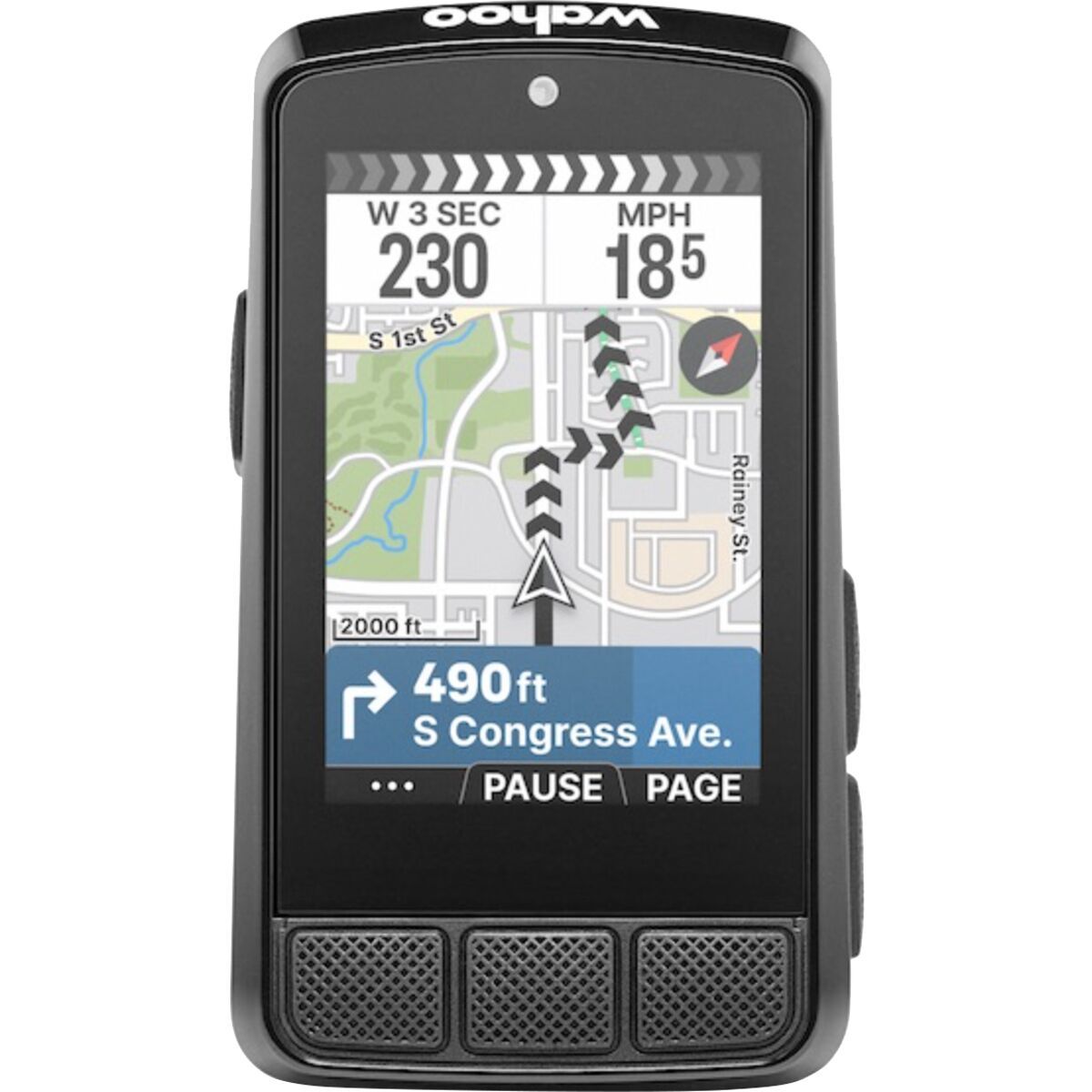
Wahoo ELEMNT BOLT 3
The bike computer of choice for serious indoor trainers — pairs seamlessly with Zwift and TrainerRoad.