Marine Corps Marathon Training Guide 2026: The People's Marathon Through America's Capital
The definitive training guide for the Marine Corps Marathon. Run through Washington DC's iconic monuments, experience world-class Marine support, and earn one of running's most coveted finisher medals on "The People's Marathon."
Calculate Your MCM Pace
Plan your splits for the monument tour course
In This Guide
The People's Marathon Experience
The Marine Corps Marathon is unlike any other race in America. Known as "The People's Marathon," it's one of the largest marathons in the world that awards no prize money - every runner is equal, whether you're chasing a sub-3 or simply aiming to finish. The race celebrates participation, personal achievement, and the enduring spirit of the United States Marines.
First held in 1976, the MCM has grown into one of America's most iconic races, drawing over 20,000 runners from all 50 states and more than 60 countries. The course takes runners on an unforgettable tour of Washington DC's monuments - from the Lincoln Memorial to the Capitol Building, along the Potomac River and through the heart of the nation's capital.
But the MCM is more than just a scenic tour. It's a challenging marathon with bridge crossings, moderate hills, and the infamous "Beat the Bridge" requirement at mile 20. And everywhere you go, Marines are there cheering, handing out water, and pushing you toward that famous finish line at the Marine Corps War Memorial.
The 2026 Marine Corps Marathon: Scheduled for Sunday, October 25, 2026. Registration opens in late March 2026 and typically sells out within days. Enter the lottery early and consider backup plans (charity entry, military entry) if you're not selected.
Course Profile: Monuments & Bridges
The Marine Corps Marathon is a loop course that starts and finishes near the Pentagon in Arlington, Virginia. The route crosses into Washington DC for most of the race, passing by iconic monuments and memorials before returning to Virginia via the 14th Street Bridge.
Key Course Statistics
| Start/Finish | Near the Pentagon, Arlington, VA |
| Total Elevation Gain | ~500 feet (152 meters) |
| Highest Point | ~120 feet (Georgetown, mile 10) |
| Major Bridges | Key Bridge (mile 7-8), 14th Street Bridge (mile 20-21) |
| Beat the Bridge Cutoff | Mile 20 by 1:15 PM (5 hr pace) |
| Course Record (Men) | 2:11:52 (Elkanah Kibet, 2022) |
| Course Record (Women) | 2:30:27 (Hirut Guangul, 2019) |
| Time Limit | 6 hours (14-minute mile pace) |
Mile-by-Mile Course Breakdown
Miles 1-3: Arlington Start & Rosslyn
Start near the Pentagon and head into Rosslyn. The first miles wind through Arlington with moderate crowds. A gradual uphill in mile 2-3 as you approach the Key Bridge. Run controlled - save energy for later.
Miles 4-6: Georgetown & Rock Creek
Cross into DC via Key Bridge with views of the Potomac. Enter Georgetown - the course's highest elevation. Run along Rock Creek Parkway. Mostly downhill from Georgetown with beautiful tree-lined sections.
Miles 7-9: Kennedy Center & Lincoln Memorial
Pass the Kennedy Center and approach the Lincoln Memorial. This is one of the most inspiring sections - running past Lincoln's memorial with the Washington Monument ahead. Crowds are enthusiastic here.
Miles 10-12: National Mall
Run along the National Mall with the Washington Monument to your left and the Capitol ahead. Flat and exposed - can be hot if sunny. Great crowd support. You'll pass several Smithsonian museums.
Miles 13-16: Capitol & Southeast DC
Circle the US Capitol Building - an iconic halfway point. Head into Southeast DC neighborhoods. Crowds thin slightly but local supporters are enthusiastic. Some gentle rolling terrain.
Miles 17-19: Anacostia & Return
Cross the Anacostia River, run along the waterfront, and begin heading back toward the Mall. This section can feel long as you approach the 20-mile mark. Stay focused.
Miles 20-21: 14th Street Bridge (BEAT THE BRIDGE)
The crucial "Beat the Bridge" section. Must reach mile 20 by 1:15 PM. Cross the 14th Street Bridge back into Virginia. Exposed to wind, mentally challenging. Marines line the bridge cheering you on.
Miles 22-24: Crystal City
Run through Crystal City with massive crowd support. The "Crystal City Volunteers" are famous for their energy. This is where you dig deep - only a 5K left. The crowds here will carry you.
Miles 25-26.2: The Finish to the Iwo Jima Memorial
The final push up a slight incline toward the Marine Corps War Memorial (Iwo Jima). Marines line the route in dress blues. The finish line is at the base of the memorial - one of the most emotional finishes in all of running.
The MCM Challenge: While not as hilly as Boston or as flat as Chicago, MCM presents its own challenges: bridge crossings with potential wind exposure, limited shade on the Mall, and the emotional and physical drain of "Beat the Bridge" at mile 20. Respect the course and prepare specifically.
DC Landmarks Tour
Running the Marine Corps Marathon is like taking a 26.2-mile tour of America's most important monuments. Here's what you'll see along the way.
Monuments & Landmarks by Mile
| Mile | Landmark | Notes |
|---|---|---|
| Start | Pentagon | Start near the world's largest office building |
| 4 | Key Bridge / Potomac River | Views of the river, enter DC |
| 5-6 | Georgetown | Historic neighborhood, highest point |
| 7 | Kennedy Center | Performing arts venue |
| 8-9 | Lincoln Memorial | Iconic photo opportunity |
| 9-10 | WWII Memorial / Washington Monument | Central Mall landmarks |
| 10-11 | Smithsonian Museums | Run past Air & Space, Natural History |
| 13 | US Capitol Building | Halfway point, circle the Capitol |
| 18-19 | Jefferson Memorial | Views across Tidal Basin |
| 20-21 | 14th Street Bridge | Beat the Bridge, return to Virginia |
| Finish | Marine Corps War Memorial (Iwo Jima) | Iconic finish at the memorial |
Registration & Lottery
The Marine Corps Marathon uses a lottery system due to high demand. Understanding your entry options is crucial to securing a spot.
Entry Options
1. Lottery Entry
Opens late March, closes within days. Results announced in April. Entry fee approximately $200. Lottery acceptance rate varies but is typically 20-40% due to high demand.
2. Military Guaranteed Entry
Active duty military, reservists, and National Guard members receive guaranteed entry. Registration opens with the lottery.
3. Charity Entry (Team MCM)
Run for an official charity with a fundraising minimum (typically $1,500-2,500). Guaranteed entry plus team support and training programs.
4. MCM Rewards (Loyalty) Entry
Runners who completed MCM events in previous years can earn guaranteed entry through the MCM Rewards program.
Lottery Tip: If you're not selected in the lottery, you can still enter via charity or the MCM Rewards program. Many runners who are rejected from the lottery find alternative paths and still run. Don't give up if you're not selected!
MCM-Specific Training
Training for the Marine Corps Marathon should focus on the course's specific demands: bridge crossings, moderate hills, concrete surfaces, and the mental challenge of "Beat the Bridge" at mile 20.
Key Training Focuses
Bridge & Overpass Training
The bridges create gradual inclines that feel harder late in the race. Practice running bridges, highway overpasses, or long gradual inclines. Include these in your long runs, especially toward the end.
Concrete Surface Adaptation
Much of the MCM course is on concrete, which is harder than asphalt. Include concrete running in training to prepare your legs for the impact.
Mile 20 Mental Preparation
The "Beat the Bridge" requirement creates unique psychological pressure at mile 20. Practice running strong through miles 18-22 in training. Know your required pace and have confidence.
Late-Race Hill Strength
The final uphill push to the Iwo Jima Memorial comes when you're most fatigued. Include hill work at the end of long runs to simulate this challenge.
16-Week Training Overview
Weeks 1-4: Base Building
- Build to 40-50 miles/week
- Introduce bridge/overpass running weekly
- One tempo run per week (20-30 min)
- Long runs building to 14-16 miles
- Include some concrete surface running
Weeks 5-8: Strength Phase
- Peak mileage: 50-60 miles/week
- Hill repeats: 8-10 x 90-second climbs
- Marathon pace long runs: 16-18 miles
- Tempo runs extending to 40-50 minutes
- Bridge running in long runs
Weeks 9-12: Race-Specific Phase (KEY WEEKS)
- Long runs: 18-22 miles with late-race intensity
- Practice running strong through miles 18-22
- Tune-up race (half marathon recommended)
- Practice race nutrition strategy
- Include finish-style uphill at end of long runs
Weeks 13-16: Taper
- Reduce mileage: 70% > 50% > 30%
- Maintain some intensity
- Final long run: 12-14 miles (2 weeks out)
- Mental preparation and course visualization
- Travel to DC; course preview if possible
Get Your MCM Training Plan
Our training plan generator creates MCM-specific plans with bridge training, late-race strength work, and Beat the Bridge pace management.
Generate Your PlanBridge & Hill Training
The MCM bridges present a unique challenge. While not steep, they're long, exposed to wind, and come at challenging points in the race. The Key Bridge (mile 7-8) is early enough to manage, but the 14th Street Bridge (mile 20-21) is brutal when fatigued.
Bridge-Specific Workouts
Long Gradual Incline Repeats
Find a gradual incline (2-4% grade) 0.5-1 mile long. Run 4-6 repeats at marathon effort. This simulates the bridge experience better than short steep hills.
Late-Run Bridge Simulation
At mile 18-20 of your long run, find a bridge or overpass and run it at marathon pace. This simulates the 14th Street Bridge when you're fatigued.
Wind Resistance Training
Bridges are exposed to wind. Train on windy days when possible. Practice maintaining rhythm when running into headwinds.
Finish Hill Simulation
The final quarter mile to the Iwo Jima Memorial is uphill. End some long runs with a moderate hill climb to prepare mentally and physically.
Weather Preparation
Late October weather in Washington DC is typically ideal for marathoning, but conditions can vary significantly. Be prepared for anything from perfect fall weather to cold rain.
Historical Weather Data
| Condition | Typical | Ideal | Extreme |
|---|---|---|---|
| Start Temp (8 AM) | 45-55°F | 45-50°F | 35-70°F |
| Finish Temp | 55-65°F | 50-60°F | 45-75°F |
| Rain Chance | 30% | 0-10% | Heavy rain possible |
| Wind | 5-15 mph | Under 10 mph | 20+ mph |
Weather Contingency Plans
Cool/Ideal (40-55°F)
Perfect conditions. Singlet, shorts, arm warmers for start. PR weather - execute your plan.
Cold (35-45°F)
Long sleeves or arm warmers throughout, light gloves. Still good racing weather - don't overdress.
Warm (60-70°F)
Adjust pace expectations. Extra hydration. Light singlet and shorts only. Visor for sun.
Rainy
Light rain jacket or garbage bag for start, discard early. Anti-chafe products essential. Visor keeps rain out of eyes.
Gear Recommendations for MCM
October in DC requires versatile gear choices. The early morning start is often cool, but you may warm up significantly by finish. Plan for layers you can adjust or discard.
Essential Race Day Gear
Racing Shoes
Cushioned racing shoes for the concrete surfaces. Carbon-plated options recommended for faster runners.
Shop Racing Shoes at BackcountryArm Warmers/Sleeves
Essential for variable October weather. Easy to remove mid-race if conditions warm.
Shop Arm Warmers at BackcountryLight Gloves
Lightweight running gloves for cold starts. Can discard or tuck into shorts when hands warm.
Shop Running Gloves at BackcountryGPS Watch
Critical for pacing and ensuring you "Beat the Bridge." Set alerts for your required pace.
Shop GPS Watches at BackcountryVisor or Cap
The Mall has little shade. A visor protects from sun while allowing heat to escape.
Shop Running Hats at BackcountryLightweight Jacket
Packable, wind-resistant layer for cool or rainy conditions. Can tie around waist if not needed.
Shop Running Jackets at BackcountryPre-Race Throwaway Gear
- Old sweatshirt or long-sleeve shirt
- Throwaway gloves and hat
- Space blanket for staging area
- Garbage bag for rain (wear with holes for head/arms)
Pacing Strategy
Pacing MCM requires balancing steady effort through the monuments with ensuring you "Beat the Bridge" at mile 20. The moderate hills and bridge crossings make even pacing more challenging than a flat course.
Beat the Bridge Pacing
Critical Cutoff: You must reach mile 20 (14th Street Bridge) by 1:15 PM. With a 7:55 AM start, that's approximately 5 hours 20 minutes - about 16:00/mile pace. However, aim to reach mile 20 by 1:00 PM minimum for a safety cushion.
Sample Pacing: 4:00 Goal (9:09/mile)
| Section | Miles | Target Pace | Notes |
|---|---|---|---|
| Arlington Start | 1-4 | 9:15-9:20 | Controlled start, gradual uphill |
| Georgetown/Mall | 5-13 | 9:05-9:10 | Find rhythm, enjoy monuments |
| SE DC | 14-19 | 9:05-9:15 | Maintain, prepare for bridge |
| 14th St Bridge | 20-21 | 9:15-9:25 | Accept slight slowdown, stay focused |
| Crystal City Finish | 22-26.2 | 9:00-9:10 | Crowd support, push to finish |
Calculate Your MCM Splits
Use our pace calculator to generate custom splits adjusted for MCM's course profile.
Pace CalculatorRace Week Logistics
Expo & Packet Pickup
The MCM Expo takes place at the Walter E. Washington Convention Center in downtown DC, Thursday through Saturday before the race.
- Bring photo ID, proof of registration, and signed waiver
- Go Thursday or Friday to avoid Saturday crowds
- The expo features military displays, gear vendors, and information sessions
- Metro accessible (Mt. Vernon Sq/Convention Center station)
Race Morning Timeline
- 4:00-5:00 AM: Wake up, eat pre-race meal
- 5:30-6:30 AM: Travel to Pentagon area
- 6:00-7:30 AM: Arrive at runners' village, use restrooms, drop gear
- 7:15-7:45 AM: Move to starting corrals
- 7:55 AM: Race start
Getting to the Start
- Metro: Pentagon station (Blue/Yellow lines) is closest - expect delays and crowds
- Driving: Limited parking at Pentagon City mall; arrive very early
- Rideshare: Drop-off points designated by MCM - check race website
- Hotel Shuttles: Many area hotels offer race morning transportation
Race Day Execution
Runners' Village
The MCM Runners' Village opens at 5:30 AM near the Pentagon. This is where you'll drop gear, use restrooms, and wait for the start. Bring throwaway layers - it can be cold waiting.
Key Race Moments
Mile 1-5: Controlled Start
Fight the urge to go fast on adrenaline. The Key Bridge climb comes at miles 4-5. Save energy.
Mile 8: Lincoln Memorial
Running past Lincoln is emotional. Enjoy the moment but maintain your pace discipline.
Mile 10-12: The Mall
Exposed section - stay hydrated if sunny. The Washington Monument and Capitol are ahead.
Mile 13: Capitol Halfway
Check your split. Should be on pace or slightly conservative. The quieter miles begin.
Mile 20: BEAT THE BRIDGE
Reach the 14th Street Bridge by 1:15 PM (aim for 1:00 PM). This is the moment. Marines will push you across.
Mile 22-24: Crystal City
The crowds here are incredible. Let them carry you. Only a 5K to the finish.
Mile 26: The Finish
Marines in dress blues line the final stretch. Push up the hill to the Iwo Jima Memorial. Receive your medal from a Marine.
Frequently Asked Questions
What is the Marine Corps Marathon course like?
The Marine Corps Marathon is a loop course that starts and finishes near the Pentagon in Arlington, Virginia. The course crosses into Washington DC, passing iconic monuments including the Lincoln Memorial, Washington Monument, Capitol Building, and Jefferson Memorial. It's a moderately hilly course with about 500 feet of total elevation gain, featuring several bridge crossings.
When is the Marine Corps Marathon 2026?
The Marine Corps Marathon 2026 is scheduled for Sunday, October 25, 2026. The race is held on the fourth Sunday of October each year. The race start is at 7:55 AM from the Pentagon. Registration typically opens in late March and sells out within days.
How do I register for the Marine Corps Marathon?
The Marine Corps Marathon uses a lottery registration system. Registration opens in late March and closes within a few days. Results are announced in April. Guaranteed entry is available for active duty military, charity runners, and through the MCM Rewards program.
What is "Beat the Bridge" at the Marine Corps Marathon?
Beat the Bridge is a pace requirement at mile 20 (the 14th Street Bridge). Runners must reach this point by 1:15 PM (approximately 5 hours from the start) to continue on the course. If you don't beat the bridge, you're diverted to a shortened finish. Plan your pace to reach mile 20 by 1:00 PM at the latest.
Why is it called "The People's Marathon"?
The Marine Corps Marathon is called "The People's Marathon" because it's one of the largest marathons that doesn't offer prize money - all runners are equal regardless of pace. It was one of the first major marathons to welcome runners of all abilities, celebrating participation and personal achievement.
What is the weather like for MCM in October?
Late October weather in Washington DC is typically ideal for marathoning. Temperatures usually range from 40-60°F at the start, warming to 50-70°F by finish. However, conditions can vary from cold and rainy to unseasonably warm. The course is mostly exposed with limited shade.
How hard are the bridges on the MCM course?
The Marine Corps Marathon crosses several bridges, with the most significant being the 14th Street Bridge (miles 20-21) and Key Bridge (miles 7-8). The bridges have gradual inclines that feel harder late in the race due to fatigue and wind exposure.
Is MCM good for first-time marathoners?
Yes, the Marine Corps Marathon is exceptional for first-time marathoners. The Marines provide incredible support at every mile, the course passes inspiring monuments, the crowds are enthusiastic, and the fall weather is typically ideal. The only challenge is getting in via lottery.
What gear should I bring for MCM?
Pack for variable October weather: racing singlet and shorts, arm warmers or sleeves, light gloves for cold years, throwaway layers for the early morning staging, and a visor or cap for sun protection. Bring anti-chafe products and your own nutrition if preferred.
Related Guides & Calculators
Featured at Backcountry — 15% off first order
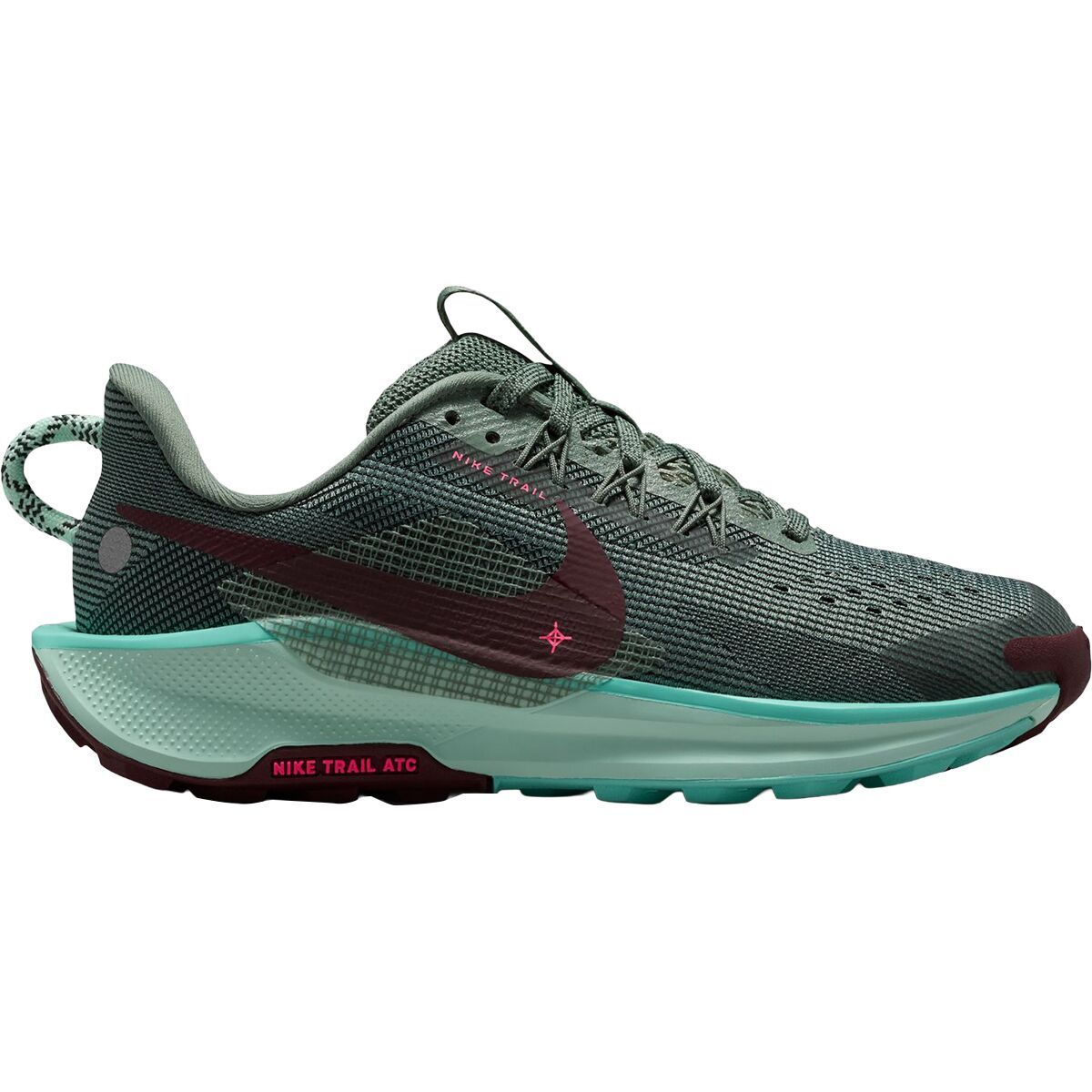
Nike Pegasus Trail 5
Our go-to trail-capable training shoe. React foam + sticky outsole.