Tokyo Marathon Training Guide 2026: Experience a World Major Through the Heart of Japan
The definitive training guide for the Tokyo Marathon. Run one of the Abbott World Marathon Majors through historic Tokyo, from the towering Shinjuku skyscrapers to the iconic Tokyo Station. Complete with lottery tips, Japan travel advice, and race day strategy.
Calculate Your Tokyo Pace
Plan your splits for the flat, fast course
In This Guide
The Tokyo Marathon Experience
The Tokyo Marathon is one of the six Abbott World Marathon Majors - the most prestigious marathon series in the world. Running Tokyo means joining the ranks of elite marathoners who have conquered all six Majors, while experiencing Japanese culture at its finest.
First held in 2007 (combining two previous marathons), Tokyo quickly became one of the world's most sought-after races. The combination of impeccable Japanese organization, a fast and flat course, and the experience of running through one of the world's greatest cities draws over 300,000 lottery applicants for just 38,000 spots.
The course is a journey through Tokyo's past and present - from the modern skyscrapers of Shinjuku, past the Imperial Palace, through the historic Asakusa district with views of the ancient Senso-ji Temple, along the Sumida River with Tokyo Skytree towering above, through the upscale Ginza shopping district, and finally to the majestic Tokyo Station. It's a 26.2-mile love letter to one of the world's most fascinating cities.
The 2026 Tokyo Marathon: Scheduled for Sunday, March 1, 2026. Lottery registration opens in August 2025 with results in September/October. The lottery acceptance rate is approximately 10% due to massive demand. Consider backup entry options including charity and international tour packages.
Course Profile: Shinjuku to Tokyo Station
The Tokyo Marathon is a point-to-point course that starts at the Tokyo Metropolitan Government Building in Shinjuku and finishes at Tokyo Station's Marunouchi side. The course is remarkably flat - one of the flattest World Marathon Majors.
Key Course Statistics
| Start Location | Tokyo Metropolitan Government Building, Shinjuku |
| Finish Location | Tokyo Station, Marunouchi |
| Total Elevation Gain | ~130 feet (40 meters) |
| Maximum Elevation | ~130 feet (start in Shinjuku) |
| Course Type | Point-to-point, very flat |
| Course Record (Men) | 2:02:40 (Eliud Kipchoge, 2024) |
| Course Record (Women) | 2:15:37 (Tigist Ketema, 2024) |
| Time Limit | 7 hours |
| Field Size | ~38,000 runners |
Mile-by-Mile Course Breakdown
Miles 1-3: Shinjuku Start
Start in front of the Tokyo Metropolitan Government Building - the iconic twin towers. Run through Shinjuku's skyscraper district. Slight downhill as you leave Shinjuku. Very crowded - be patient and don't fight for position.
Miles 3-5: Imperial Palace
Pass the historic Imperial Palace, residence of Japan's Emperor. The palace moat and gardens provide beautiful scenery. This section is flat and wide. Good crowd support along the palace walls.
Miles 5-8: Toward Nihonbashi
Run through central Tokyo business districts. Pass the historic Nihonbashi bridge - the traditional starting point of Japan's five major roads during the Edo period. Flat terrain with urban scenery.
Miles 8-12: Asakusa & Senso-ji
Head north to the historic Asakusa district. You'll pass near Senso-ji Temple - Tokyo's oldest and most famous Buddhist temple. Tokyo Skytree towers in the distance. This is one of the most culturally rich sections of the course.
Miles 12-15: Sumida River
Run along the Sumida River heading south. Views of Tokyo Skytree (the world's tallest tower at 634m). The halfway point comes around mile 13. Check your split - adjust pace if needed.
Miles 15-20: Monzen-Nakacho & Return
The course heads to Monzen-Nakacho before turning back toward central Tokyo. This section can feel mentally long as you're heading away from the finish. Stay focused. Crowds thin slightly.
Miles 20-23: Return to Central Tokyo
Turn back toward the finish. This is where the race gets real. The flat course means no terrain to blame - it's pure fitness and mental strength. Stay patient and maintain rhythm.
Miles 23-26.2: Ginza to Tokyo Station
Run through the famous Ginza shopping district - Japan's most upscale area. Pass near Tokyo Tower. The crowds build as you approach the finish. Turn toward Tokyo Station for the final stretch. Cross the finish line in front of the beautiful red-brick station building.
The Flat Course Advantage: With only 130 feet of total elevation gain, Tokyo is one of the flattest World Marathon Majors. This makes it excellent for PR attempts - but the lack of terrain variation means you can't hide from your fitness. Even pacing is essential.
Tokyo Landmarks Tour
Running the Tokyo Marathon is like taking a 26.2-mile tour of one of the world's greatest cities. Here are the iconic sights you'll pass.
Landmarks by Mile
| Mile | Landmark | Significance |
|---|---|---|
| Start | Tokyo Metropolitan Government Building | Iconic twin towers, observation decks |
| 3-5 | Imperial Palace | Home of Japan's Emperor, historic gardens |
| 6 | Nihonbashi Bridge | Historic starting point of Japan's roads |
| 9-11 | Asakusa / Senso-ji Temple | Tokyo's oldest temple, historic district |
| 12-15 | Tokyo Skytree (views) | World's tallest tower (634m) |
| 23-24 | Ginza District | Tokyo's most upscale shopping area |
| 25 | Tokyo Tower (views) | Iconic red-and-white tower |
| Finish | Tokyo Station | Beautiful red-brick historic station |
Lottery & Entry Options
Getting into the Tokyo Marathon is extremely competitive. With over 300,000 applicants for approximately 38,000 spots, the acceptance rate is around 10%. Understanding your entry options is crucial.
Entry Methods
1. General Lottery (Approximately 10% acceptance)
Opens in August, closes in a few weeks, results in September/October. Entry fee approximately 16,500 yen (~$110 USD). First-time lottery applicants have a slight advantage in some years. You can apply from anywhere in the world through the official website.
2. Charity Entry
Guaranteed entry with fundraising commitment. Minimum donation typically 100,000-200,000 yen (~$700-1,400 USD). Supports designated charities. Registration opens before the general lottery.
3. International Tour Packages
Travel companies offer guaranteed entry packages including race entry, accommodations, and services. More expensive ($1,500-3,000+) but guarantees your spot. Good option if lottery fails.
4. Elite/Sub-Elite Qualification
Very fast qualifying times guarantee entry. Men: sub-2:21:00, Women: sub-2:52:00 (times may vary). Not realistic for most recreational runners.
Lottery Strategy: Apply for the lottery every year you're interested - acceptance rates fluctuate and persistence pays off. Have a backup plan (charity, tour package) if the lottery doesn't work. Apply in the first days of registration - some reports suggest early applications may have advantages.
Tokyo-Specific Training
Training for Tokyo should focus on flat course pacing, even split execution, and preparing for the international travel component. The flat profile means your pace discipline is everything.
Key Training Focuses
Even Pace Mastery
The flat course rewards metronomic pacing. Practice running exact pace for long periods. Do long runs where every mile is within 5 seconds of goal pace.
Jet Lag Preparation
Tokyo is 13-17 hours ahead of the US. Start shifting sleep 3-5 days before departure. Do some training runs at your "Tokyo time" equivalent. Arrive 4-5 days early.
Crowd Navigation
With 38,000 runners, the course is crowded. Practice running in congested conditions. Stay patient in early miles. Don't waste energy weaving excessively.
Concrete Surface Adaptation
The course is on smooth concrete and asphalt. Include road running in training to prepare your legs. Good shoe cushioning helps.
16-Week Training Overview
Weeks 1-4: Base Building
- Build to 40-50 miles/week
- Focus on consistent easy pace running
- One tempo run per week (20-30 min)
- Long runs building to 14-16 miles
Weeks 5-8: Strength & Speed
- Peak mileage: 50-65 miles/week
- Marathon pace long runs: 16-18 miles with 8-10 at goal pace
- Tempo runs extending to 40-50 minutes
- Even-split practice: 10+ miles at exact goal pace
Weeks 9-12: Race-Specific Phase (KEY WEEKS)
- Long runs: 20-22 miles with significant marathon pace work
- Practice exact even splits for 14-16 miles
- Tune-up race (half marathon recommended)
- Practice race nutrition strategy
- Begin jet lag preparation research
Weeks 13-16: Taper & Travel Prep
- Reduce mileage: 70% > 50% > 30%
- Maintain some intensity
- Final long run: 12-14 miles (2 weeks out)
- Start shifting sleep schedule for jet lag
- Travel to Tokyo 4-5 days before race
Get Your Tokyo Marathon Training Plan
Our training plan generator creates flat-course-optimized plans with even pacing focus tailored to your goal time.
Generate Your PlanJapan Travel Planning
Running Tokyo is as much about the travel experience as the race itself. Proper planning ensures you arrive ready to perform.
Timing Your Arrival
Recommended: Arrive 4-5 days before the race
- Day 1-2: Adjust to time zone, light activity only
- Day 3: Expo and packet pickup, short shakeout run
- Day 4: Rest day, course preview, finalize gear
- Day 5: Race day
Jet Lag Management
- Start shifting your sleep schedule 3-5 days before departure
- On the flight: stay hydrated, avoid alcohol, sleep on Tokyo time
- Upon arrival: get outside in natural light, stay awake until local bedtime
- No hard training for 48-72 hours after arrival
- Consider melatonin supplements (consult your doctor)
Where to Stay
- Shinjuku area: Near the start, excellent transport connections
- Tokyo Station area: Near the finish, central location
- Ginza/Marunouchi: Near finish, upscale options
- Book early - marathon weekend hotels fill quickly
Useful Japanese Phrases for Runners
- Ganbare! (頑張れ) - "Go for it!" / "Do your best!" (you'll hear this a lot)
- Arigato gozaimasu (ありがとうございます) - "Thank you very much"
- Sumimasen (すみません) - "Excuse me" / "Sorry"
- Mizu (水) - "Water"
- Toire (トイレ) - "Toilet"
Weather Preparation
Early March weather in Tokyo is typically good for marathoning, but can be variable. Temperatures usually range from cool to mild - ideal conditions if you're prepared.
Historical Weather Data
| Condition | Typical | Ideal | Extreme |
|---|---|---|---|
| Start Temp (9 AM) | 42-52°F (6-11°C) | 45-50°F (7-10°C) | 35-60°F (2-16°C) |
| Finish Temp | 48-58°F (9-14°C) | 50-55°F (10-13°C) | 40-65°F (4-18°C) |
| Rain Chance | 25-35% | 0-10% | Cold rain possible |
| Wind | 5-15 mph | Under 10 mph | Gusty in urban canyons |
Gear Recommendations for Tokyo
Pack for variable March weather and remember you're traveling internationally. Bring essential gear in your carry-on in case of lost luggage.
Essential Race Day Gear
Racing Shoes
Carbon-plated racing shoes for the flat course. Well-cushioned for concrete surfaces. Bring a backup pair in case of issues.
Shop Racing Shoes at BackcountryArm Warmers
Essential for the typically cool March start. Easy to remove mid-race. Pack in carry-on.
Shop Arm Warmers at BackcountryLight Gloves
Lightweight running gloves for cold starts. Discard or tuck when warmed up.
Shop Running Gloves at BackcountryCompression Socks
Wear on the flight to prevent swelling. Also useful for recovery after the race.
Shop Compression Socks at BackcountryGPS Watch
Essential for even pacing. Tall buildings can affect GPS accuracy - use lap pace rather than instant pace.
Shop GPS Watches at BackcountryPackable Rain Jacket
Lightweight rain protection for variable weather. Can tie around waist if not needed.
Shop Running Jackets at BackcountryWhat to Pack in Carry-On
- Racing shoes (never check your race shoes!)
- Race singlet and shorts
- Arm warmers and light gloves
- GPS watch and charger
- Nutrition/gels you've trained with
- Anti-chafe products
- Compression socks for the flight
Pacing Strategy
Tokyo's flat profile is perfect for even pacing. The key is discipline in the crowded early miles and maintaining rhythm through the quieter middle sections.
The Even Split Strategy
The Goal: Run identical splits for the first half and second half. On this flat course, even splits produce the fastest times. Avoid the temptation to bank time early.
Sample Pacing: 3:45 Goal (8:35/mile)
| Section | Miles | Target Pace | Notes |
|---|---|---|---|
| Shinjuku Start | 1-5 | 8:40-8:45 | Very crowded, stay patient |
| To Asakusa | 6-12 | 8:35 | Find rhythm, enjoy landmarks |
| Sumida/Turnaround | 13-20 | 8:35 | Maintain, mentally stay engaged |
| Ginza to Finish | 21-26.2 | 8:30-8:35 | Slight push if feeling good |
Calculate Your Tokyo Splits
Use our pace calculator to generate perfect even splits for your Tokyo goal time.
Pace CalculatorRace Week in Tokyo
Expo & Packet Pickup
The Tokyo Marathon Expo is held at Tokyo Big Sight convention center on Odaiba Island, typically Thursday-Saturday before the race.
- Bring passport, confirmation email, and completed entry form
- The expo is large and well-organized
- Transportation: Yurikamome Line to Tokyo Big Sight station
- Go Friday if possible to avoid Saturday crowds
Pre-Race Meals
Japanese cuisine offers excellent marathon fuel options:
- Rice (gohan): Perfect carbohydrate source
- Udon noodles: Easy to digest, carb-rich
- Onigiri (rice balls): Available at every convenience store
- Avoid: Raw fish (sashimi/sushi) close to race day - stick to cooked options
Race Day Execution
Race Morning Timeline
- 5:30-6:00 AM: Wake up, eat pre-race meal
- 6:30-7:00 AM: Leave for Shinjuku start area
- 7:00-8:30 AM: Arrive at start, use restrooms, drop gear bags
- 8:45 AM: Move to starting blocks
- 9:10 AM: Marathon start
Race Day Tips
Miles 1-5: Patience
With 38,000 runners, the start is crowded. Don't fight for position. Accept slower early splits. Save energy for when the course opens up.
Miles 8-12: Asakusa
One of the most culturally rich sections. Enjoy the views of Senso-ji and Tokyo Skytree, but stay focused on rhythm.
Miles 15-20: The Quiet Section
The course heads away from central Tokyo. Crowds thin. Stay mentally engaged. This is where races are won or lost.
Miles 23-26: Ginza to Finish
The crowds return in Ginza. Use the energy for your final push. Tokyo Station awaits!
Aid Station Notes
- Water and Amino-Value sports drink provided
- Approximately every 2.5km (1.5 miles)
- Food available at later stations (bananas, various snacks)
- Bow to volunteers when receiving items (cultural courtesy)
- Dispose of cups at designated areas - don't litter
Frequently Asked Questions
What is the Tokyo Marathon course like?
The Tokyo Marathon is a mostly flat, fast point-to-point course from Shinjuku to Tokyo Station. The course winds through central Tokyo, passing iconic landmarks including the Imperial Palace, Asakusa Senso-ji Temple, Ginza district, and Tokyo Tower. Total elevation gain is only about 130 feet, making it one of the flattest World Marathon Majors.
When is the Tokyo Marathon 2026?
The Tokyo Marathon 2026 is scheduled for Sunday, March 1, 2026. The race is typically held on the first Sunday of March. The main marathon start is at 9:10 AM. The race has a 7-hour time limit.
How do I enter the Tokyo Marathon lottery?
The Tokyo Marathon uses a lottery system for general entry. Registration opens in August for the following March race, with results announced in September/October. The acceptance rate is approximately 10% or less. Alternative entry options include charity slots and international tour packages.
What is the weather like for the Tokyo Marathon in March?
Early March weather in Tokyo can be variable. Temperatures typically range from 40-55°F (5-13°C), which is ideal for marathoning. Conditions can include cold rain, wind, or occasionally warmer temperatures. Prepare for variable conditions with layering options.
How should I prepare for jet lag?
Tokyo is 13-17 hours ahead of the US. Arrive in Japan at least 4-5 days before the race. Start shifting your sleep schedule before departure. Stay hydrated on the flight. Get natural light upon arrival. Avoid heavy training for the first 2-3 days.
What should I know about running etiquette in Japan?
Japanese running culture emphasizes respect and courtesy. Bow to volunteers when receiving water, don't litter (carry trash to disposal points), be patient in crowded sections, and thank spectators. The crowds are supportive but generally quieter than Western marathons.
Is the Tokyo Marathon good for a PR attempt?
Yes, Tokyo is excellent for PR attempts. The course is very flat with only about 130 feet of elevation gain. The roads are smooth and well-maintained. March temperatures are typically ideal. However, jet lag can impact performance if you don't arrive early enough, and the course is crowded.
What landmarks will I pass during the Tokyo Marathon?
You'll pass many iconic landmarks: starting at the Tokyo Metropolitan Government Building in Shinjuku, the Imperial Palace, Nihonbashi bridge, Asakusa district and Senso-ji Temple, views of Tokyo Skytree, Ginza shopping district, Tokyo Tower, and finishing at the beautiful Tokyo Station.
What gear should I bring for the Tokyo Marathon?
Pack for variable March weather: racing singlet and shorts, arm warmers (essential), light gloves, a packable rain jacket, and throwaway layers for the start. Bring anti-chafe products and your own nutrition. Consider compression socks for the long flight.
Related Guides & Calculators
Featured at Backcountry — 15% off first order
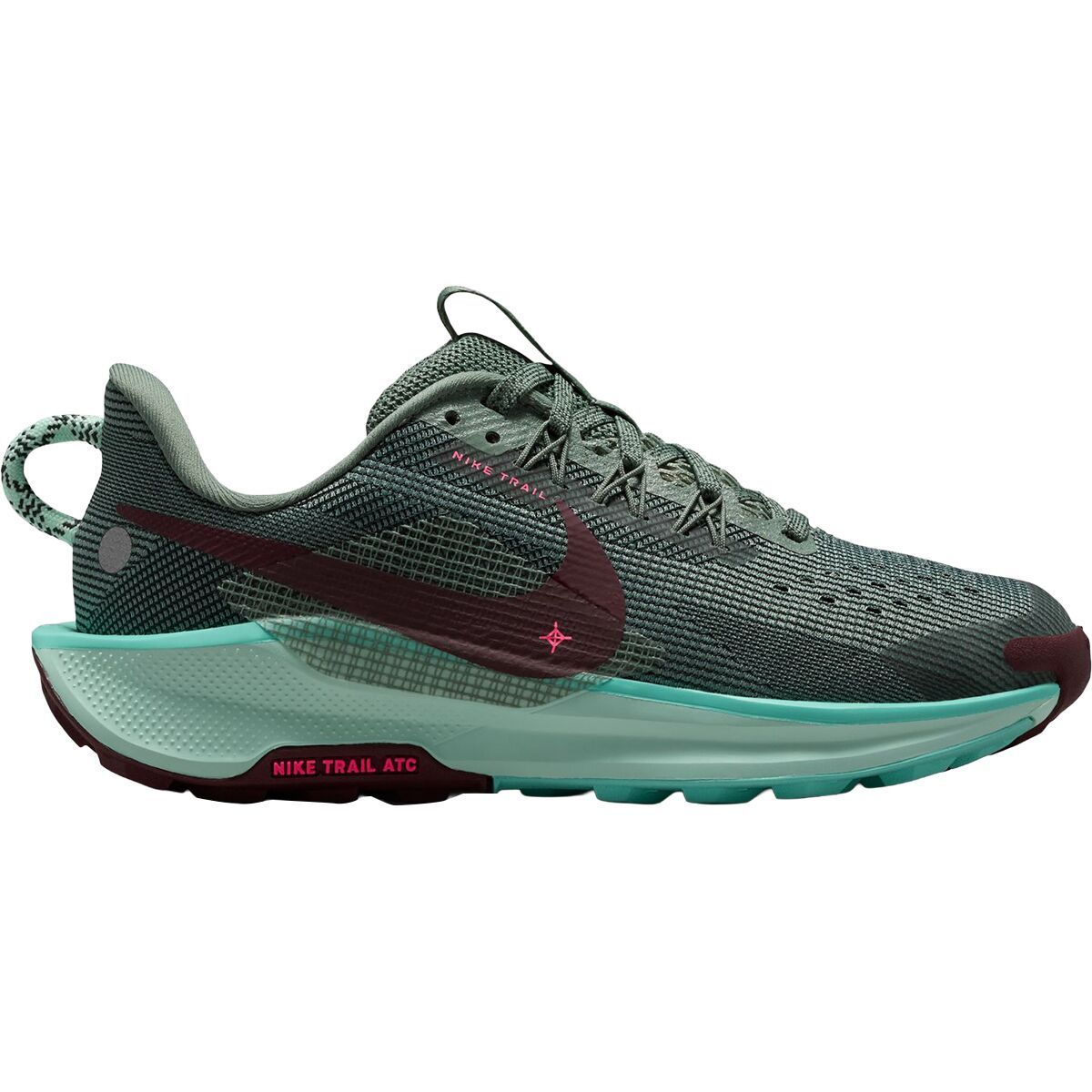
Nike Pegasus Trail 5
Our go-to trail-capable training shoe. React foam + sticky outsole.