
Treadmill Running: The Complete Guide to Indoor Training
My Treadmill Training Journey
"I used to hate the treadmill. Called it the 'dreadmill.' But during a brutal New England winter when temperatures dropped below zero for weeks, I had no choice. That's when I discovered treadmill training wasn't just a backup plan - it could be a strategic advantage."
"Training indoors let me nail precise paces for interval workouts without fighting wind or traffic. I could focus purely on form. When spring came and I raced my first outdoor 10K, I crushed my PR by 90 seconds. The treadmill had made me stronger, faster, and more mentally resilient than I'd ever been."
Treadmill running offers unmatched control, safety, and convenience for runners of all levels. Whether training through harsh weather, recovering from injury, or targeting specific paces for interval work, the treadmill is a powerful training tool when used correctly.
This comprehensive 2025 guide covers everything you need to maximize treadmill training: the science-backed benefits, proper form adjustments, the 1% incline rule explained, beginner through advanced workouts, mental strategies to combat boredom, and answers to the most common treadmill questions.
Calculate Your Perfect Treadmill Pace
Use our treadmill pace calculator to convert outdoor paces, account for incline, and determine exact speeds for every workout type.
Get Your Treadmill Paces →Benefits of Treadmill Running
Treadmill training offers unique advantages that complement outdoor running and can accelerate your improvement when used strategically.
Weather Independence
Treadmills eliminate weather as a training barrier, ensuring consistency regardless of external conditions:
- Extreme Heat or Cold: Maintain training volume without heat exhaustion or frostbite risk
- Rain and Snow: Avoid slippery conditions and soaked gear
- Air Quality: Train safely during high pollution or wildfire smoke days
- Darkness: Safe running option for early morning or evening sessions
- Consistency: Never miss a workout due to weather, protecting training momentum
Safety and Convenience
- Zero Traffic: No cars, intersections, or stoplights interrupting workout flow
- Controlled Environment: Eliminate tripping hazards, uneven surfaces, and aggressive dogs
- Immediate Access: No travel time to running routes or tracks
- Hydration and Fuel: Easy access to water and nutrition throughout run
- Emergency Stop: Can immediately end workout if needed for safety or fatigue
- Security: Safe option for runners concerned about personal safety outdoors
Top Rated Treadmills:
Controlled Pace and Effort
Treadmills provide unmatched precision for structured workouts:
- Exact Pace Control: Hit precise interval paces without GPS lag or variation
- Consistent Effort: No wind, hills, or terrain changes affecting pace
- Perfect for Intervals: Automatic pace changes make interval structure effortless
- Data Accuracy: Precise distance and pace without GPS signal issues
- Progressive Workouts: Easily program complex workouts with automatic pace changes
- Form Focus: Consistent surface allows concentration on running mechanics
Reduced Impact
- Cushioned Surface: Most treadmills offer more shock absorption than concrete or asphalt
- Injury Recovery: Gentler option when returning from injury
- High-Mileage Training: Reduced cumulative impact stress during high-volume weeks
- Joint Protection: Particularly beneficial for heavier runners or those with joint concerns
Essential Treadmill Running Gear:
Treadmill vs Outdoor Running: The Science
Understanding the biomechanical and physiological differences between treadmill and outdoor running helps you optimize both training modes.
The 1% Incline Rule Explained
Research shows that setting your treadmill to 1% incline closely approximates outdoor running effort:
Why Use 1% Incline?
- Wind Resistance: Outdoors, you overcome air resistance that creates 2-10% additional effort depending on speed
- Energy Cost Match: 1% incline compensates for this missing resistance at most running speeds
- Speed Correlation: Most important at faster paces (7:00-6:00 min/mile) where wind resistance increases
- Research Validated: Studies confirm 1% incline makes oxygen cost equivalent to outdoor running
When to Use Different Inclines
- • 0% Incline: Recovery runs, warm-ups, cool-downs, or easy pace running
- • 1% Incline: Standard setting for most training runs and tempo workouts
- • 2-5% Incline: Simulate moderate hills or add difficulty to easy runs
- • 6-10% Incline: Hill repeat workouts and strength building
- • Variable Incline: Simulate outdoor terrain or rolling hill courses
Biomechanical Differences
How Treadmill Running Differs
- Belt Movement: Moving belt can encourage slight overstriding if you're not mindful
- Propulsion: Outdoor running requires pushing off ground; treadmill belt assists slightly
- Hamstring Activation: Treadmill may engage hamstrings slightly less than outdoor running
- Cadence Consistency: Easier to maintain steady cadence on treadmill's uniform surface
- Stabilizer Muscles: Outdoor running recruits more stabilizing muscles for terrain navigation
Making Treadmill Running More "Outdoor-Like"
- Use 1% incline for moderate to fast running
- Vary incline periodically to simulate rolling terrain
- Focus on active push-off rather than passive belt movement
- Mix treadmill and outdoor running for complete muscular development
- Run some outdoor sessions weekly to maintain terrain adaptation
Proper Treadmill Running Form
While running mechanics remain largely consistent, treadmill running requires specific form considerations for optimal efficiency and safety.
Essential Form Elements
Head and Eyes
- Gaze Forward: Look straight ahead at eye level, not down at console or feet
- Neck Neutral: Keep head aligned with spine, avoid jutting forward
- Mirror Use: If available, check form in mirror occasionally but don't fixate
Arms and Hands
- Natural Swing: Arms should swing naturally at sides, not across body
- 90-Degree Bend: Maintain relaxed 90-degree elbow angle
- Never Hold Handrails: Holding rails alters gait mechanics and reduces calorie burn by up to 20%
- Relaxed Hands: Keep hands relaxed, not clenched in fists
Core and Posture
- Upright Torso: Maintain slight forward lean from ankles, not waist
- Engaged Core: Light core engagement for stability
- Shoulders Relaxed: Keep shoulders down and back, not hunched
- Belt Position: Run in center of belt, not too far forward or back
Legs and Feet
- Midfoot Landing: Land on midfoot under center of mass, not heel-striking ahead of body
- Quick Turnover: Maintain cadence of 170-180 steps per minute
- Avoid Overstriding: Don't reach forward with legs - let belt come to you
- Active Push-Off: Consciously push off with toes rather than relying on belt movement
- Knee Drive: Drive knees forward and up, maintaining proper running mechanics
Common Treadmill Form Mistakes
Avoid These Errors:
- • Holding Handrails: Destroys natural gait and reduces workout effectiveness
- • Looking Down: Creates neck strain and poor posture
- • Running Too Far Forward: Increases fall risk if you stumble
- • Too Far Back: Risk of stepping off belt unexpectedly
- • Bouncing Excessively: Indicates overstriding or inefficient mechanics
- • Inconsistent Pace: Drifting forward and backward on belt
Beginner Treadmill Workouts
Start your treadmill training with these progressive workouts designed to build endurance, confidence, and proper pacing skills.
Workout 1: Walk-Run Intervals
Building Running Endurance (Weeks 1-4)
- • Warm up: 5 minutes walking at comfortable pace
- • Main set: 8 rounds of (2 min run, 1 min walk)
- • Running pace: Easy, conversational (around 5.5-6.5 mph)
- • Walking pace: Comfortable recovery (3.5-4.0 mph)
- • Cool down: 5 minutes easy walking
- • Incline: 0%
- • Total: 34 minutes
- • Progression: Add 1 round weekly or increase run intervals to 2.5 then 3 minutes
Workout 2: Steady Easy Run
Continuous Running Foundation (Weeks 5-8)
- • Warm up: 5 minutes easy walk/jog
- • Main set: 20-30 minutes continuous easy running
- • Pace: Conversational, should be able to speak full sentences (RPE 5-6/10)
- • Incline: 1%
- • Cool down: 5 minutes easy walking
- • Total: 30-40 minutes
- • Focus: Maintaining steady effort and proper form throughout
- • Progression: Add 5 minutes to main set each week
Workout 3: Beginner Fartlek
Introduction to Speed Variation (Weeks 9-12)
- • Warm up: 10 minutes easy running
- • Main set: 6 rounds of (1 min moderate-hard, 2 min easy)
- • Hard effort: 1-1.5 mph faster than easy pace (RPE 7/10)
- • Easy effort: Return to conversational pace
- • Incline: 1% throughout
- • Cool down: 5 minutes easy running
- • Total: 33 minutes
- • Purpose: Introduce varied pace without overwhelming intensity
Find Your Perfect Training Pace
Use our running pace calculator to determine your ideal easy, tempo, and interval paces for all treadmill workouts.
Calculate Training Paces →Advanced Treadmill Workouts
Challenge yourself with these structured workouts designed to build speed, endurance, and mental toughness.
VO2 Max Intervals
Maximum Aerobic Development
- • Warm up: 15 minutes easy at 1% incline
- • Main set: 6 x 3 minutes at 5K race pace
- • Recovery: 2.5 minutes easy jog between intervals
- • Work incline: 1%
- • Recovery incline: 0%
- • Cool down: 10 minutes easy
- • Total: 58 minutes
- • Purpose: Develop VO2 max and speed endurance
- • Heart rate: Should reach 90-95% max HR by end of each interval
Progressive Tempo Run
Lactate Threshold Builder
- • Warm up: 15 minutes easy at 1% incline
- • Set 1: 10 minutes at tempo pace (comfortably hard, RPE 7/10)
- • Increase speed by 0.3 mph
- • Set 2: 10 minutes at slightly faster tempo
- • Increase speed by 0.3 mph
- • Set 3: 5 minutes at threshold pace (RPE 8/10)
- • Cool down: 10 minutes easy
- • Incline: 1% throughout
- • Total: 50 minutes
- • Purpose: Gradual progression builds mental and physical threshold
Hill Repeat Power Workout
Strength and Power Development
- • Warm up: 15 minutes easy at 0-1% incline
- • Main set: 8 x 2 minutes uphill
- • Hill incline: 6-8%
- • Hill effort: Hard but controlled (RPE 8/10), maintain good form
- • Recovery: 2 minutes easy jog at 0% incline
- • Cool down: 10 minutes easy at 0%
- • Total: 57 minutes
- • Focus: Driving knees, maintaining cadence, powerful push-off
- • Purpose: Build running power and strength without impact of downhills
Pyramid Intervals
Mixed-Distance Speed Work
- • Warm up: 15 minutes easy at 1% incline
- • Pyramid: 1min - 2min - 3min - 4min - 3min - 2min - 1min
- • Pace: 5K race pace to 10K pace (faster for shorter, sustainable for longer)
- • Recovery: Half the interval time (30 sec, 1 min, 1.5 min, 2 min, etc.)
- • Incline: 1% for work, 0% for recovery
- • Cool down: 10 minutes easy
- • Total: 50 minutes
- • Purpose: Develop multiple energy systems in single session
Race Simulation
10K Race Pace Practice
- • Warm up: 2 miles easy at 1% incline
- • Main set: 5 miles at goal 10K race pace
- • Incline: 1% to simulate outdoor effort
- • Mental strategy: Break into 5 x 1-mile segments
- • Cool down: 1 mile easy
- • Total: 8 miles
- • Purpose: Build confidence at race pace and practice pacing strategy
- • Note: Practice race-day nutrition and hydration strategies
Get Your Custom Training Plan
Generate a personalized training plan with treadmill and outdoor workouts optimized for your goals and schedule.
Create Training Plan →Mental Strategies and Entertainment
The mental challenge of treadmill running is often greater than the physical demand. Use these strategies to stay engaged and motivated during indoor runs.
Segmentation Strategies
Break Runs into Small Chunks
- Mile-by-Mile: Focus only on completing current mile, not total distance
- 5-Minute Blocks: "Just 5 more minutes" is mentally manageable
- Song Method: Run duration of 3-4 songs at a time
- Quarter Goals: Divide run into quarters, each with specific focus
- Countdown Method: Use console countdown to focus on time remaining
Entertainment Options
Ranked by Effectiveness:
- • TV Shows: Engaging content makes time disappear (save favorite shows for treadmill only)
- • Podcasts: Educational or entertaining, perfect for easy runs
- • Audiobooks: Get lost in story, excellent for longer runs
- • Music Playlists: Match tempo to running cadence, create workout-specific playlists
- • Virtual Races: Apps like Zwift or iFit provide interactive competition
- • Scenic Routes: Some treadmills offer virtual running paths worldwide
- • YouTube Videos: Race footage, running documentaries, or vlogs
Mental Toughness Training
Use the treadmill's controlled environment to develop race-day mental skills:
- Pace Awareness: Practice running by feel, then check actual pace
- Discomfort Tolerance: Learn to maintain form when fatigued
- Race Visualization: Mentally rehearse race scenarios during tempo runs
- Form Focus: Use mirror to perfect mechanics under fatigue
- Cadence Drills: Practice hitting 180 spm without watching console
- Negative Splitting: Practice running second half faster than first
Variety Through Workout Structure
Boredom often comes from monotonous steady running. Add variety with workout structure:
- Intervals: Changing pace provides mental checkpoints
- Incline Variation: Simulate outdoor terrain changes
- Progressive Runs: Gradual pace increases provide focus
- Fartlek Sessions: Spontaneous speed surges add unpredictability
- Time Trials: Race yourself for set distance
- Speed Ladders: Complex interval structures demand concentration
My Treadmill Mental Strategy
"For long treadmill runs, I use the 'only watch when it ends in 0 or 5' rule. I can only look at the time display when it shows :00, :05, :10, etc. This breaks the run into 5-minute segments and prevents constant clock-watching."
"I also save my favorite podcast exclusively for treadmill runs. It gives me something to look forward to, and I'm genuinely excited to get on the treadmill to hear the next episode. Creating these positive associations transforms the mental game completely."
Optimize Training with Heart Rate Zones
Calculate your precise heart rate training zones to ensure you're hitting the right intensity for each treadmill workout type.
Calculate HR Zones →Frequently Asked Questions About Treadmill Running
Is running on a treadmill as effective as outdoor running?
Treadmill running is equally effective for cardiovascular fitness and endurance development when using a 1% incline to compensate for lack of wind resistance. While treadmills offer controlled conditions and reduced impact stress, outdoor running provides terrain variation and builds stabilizing muscles. Both training modes have unique benefits and complement each other in a balanced program. Many elite runners incorporate treadmill training for precise pace work.
Should I always use a 1% incline on the treadmill?
The 1% incline rule helps compensate for lack of wind resistance and makes treadmill effort more comparable to outdoor running at moderate to fast paces. Use 1% incline for most training runs, tempo workouts, and intervals. For easy recovery runs or interval recovery periods, 0% incline is acceptable. Increase incline to 2-10% for specific hill training or to add difficulty to workouts. The 1% rule is most important at paces faster than 9:00/mile.
How do I combat boredom on the treadmill?
Combat treadmill boredom by varying workout structure with intervals, incline changes, or progressive runs rather than steady-state running. Entertainment options include engaging TV shows, podcasts, audiobooks, or music playlists matched to running cadence. Mental strategies like breaking runs into 5-minute segments, focusing on form cues, practicing race visualization, or using the "only look at multiples of 5" time-check method can make runs pass faster.
What's the difference between treadmill and outdoor running form?
Treadmill running form should mirror outdoor running with a few adjustments: never hold handrails as this alters gait mechanics, focus on active push-off with toes rather than relying on belt movement, maintain natural arm swing, and avoid overstriding by landing with feet under your center of mass. The moving belt can encourage reaching forward with legs - resist this by maintaining 170-180 step cadence and letting the belt come to your feet rather than reaching for it.
What are the best treadmill workouts for beginners?
Beginner treadmill workouts should start with walk-run intervals: alternate 2 minutes running with 1 minute walking for 20-30 minutes total. Progress to continuous easy running at conversational pace for 20-30 minutes at 1% incline. Add variety with simple fartlek sessions including 30-60 second speed surges during steady runs, gradual incline walks at 3-5% grade, or progressive runs that gradually increase speed every 5 minutes. Focus on consistency and proper form before advancing to structured interval training.
Conclusion: Maximizing Your Treadmill Training
Final Thoughts on Treadmill Running
"The treadmill transformed from my least favorite training tool to one of my most valuable. It's where I do my hardest workouts because I can control every variable and focus purely on execution."
"Stop thinking of the treadmill as a backup plan for bad weather. Think of it as a precision training instrument that lets you nail specific paces, perfect your form, and build mental toughness in a controlled environment."
"Use our treadmill pace calculator to find your exact training speeds, embrace the mental challenge, and discover how indoor running can accelerate your outdoor performance."
Treadmill running is a powerful training tool that offers unique advantages for runners at all levels. The controlled environment enables precise pace work, the cushioned surface reduces impact stress, and weather independence ensures training consistency year-round.
Success with treadmill training requires proper technique: maintain good form without holding handrails, use 1% incline for most runs to simulate outdoor effort, vary your workouts to prevent mental fatigue, and develop entertainment strategies that keep you engaged.
Whether you're a beginner building base endurance with walk-run intervals or an advanced runner executing complex speed workouts, the treadmill provides unmatched control for achieving specific training objectives. Mix treadmill and outdoor running for comprehensive development, using each environment's strengths to your advantage.
Start by calculating your precise treadmill paces using our treadmill pace calculator, implement proper form techniques, choose workouts that match your goals, and embrace the mental challenge. With the right approach, treadmill training becomes not just tolerable, but genuinely effective and even enjoyable.
Ready to Master Treadmill Training?
Calculate your exact treadmill paces and start maximizing your indoor training with precision-based workouts.
Get Your Treadmill Paces →Related Articles
Featured at Backcountry — 15% off first order
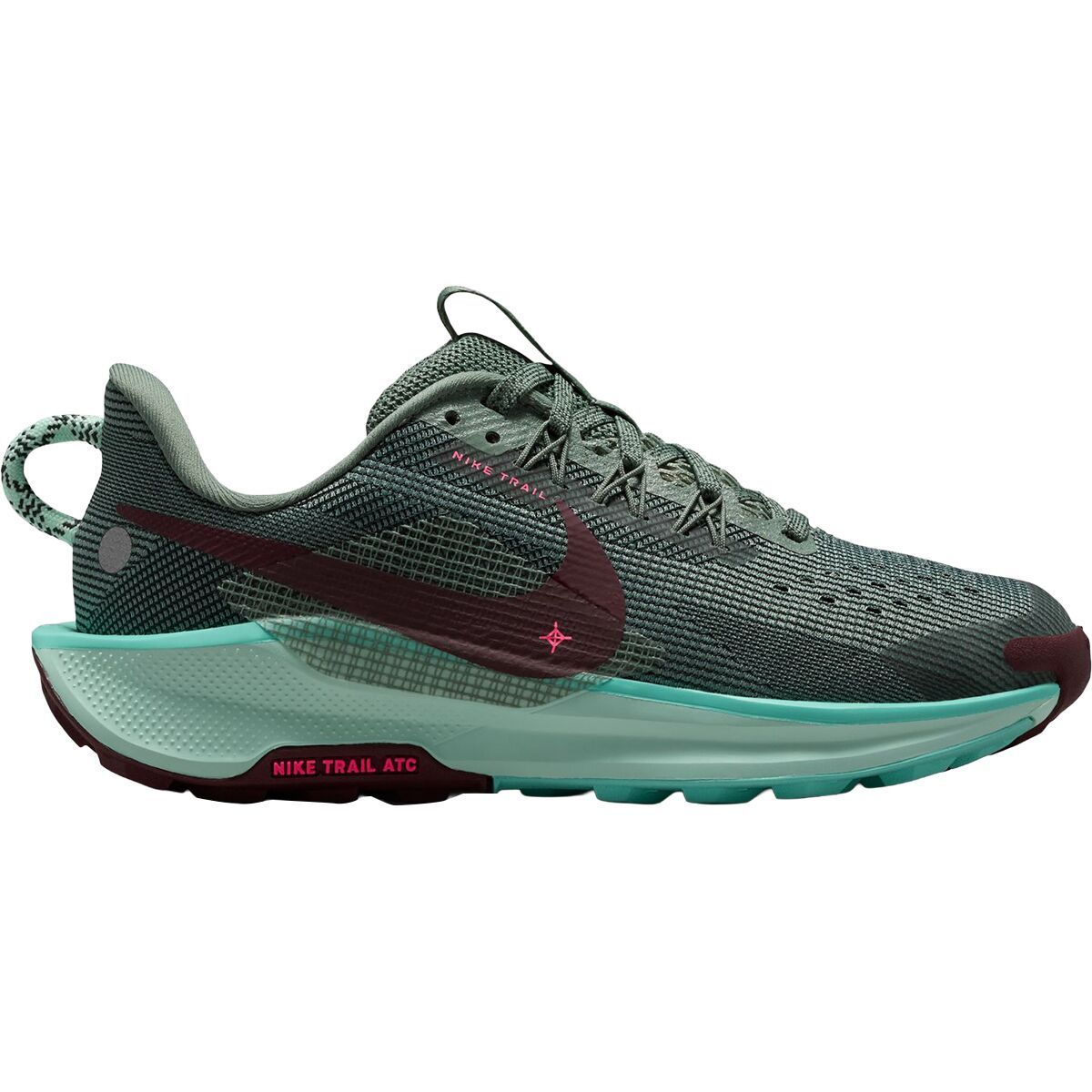
Nike Pegasus Trail 5
Our go-to trail-capable training shoe. React foam + sticky outsole.