
How Many Calories Does Cycling Burn?
Cycling is one of the most efficient forms of cardiovascular exercise — efficient both for your joints and for calorie-burning potential over long durations. The number of calories burned on a bike ride depends on four primary variables: your body weight, riding intensity (speed), duration or distance, and terrain.
Most estimates you see on smartwatches and stationary bikes use a simple formula derived from MET values — Metabolic Equivalent of Task. Our cycling calorie calculator applies the same science, refined for actual cycling intensities and terrain grades based on published compendium research.
Calories Burned Cycling by Speed (150 lb Rider, 60 Minutes)
Use this table as a quick reference for how cycling speed affects calorie burn. Values are for a 150 lb (68 kg) rider on flat terrain over one hour.
| Speed | Intensity | MET Value | Cal / Hour | Cal / 30 Min |
|---|---|---|---|---|
| <12 mph | Casual / Leisure | 4.0 | 272 | 136 |
| 12–15 mph | Moderate | 6.8 | 462 | 231 |
| 16–19 mph | Vigorous | 8.0 | 544 | 272 |
| 20+ mph | Racing | 10.0 | 680 | 340 |
| Indoor | Spinning Class | 8.5 | 578 | 289 |
Values calculated using: Calories = MET x weight(kg) x time(hrs). Based on 150 lb (68 kg) rider on flat terrain.
How Terrain Affects Cycling Calorie Burn
Terrain is one of the most underrated factors in cycling calorie calculations. Many apps ignore it entirely, which leads to significant underestimates for riders who tackle hills.
- Flat terrain: Baseline MET value, no adjustment needed
- Hilly terrain: Adds approximately 20% more calories burned over the same duration at the same speed
- Mountainous / sustained climbing: Adds approximately 40% more calories — the energy cost of gaining elevation is substantial
For context: a 150 lb rider doing an hour of moderate cycling burns about 462 calories on flat roads. On a hilly route that same hour jumps to 554 calories. On a mountain climb it reaches 647 calories.
Cycling vs Running Calorie Burn
The most common question we get is: does cycling burn as many calories as running? The short answer is that running burns more calories per minute at a comparable effort, but cycling allows most athletes to sustain effort longer, often resulting in comparable or greater total calorie burn per session.
| Activity | Speed / Effort | MET | Cal / Hour (150 lb) |
|---|---|---|---|
| Running | 6 mph (10 min/mile) | 10.0 | 680 |
| Running | 8 mph (7.5 min/mile) | 13.5 | 918 |
| Cycling | 12–15 mph (moderate) | 6.8 | 462 |
| Cycling | 16–19 mph (vigorous) | 8.0 | 544 |
| Cycling | 20+ mph (racing) | 10.0 | 680 |
| Spinning | Indoor class | 8.5 | 578 |
The key practical difference: running has a higher injury risk that limits session length and weekly volume. Cycling allows high-volume training with less cumulative stress. Many endurance athletes use cycling as an active recovery tool or cross-training method precisely because they can burn significant calories without pounding their joints. See our running calorie calculator for a direct side-by-side comparison with your own numbers.
The MET Formula Explained
Every result from this cycling calorie calculator uses the same formula published in exercise science research:
Calories = MET x weight (kg) x duration (hours) x terrain modifier
MET (Metabolic Equivalent of Task) represents the ratio of your working metabolic rate to your resting metabolic rate. A MET of 1.0 is sitting still. Casual cycling at a MET of 4.0 means you are burning energy four times faster than at rest. Racing at MET 10.0 means ten times your resting rate.
The terrain modifier we apply is based on grade-adjusted energy cost research: flat = 1.0x, hilly = 1.2x, mountainous = 1.4x.
Factors That Affect Your Actual Calorie Burn
Body Weight
Heavier riders burn more calories because moving a larger mass requires more energy. A 200 lb rider burns roughly 33% more calories per hour than a 150 lb rider at the same speed.
Cycling Efficiency
More experienced cyclists develop better pedaling mechanics and aerodynamic position, meaning they can maintain the same speed at a lower metabolic cost. This is one reason why MET-based calculators may slightly overestimate calorie burn for highly trained riders.
Drafting
Drafting behind another rider can reduce aerodynamic drag by 20–40%, meaningfully lowering calorie burn at the same speed. Group ride calorie numbers will be lower than solo ride estimates at equivalent speeds.
Bike Type
Road bikes on pavement are the most efficient. Mountain bikes on trails, due to rolling resistance and rider position, demand more energy. An e-bike with pedal assist naturally reduces calorie burn.
Using Cycling for Weight Loss
Cycling is one of the most sustainable exercises for long-term calorie deficit because it is low-impact and enjoyable enough that most people stick with it. A 150 lb rider cycling at moderate intensity five days per week for one hour would burn roughly 2,310 additional calories — about two-thirds of a pound of fat per week from exercise alone, without any dietary changes.
For practical cycling weight loss strategies, read our guide on cycling for weight loss in 2025. To optimize your training zones for maximum fat burn, use our heart rate zone calculator and FTP calculator to dial in the right intensities.
Calorie Burn Across Common Cycling Scenarios
- 30-minute commute (casual, 150 lb): ~136 calories
- 1-hour group ride (moderate, 150 lb): ~462 calories
- 2-hour endurance ride (moderate, 150 lb): ~924 calories
- 45-minute spinning class (150 lb): ~434 calories
- Century ride — 100 miles (~6 hrs moderate, 150 lb): ~2,770 calories
- 1-hour mountain climb (vigorous, 150 lb, mountainous): ~762 calories
How to Get More Accurate Calorie Estimates
MET-based calculators are accurate within 10–15% for most riders. To improve precision:
- Add a heart rate monitor: Heart rate correlates more directly with oxygen consumption than speed alone. Devices like the Wahoo TICKR HR monitor paired with a cycling computer can improve calorie estimate accuracy to within 5–10%.
- Use a power meter: Measuring actual power output in watts is the gold standard for cycling calorie calculation. If you have a power meter, use your normalized power and kilojoule data (1 kJ ≈ 1 kcal at roughly 24% mechanical efficiency).
- Track with a GPS computer: A device like the Garmin Edge 540 factors in real-time speed, grade, and heart rate for the most accurate all-around estimate without a dedicated power meter.
- Use consistent inputs: Always enter your current weight and choose the intensity level that matches your perceived exertion, not just your target speed.
Featured at Backcountry — 15% off first order
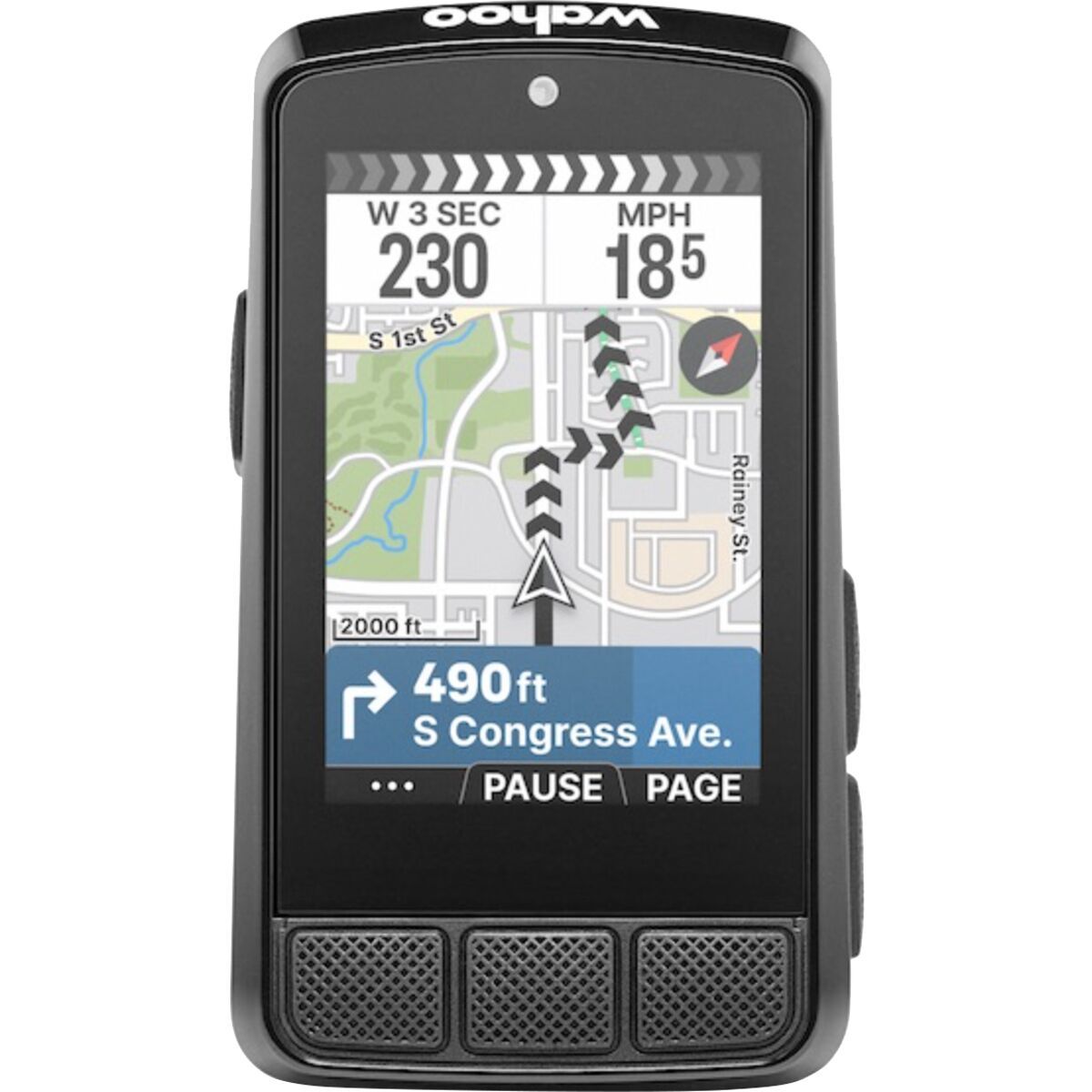
Wahoo ELEMNT BOLT 3
Track your rides with Wahoo's compact GPS — the bike computer we use daily.