Endure Weekly Welcome Guide
The Ultimate Zone 2 Training Guide
The most undertrained intensity in endurance sport — and the one elites build their entire base on.
From Endure Weekly · runbikecalc.com/guides/ultimate-zone-2-training
What Zone 2 actually is
Zone 2 is the highest intensity at which your body's energy demand is met almost entirely by the aerobic, fat-oxidizing system. Above Zone 2, you start producing lactate faster than you can clear it. Below it, you're not stressing the system enough to drive adaptation.
For most well-trained endurance athletes, Zone 2 corresponds to roughly 60–70% of maximum heart rate, or about 55–75% of FTP / lactate threshold. The exact number is less important than the physiological signal it represents: you can hold a full conversation, your breathing is rhythmic but unhurried, and you could sustain the effort for hours.
"All my workouts are based on the foundation of zone 2 training. There's no way to skip it." — Iñigo San Millán, exercise physiologist to Tadej Pogačar
Why it matters more than any other zone
Zone 2 develops three things nothing else can:
- Mitochondrial density — the engines inside your muscle cells multiply in response to long, low-intensity work. More mitochondria = more capacity to produce ATP aerobically = higher sustained power for any race longer than 90 seconds.
- Capillarization — new capillaries grow into the slow-twitch muscle fibers, delivering more oxygen and clearing more metabolites at every intensity above Zone 2 too.
- Fat oxidation — your body becomes far better at burning fat as fuel, sparing precious glycogen for when you actually need it (Zone 4–5 efforts, race finishes, surges).
None of these adaptations are produced efficiently by harder training. That's why elite triathletes, marathon runners, and Tour de France cyclists spend roughly 80% of their training hours in Zone 1–2, even though their races are far harder.
How to find your Zone 2 — four methods, ranked by accuracy
1. Lactate testing (most accurate)
A fingerprick blood sample at the end of a steady-state effort. Zone 2 corresponds to a blood lactate of 1.7–2.0 mmol/L. This is what coaches use for elite athletes. A consumer-grade meter (Lactate Plus, Eaglenos) costs $200–400 and gives near-lab accuracy.
2. Heart-rate-deflection / "MAF" method
Subtract your age from 180. The result is your Maffetone Aerobic Function (MAF) heart rate. Subtract 5 if you're returning from injury or just starting structured training. Add 5 if you've been training consistently for 2+ years with no setbacks. Stay below this number on every easy day.
Example: a 35-year-old with 2 years of consistent training → 180 − 35 + 5 = 150 bpm ceiling.
3. Talk test (universally available)
You should be able to speak in full sentences without gasping. If you can only manage broken phrases, you're in Zone 3 (too hard). If you can sing comfortably, you're below Zone 2. Use this to validate your heart-rate readings — if HR says Zone 2 but you're gasping, your HR data is wrong (or you're sick / over-caffeinated).
4. Heart rate as % of max
Zone 2 = 60–70% of HRmax. If your max HR is 190, that's 114–133 bpm. The "220 minus age" formula is wildly inaccurate for individuals — use a recent race or a true max test (warm up, then 3 minutes all-out at the end of a 5-minute progressive ramp). Use our Zone 2 calculator to dial it in.
The protocol elites use
3–5 Zone 2 sessions per week. For most working amateurs, 3 sessions is the sweet spot.
45–90 minutes minimum per session. Anything shorter than 45 minutes doesn't accumulate the metabolic stress needed for adaptation. The first 20 minutes are essentially warm-up; the magic happens in minutes 30–90.
No surges. No "just for a moment" hard sections. No hills if you can't hold Zone 2 up them. The single most common mistake is letting heart rate drift into Zone 3 on inclines, in headwinds, or when you feel good. The training stimulus is destroyed the moment you cross over.
Adaptations take 8–12 weeks of consistent execution to show up in race performance. Most athletes quit at week 4 because they "feel slow." Push through.
Sample Zone 2 sessions by sport
Running
- Easy aerobic: 60 min continuous in Zone 2. If hilly, walk the climbs to keep HR down.
- Long easy: 90–150 min in Zone 2. Take in 30–60g carbs/hour for sessions over 90 min to support adaptation without bonking.
- Doubles: Two 45-min easy runs in the same day (AM/PM) once per week to add volume without raising injury risk.
Cycling
- Steady spin: 60–90 min on the trainer at 65% FTP. Indoor is ideal because there are no terrain forcing you above zone.
- Long aerobic ride: 2–4 hours outdoors, soft-pedaling climbs to stay sub-threshold. Coffee shop ride pace.
- Brick base: 90 min Zone 2 bike + 20 min Zone 2 run off the bike once per week if training for tri.
Hyrox / functional fitness
- Erg base: 60 min continuous on the rower or SkiErg at conversational effort. Use HR cap, not pace.
- Run-bike-run: 20-min run + 20-min bike + 20-min run all in Zone 2. Mimics multi-modal Hyrox endurance demand.
- Long sled walk: 90 min walking with a low sled push — gets HR into Zone 2 without strength fatigue.
The single biggest mistake: Zone 3 drift
Sports scientists call it "moderate intensity syndrome" — the tendency to spend nearly all training in Zone 3, the no-man's-land where workouts feel "kind of hard but not really hard." Zone 3 is too easy to drive top-end gains and too hard to develop the aerobic engine.
If you're ambitious, this is uncomfortable to hear. The fix:
| Easy days | Hard days |
|---|---|
| Should feel almost lazy | Should feel scary |
| Heart rate < 70% max | Heart rate ≥ 90% max for intervals |
| "I could do this all day" | "I'm ready to be done" |
If your Sunday long run finishes with you feeling tired, you ran it too hard. Easy days exist to recover from hard days while accumulating aerobic volume. They are not workouts.
How to verify you're actually adapting
Three measurable signals tell you Zone 2 work is working:
1. Heart rate at fixed pace drops
Run the same loop at the same effort. After 8 weeks of disciplined Zone 2, your average heart rate at that pace should be 5–10 bpm lower. This is unambiguous evidence of cardiac efficiency improvement.
2. Pace at fixed heart rate increases
Run for 30 minutes at exactly your Zone 2 HR ceiling. After 8 weeks, your average pace at that ceiling should be 10–30 sec/mile faster. This is sometimes called an "aerobic threshold test" and is the cleanest way to see Zone 2 progress.
3. Resting heart rate drops
Track morning resting HR weekly. With consistent Zone 2 work, it should fall 3–8 bpm over 8–12 weeks. (HRV will rise correspondingly if you measure it.)
Frequently asked questions
Will Zone 2 make me slow?
The opposite. Athletes who add structured Zone 2 to their training plan see race-pace improvements of 3–8% over 12 weeks because the aerobic engine fuels every other zone. Most "slowing" complaints come from athletes who are losing top-end fitness — but they're skipping the 20% of high-intensity work that should accompany Zone 2 base.
How long until I see results?
Heart rate at fixed pace drops within 4–6 weeks. Race performance improves at 8–12 weeks. Mitochondrial density changes are still accumulating at 6 months. This is a long game.
Can I do Zone 2 indoors?
Yes — and it's often easier indoors because terrain doesn't force HR drift. The catch: indoor sessions feel mentally longer. Watch a movie, listen to a podcast, or do calls. The metabolic stimulus is identical.
Is fasted Zone 2 better?
For sessions under 60 min, fasted is fine and may slightly enhance fat-oxidation adaptation. For sessions over 90 min, fuel — bonking does not improve your training. Take in 30–60g carbs/hour during longer sessions.
What's the relationship between Zone 2 and FTP / threshold?
Zone 2 is 55–75% of FTP (cycling) or 73–86% of lactate threshold pace (running). Use our FTP calculator for cyclists or the lactate threshold calculator for runners.
How do I know if my heart rate monitor is accurate?
Optical wrist HRMs lag by 5–15 seconds and over-report at low intensities. For Zone 2 work, use a chest strap (Polar H10 or Garmin HRM-Pro). Wrist data is fine for casual tracking but unreliable for the 5-bpm precision Zone 2 actually requires.
Your next steps
- Calculate your zone. Use the Zone 2 calculator to set your exact HR ceiling.
- Schedule three sessions this week in Zone 2. 60–90 min each. Don't go above your ceiling, even on hills.
- Track HR at the same loop weekly. After 4–6 weeks, you should see HR drop at the same effort.
- Be patient. The 8–12 week mark is when Zone 2 work pays off in race performance. Most athletes quit at week 3. Don't.
This guide is the welcome resource for Endure Weekly — one weekly email for runners, cyclists, triathletes, and Hyrox athletes. Read past issues at endureweekly.beehiiv.com.
Featured at Backcountry — 15% off first order
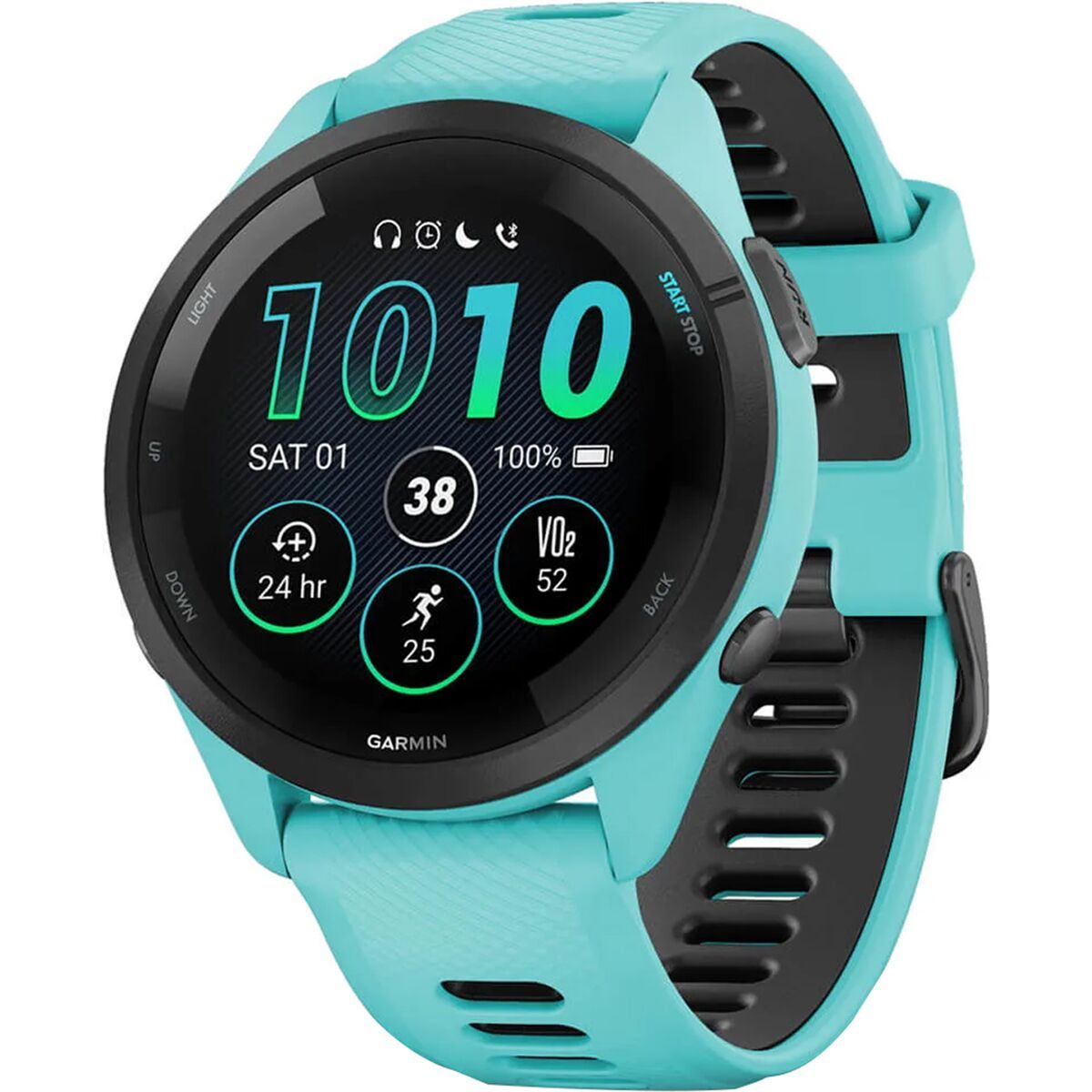
Garmin Forerunner 265
AMOLED display with real-time Zone 2 alerts via vibration — you stay in zone without looking down. Pairs cleanly with any ANT+/Bluetooth chest strap for the precision Z2 demands.
The Zone 2 Gear That Actually Matters
If you took the time to read a complete Z2 guide, you already know wrist-based HR optical sensors lag during steady-state efforts. These are what serious Z2 trainers — and the researchers who validated Z2 protocols — actually use. As an Amazon Associate, we earn from qualifying purchases.
- Polar H10 Heart Rate Monitor The gold-standard chest strap for Z2 accuracy. ECG-level signal, dual ANT+/Bluetooth, ~400 hours per battery. Used in most peer-reviewed Z2 research. ~$90.
- Garmin HRM 600 (Backcountry) Garmin's current flagship chest strap — running dynamics, stride length, vertical oscillation, and offline storage when your watch is out of range. Amazon. ~$170.
- Wahoo TICKR FIT (Backcountry) Budget pick — optical armband instead of chest strap. Less accurate at intervals but more comfortable for long Z2 sessions if chest straps chafe. Amazon. ~$80.
- Books on Z2 by Inigo San Millan / Peter Attia The primary sources cited on every Z2 podcast (Huberman, The Drive, Tim Ferriss). ~$20.