YMCA Cycle Ergometer Test Calculator
Estimate VO2 max from the YMCA submaximal bike test protocol. Used by fitness professionals worldwide.
Quick Answer: YMCA bike test estimates VO2 max without maximal effort. Start at 150 kgm/min, increase until 85% max HR. Accuracy: ±10-15% vs lab testing. Good VO2 max: Men 35-40, Women 30-35 ml/kg/min.
Calculate Your VO2 Max
Your Results
Enter your test data to see results
Endure Weekly
Want to keep improving?
Get your free Zone 2 training guide plus one short training email each Wednesday.
Free. No spam. Unsubscribe anytime.
YMCA Test Protocol
| Stage | Duration | Workload | Watts | RPM |
|---|---|---|---|---|
| 1 (Warm-up) | 3 min | 150 kgm/min | 25W | 50 |
| 2 | 3 min | 300-750 kgm/min* | 50-125W | 50 |
| 3 | 3 min | +150 kgm/min | +25W | 50 |
| 4+ | 3 min each | +150 kgm/min | +25W | 50 |
Stage 2 Selection: Based on Stage 1 ending HR:
- HR < 80 bpm: Use 750 kgm/min (125W)
- HR 80-89 bpm: Use 600 kgm/min (100W)
- HR 90-100 bpm: Use 450 kgm/min (75W)
- HR > 100 bpm: Use 300 kgm/min (50W)
Continue until heart rate reaches 85% of age-predicted max HR (220 - age) for two consecutive stages, or until two steady-state heart rates are obtained between 110-150 bpm.
Equipment for YMCA Testing
For accurate YMCA test results, you need reliable equipment with precise workload control.
Cycle Ergometer
The Monark 828E is the gold standard for YMCA testing - precise mechanical braking with accurate workload display.
- • Mechanically-braked for accurate resistance
- • Displays watts and kgm/min
- • Used in fitness labs worldwide
Heart Rate Monitor
A chest strap provides the accuracy needed for submaximal HR-based testing protocols.
- • Chest strap for real-time accuracy
- • ANT+ and Bluetooth connectivity
- • Essential for HR-based protocols
Affiliate Disclosure: As an Amazon Associate, we earn from qualifying purchases at no additional cost to you.
What is the YMCA Cycle Ergometer Test?
The YMCA Cycle Ergometer Test is a submaximal fitness test developed by the YMCA to estimate VO2 max without requiring maximal effort. It's one of the most widely used fitness assessments in gyms, hospitals, and research settings.
Advantages
- + No maximal effort required
- + Safe for most populations
- + Requires minimal equipment
- + Takes only 9-15 minutes
- + Easy to standardize
Limitations
- - 10-15% estimation error
- - Assumes linear HR-workload
- - Less accurate for athletes
- - Requires steady-state HR
- - Affected by medications
How the Calculation Works
The test uses the linear relationship between heart rate and oxygen consumption. By measuring heart rate at two submaximal workloads, we can extrapolate to estimate the workload at max HR, then convert to VO2 max using the ACSM metabolic equation.
VO2 Max Fitness Categories
| Category | Men 20-29 | Men 30-39 | Men 40-49 | Women 20-29 | Women 30-39 | Women 40-49 |
|---|---|---|---|---|---|---|
| Excellent | >55 | >54 | >52 | >49 | >45 | >42 |
| Good | 47-55 | 45-54 | 42-52 | 41-49 | 37-45 | 34-42 |
| Average | 39-46 | 36-44 | 33-41 | 33-40 | 30-36 | 27-33 |
| Below Avg | 31-38 | 29-35 | 26-32 | 26-32 | 23-29 | 21-26 |
| Poor | <31 | <29 | <26 | <26 | <23 | <21 |
Values in ml/kg/min. Source: ACSM Guidelines for Exercise Testing and Prescription
Frequently Asked Questions
What is the YMCA Cycle Ergometer Test?
The YMCA Cycle Ergometer Test is a submaximal fitness test that estimates VO2 max without requiring maximal effort. It uses progressively increasing workloads on a stationary bike while monitoring heart rate to predict aerobic capacity.
How accurate is the YMCA bike test?
The YMCA test has a standard error of estimate of approximately 10-15% compared to direct VO2 max testing. It's accurate enough for fitness assessment and tracking progress, but athletes may prefer maximal testing.
What equipment do I need?
You need a mechanically-braked cycle ergometer (like Monark), heart rate monitor, and stopwatch. Many spin bikes with power output can also work. The key is consistent, measurable resistance.
Who should not take this test?
Avoid this test if you have uncontrolled cardiovascular conditions, are on beta-blockers (affects HR response), have orthopedic limitations for cycling, or haven't been cleared for exercise by a physician.
Related Calculators & Tests
Featured at Backcountry — 15% off first order
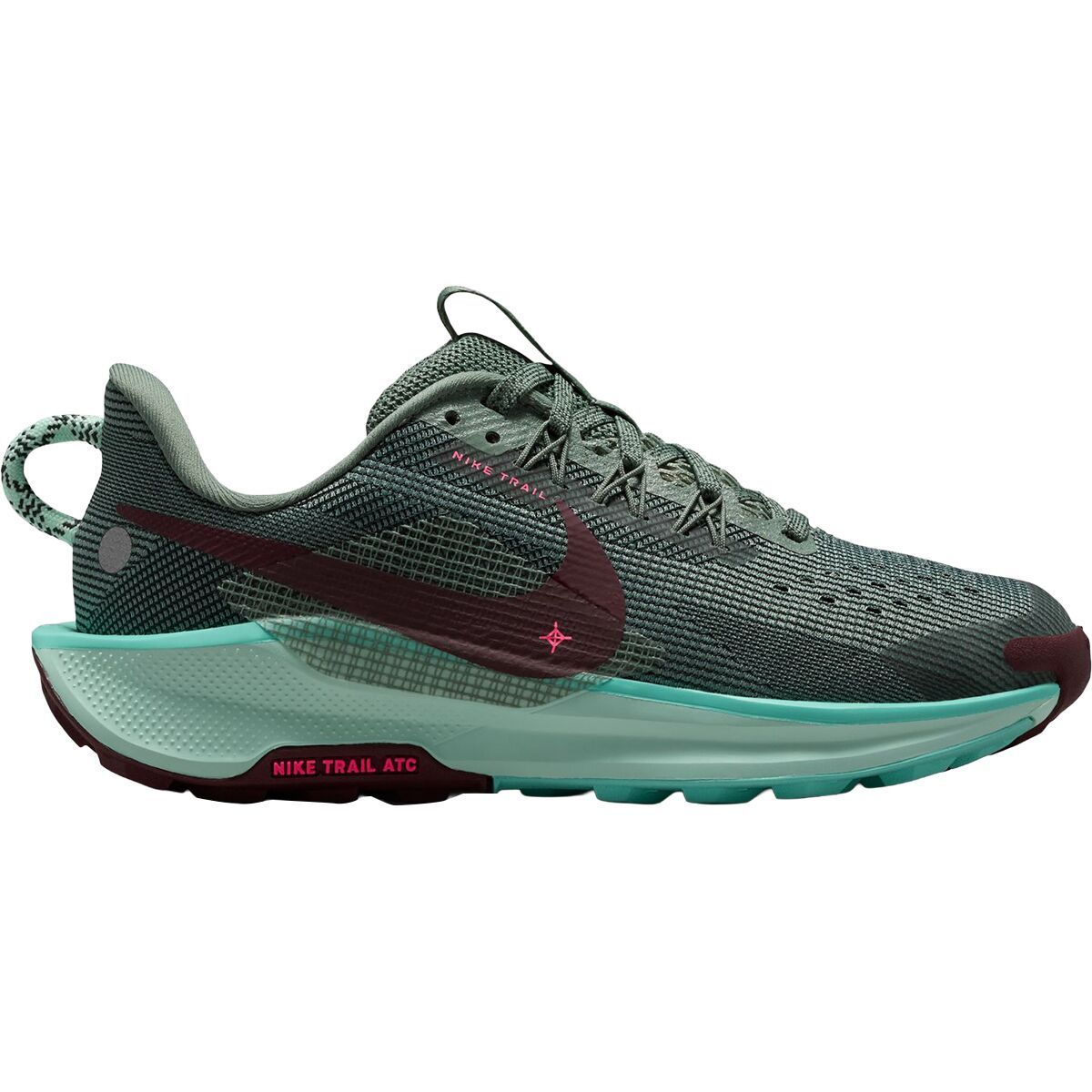
Nike Pegasus Trail 5
Our go-to trail-capable training shoe. React foam + sticky outsole.