Quick Formula: TSS = (Duration in hours) x (Intensity Factor)² x 100. Example: 2hr ride at IF 0.85 = 2 x 0.72 x 100 = 144 TSS
Training Stress Score Calculator
Calculate TSS for cycling (power), rTSS for running (pace), and hrTSS (heart rate). Track weekly training load, monitor CTL/ATL/TSB, and optimize your training with science-based recommendations.
TSS Quick Reference Guide
Cycling TSS Calculator (Power-Based)
TSS Formula
TSS = (Duration in seconds x NP x IF) / (FTP x 3600) x 100
Or simplified: TSS = (Duration in hours) x IF² x 100
Your Training Stress Results
Workout Interpretation
Overtraining Warning
Training Recommendation
Weekly Training Analysis
CTL (Fitness)
42-day average daily TSS. Higher = more fit.
ATL (Fatigue)
7-day average daily TSS. Higher = more fatigued.
TSB (Form)
CTL - ATL. Positive = fresh. Negative = fatigued.
Weekly Assessment
Training Load Warning
Endure Weekly
Want to keep improving?
Get your free Zone 2 training guide plus one short training email each Wednesday.
Free. No spam. Unsubscribe anytime.
Understanding CTL, ATL, and TSB
CTL - Chronic Training Load (Fitness)
CTL represents your accumulated fitness from consistent training. It's calculated as a 42-day exponentially weighted moving average of daily TSS.
CTL Benchmarks
- 30-50: Recreational fitness level
- 50-70: Fitness enthusiast
- 70-100: Competitive amateur
- 100-130: Serious competitive athlete
- 130+: Elite/Professional level
ATL - Acute Training Load (Fatigue)
ATL reflects recent training stress that hasn't been fully absorbed. It's a 7-day exponentially weighted average that responds quickly to training changes.
Managing ATL
- ATL rising faster than CTL = building fatigue
- ATL dropping below CTL = recovering/freshening
- Large ATL spikes require recovery days
- Sustained high ATL leads to overreaching
TSB - Training Stress Balance (Form)
TSB = CTL - ATL. This number indicates your readiness to perform. It's the key metric for timing peak performance.
TSB Interpretation
- +15 to +25: Optimal race form (peak performance)
- +5 to +15: Fresh, good for hard training or racing
- -10 to +5: Neutral, normal training zone
- -10 to -25: Fatigued, productive overload
- Below -25: Risk of overtraining, reduce load
Optimal Training Load by Goal
| Training Phase | Weekly TSS | Target TSB | Focus |
|---|---|---|---|
| Base Building | 400-600 | -10 to -20 | Volume, aerobic development |
| Build Phase | 500-750 | -15 to -30 | Intensity, race-specific work |
| Peak/Race Phase | 300-500 | 0 to +10 | Maintain fitness, recover |
| Taper | 150-300 | +15 to +25 | Fresh for A-race |
| Recovery Week | 200-350 | +5 to +15 | Absorb training, recover |
Progressive Overload Guidelines
- Increase weekly TSS by no more than 5-10% per week
- Every 3-4 weeks, include a recovery week (reduce TSS by 30-40%)
- Monitor resting heart rate and HRV for signs of accumulated fatigue
- Adjust based on sleep quality, mood, and performance in key workouts
Overtraining Warning Signs
TSS-Based Red Flags
- ! Single workout TSS > 400 without adequate base fitness
- ! Weekly TSS increase > 15% from previous week
- ! TSB below -30 for more than 2 consecutive weeks
- ! CTL ramp rate > 7 points per week sustained
- ! No recovery weeks for 4+ consecutive weeks
Physical Warning Signs
- ! Elevated resting heart rate (+5-10 bpm)
- ! Decreased heart rate variability (HRV)
- ! Persistent muscle soreness beyond 48-72 hours
- ! Declining performance despite increased training
- ! Sleep disturbances, mood changes, loss of motivation
Recovery Protocol When Overtrained
- Immediately reduce training volume by 50-70%
- Focus on sleep quality (8-9 hours minimum)
- Increase caloric intake and protein consumption
- Include active recovery (walking, easy swimming, yoga)
- Monitor resting HR and HRV daily until normalized
- Gradually return to training over 1-2 weeks
TSS in Training Plan Design
Sample Week Structure (500 TSS Target)
| Day | Workout Type | Duration | IF | TSS |
|---|---|---|---|---|
| Monday | Rest / Active Recovery | 30 min | 0.50 | 12 |
| Tuesday | Intervals (VO2max) | 1:15 | 0.90 | 101 |
| Wednesday | Endurance | 1:30 | 0.70 | 74 |
| Thursday | Tempo | 1:00 | 0.85 | 72 |
| Friday | Recovery | 45 min | 0.55 | 23 |
| Saturday | Long Ride (Group) | 3:00 | 0.75 | 169 |
| Sunday | Easy Endurance | 1:15 | 0.65 | 53 |
| Weekly Total | 504 | |||
Periodization Tips
- Base phase: Higher TSS, lower IF (0.65-0.75)
- Build phase: Moderate TSS, higher IF (0.80-0.95)
- Peak phase: Lower TSS, race-specific IF
- Recovery: Significantly reduced TSS (40-60% of normal)
Multi-Sport Athletes
- Sum TSS from all activities
- Running typically produces more fatigue per TSS point
- Consider sport-specific CTL for triathletes
- Allow for cross-sport recovery differences
Frequently Asked Questions
What is Training Stress Score (TSS)?
Training Stress Score (TSS) is a metric developed by Dr. Andrew Coggan that quantifies the training load of a workout. It combines workout duration and intensity relative to your threshold (FTP for cycling, threshold pace for running). A TSS of 100 equals one hour at threshold intensity. TSS allows you to compare workouts of different durations and intensities on a common scale.
How do I calculate TSS for cycling?
Cycling TSS is calculated using the formula: TSS = (Duration in seconds x Normalized Power x Intensity Factor) / (FTP x 3600) x 100. In simplified form: TSS = Duration (hours) x IF² x 100. You need a power meter and your FTP to calculate accurate TSS. The Intensity Factor (IF) is your Normalized Power divided by FTP.
What is rTSS for running?
Running TSS (rTSS) is a pace-based training stress metric for runners. It uses your threshold pace (pace you can sustain for about 60 minutes) and actual workout pace to calculate training load. The formula accounts for the exponential relationship between pace and effort, recognizing that small pace increases require disproportionately more effort.
What is hrTSS?
Heart Rate TSS (hrTSS) calculates training stress using heart rate data when power or pace data isn't available. It uses your lactate threshold heart rate (LTHR) as the reference point. While less accurate than power-based TSS due to cardiac drift and other factors, hrTSS is useful for activities where power measurement isn't practical, like hiking, swimming, or strength training.
What is CTL (Chronic Training Load)?
CTL (Chronic Training Load) represents your fitness level as a 42-day exponentially weighted average of daily TSS. It reflects the long-term training load your body has adapted to. Higher CTL indicates greater fitness capacity. Building CTL takes time and consistency - expect about 1 point increase for every ~100 TSS accumulated, with diminishing contributions from older workouts.
What is ATL (Acute Training Load)?
ATL (Acute Training Load) represents your fatigue level as a 7-day exponentially weighted average of daily TSS. It reflects recent training stress that hasn't been fully absorbed. High ATL indicates accumulated fatigue from recent training. ATL responds quickly to changes in training load, rising fast during hard training blocks and dropping quickly during rest periods.
What is TSB (Training Stress Balance)?
TSB (Training Stress Balance) is calculated as CTL minus ATL and represents your form or freshness. Positive TSB indicates you're rested and ready to perform. Negative TSB indicates accumulated fatigue. Optimal race TSB is typically +15 to +25. During heavy training, TSB will be negative (-10 to -30), which is necessary for adaptation but not ideal for peak performance.
What is a good weekly TSS?
Weekly TSS targets vary by athlete level and goals: Recreational (200-400), Competitive Amateur (400-600), Serious Amateur (600-800), Elite/Pro (800-1200+). The key is progressive overload - increase weekly TSS by no more than 5-10% to avoid overtraining. Every 3-4 weeks, include a recovery week at 60-70% of normal load.
What TSS indicates overtraining?
Warning signs include: TSB below -30 for extended periods, weekly TSS increases greater than 15%, persistent fatigue despite rest days, declining performance with increased training. Single workouts over TSS 300-400 require significant recovery time. If you notice elevated resting heart rate, decreased HRV, or mood disturbances alongside high TSS, reduce training immediately.
How do I use TSS for training plans?
Plan weekly TSS distribution with 2-3 hard days (TSS 100-150+) and recovery days (TSS 30-50). Build CTL gradually during base phase, maintain during competition phase, and reduce TSS 40-60% during taper. Monitor TSB to peak for key events - start tapering 7-14 days before an A-race to achieve TSB of +15 to +25 on race day.
What is Intensity Factor (IF)?
Intensity Factor (IF) is the ratio of workout intensity to threshold. For cycling, IF = Normalized Power / FTP. For running, IF = Threshold Pace / Workout Pace. An IF of 1.0 means threshold intensity. IF below 0.75 is endurance/recovery, 0.75-0.85 is tempo, 0.85-0.95 is threshold, 0.95-1.05 is sweet spot, and above 1.05 is VO2max/anaerobic intensity.
How long does it take to recover from high TSS?
Recovery time depends on TSS magnitude: Low (under 150) - typically recoverable by next day, Medium (150-300) - requires 1-2 days of easy training, High (300-450) - needs 2-4 days of recovery, Very High (450+) - may need 4-7+ days. Individual recovery capacity varies based on fitness, age, sleep, nutrition, and overall stress levels.
Track Your Training Stress Accurately
Garmin Edge 1040 Solar Cycling Computer
The ultimate training partner with built-in TSS tracking, Training Status, and Training Load features. Automatically calculates and tracks your fitness, fatigue, and form.
- Yes Automatic TSS, CTL, ATL, TSB tracking
- Yes Training Load and Recovery Time features
- Yes Syncs with TrainingPeaks, Strava, Zwift
- Yes Solar charging for extended battery life
- Yes Power meter compatible with all protocols
Affiliate Disclosure: As an Amazon Associate, we earn from qualifying purchases at no additional cost to you.
Garmin Edge 1040 Solar
Advanced Training Metrics
Master Training Load Management
Learn how to use TSS for structured training and peak performance
Cycling Training Plan Generator
Create periodized plans with TSS targets built in.
Running Training Plan Generator
Build running plans with rTSS progression.
Triathlon Training Plan Generator
Multi-sport training with combined TSS management.
FTP Calculator
Calculate your FTP for accurate TSS tracking.
Shop Related 2026 Gear
Gear picks that pair with this calculator:
Featured at Backcountry — 15% off first order
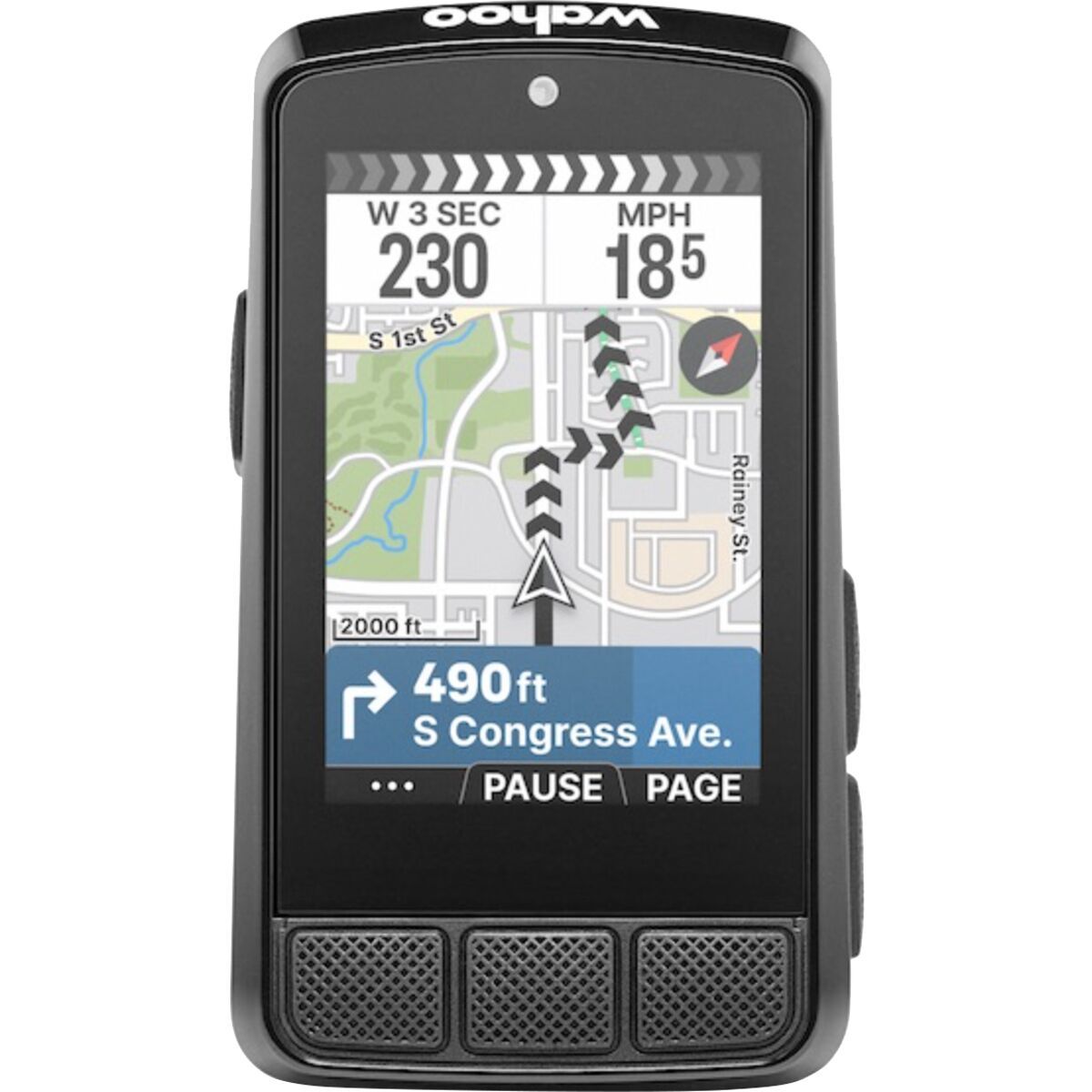
Wahoo ELEMNT BOLT 3
Pair with any ANT+ or Bluetooth HR monitor. Displays training zones in real time.